English
Private Blood Testing vs Doctor Referral in Canada

Introduction
Accessing blood work without a doctor referral has become a realistic option for Canadians who want faster, more comprehensive health data. The traditional pathway, which routes every lab requisition through a physician, often means weeks of waiting for an appointment, limited biomarker panels, and results that arrive only after a follow-up visit. Private blood testing flips that model by letting individuals order their own panels, choose the biomarkers that matter to them, and receive results directly. The gap between these two approaches is widening as more Canadians prioritize preventive health screening over reactive care, and understanding the practical differences is essential before choosing a path.
Key Takeaway: Private blood testing gives Canadians direct control over which biomarkers they track, eliminates referral wait times, and delivers results faster, while traditional doctor referrals remain the better fit when provincial insurance coverage and physician-guided interpretation are priorities.
How Each Pathway Works
The mechanics of getting blood drawn are similar in both models: a trained phlebotomist collects a sample, and a certified laboratory processes it. The real differences emerge in how the process starts, what gets tested, and how results reach the patient. Understanding these logistics helps clarify why one route may serve a specific health goal better than the other.
The Traditional Doctor Referral Process
In the conventional system, a family physician or nurse practitioner determines which tests are medically necessary based on symptoms, age, and risk factors. This means the panel selection is often limited to a handful of standard markers like complete blood count, fasting glucose, and basic lipids. The process follows a predictable sequence:
Appointment booking: Patients wait days to weeks for a GP visit, depending on clinic availability and location
Requisition scope: The physician decides which markers to order, typically based on presenting symptoms or routine screening guidelines
Lab visit: Patients take the requisition to a provincial lab, often encountering additional wait times for walk-in slots
Results delivery: Results return to the physician's office, and patients schedule another appointment for interpretation
Coverage: Provincial health insurance covers the cost of physician-ordered tests, making this pathway free at the point of service
The Private Blood Testing Process
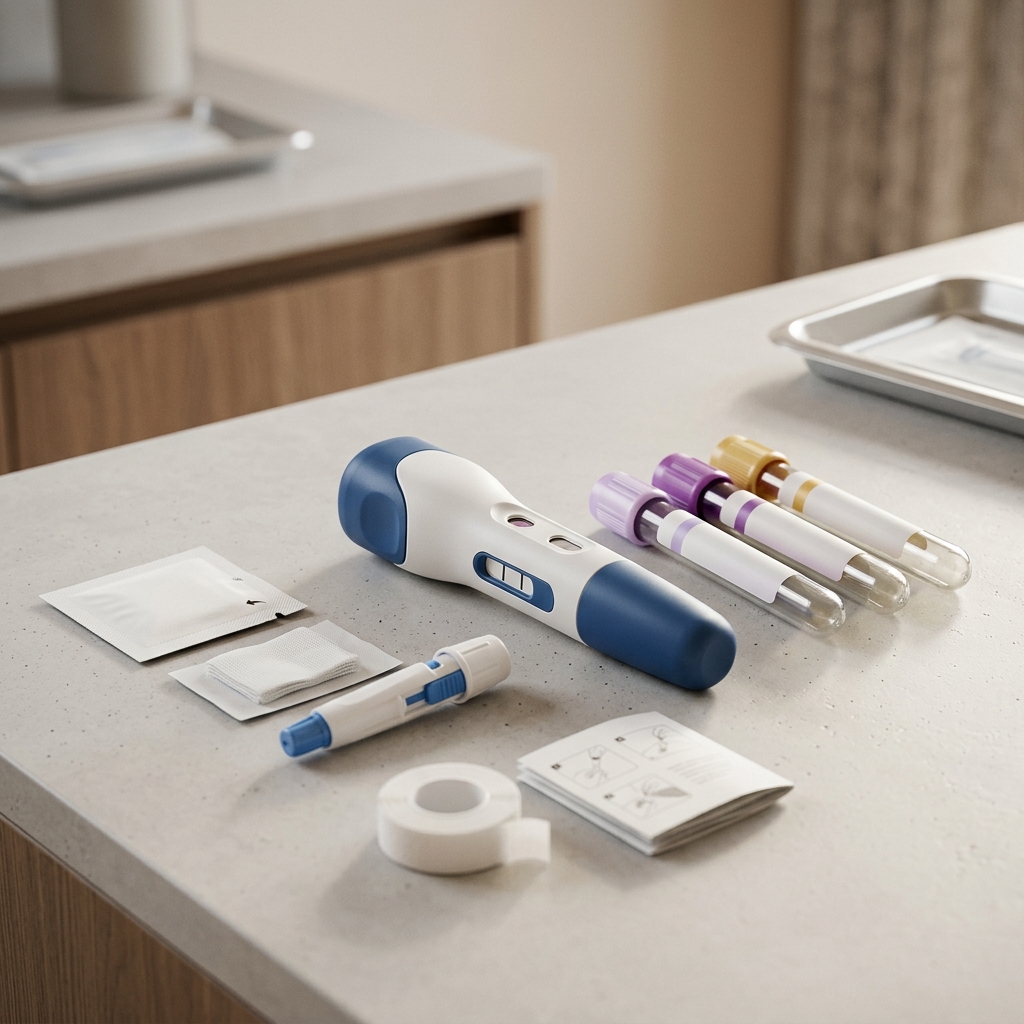
Direct access blood testing removes the referral requirement entirely. Individuals browse available panels online, select the biomarkers they want, and either visit a partnered lab or arrange at-home blood collection. Results typically arrive within days through a secure digital dashboard, often with interpretive guidance included. This model is growing quickly in provinces like Ontario, British Columbia, and Alberta, where urban professionals find the traditional system too slow for their preventive health goals.
Comparing the Two Approaches Side by Side
Choosing between private lab testing and traditional referral-based blood work depends on individual priorities: cost sensitivity, biomarker depth, turnaround speed, and how much control someone wants over their health data. A structured comparison makes the tradeoffs concrete.
Key Differences at a Glance
The following table summarizes the most decision-relevant factors when evaluating private blood tests in Canada against the standard physician referral route.
Factor | Doctor Referral | Private Blood Testing |
|---|---|---|
Access | Requires GP appointment and requisition | Order online, no referral needed |
Wait Time | Days to weeks for initial appointment | Same-day or next-day booking common |
Biomarker Range | Standard panels (5-15 markers typical) | Comprehensive panels (40-65+ markers) |
Cost | Covered by provincial health insurance | Out-of-pocket ($100-$600+ depending on panel) |
Results Turnaround | 1-3 weeks (includes follow-up appointment) | 2-5 business days, delivered digitally |
Result Interpretation | Physician reviews and explains | Varies: some include physician review, others provide raw data |
Collection Method | In-lab only | In-lab or at-home options |
Tracking Over Time | Manual, across separate visits | Digital dashboards with longitudinal trends |
The clearest takeaway: traditional referrals win on cost, while private testing wins on speed, depth, and autonomy. For someone managing a chronic condition within the public system, the referral pathway is practical and financially sensible. For someone pursuing health optimization blood tests or tracking preventive health markers proactively, private testing fills a gap the public system was never designed to address.
What Standard Referrals Frequently Miss
A typical doctor-ordered panel focuses on immediate clinical flags: blood sugar, cholesterol ratios, kidney function, and a basic CBC. This approach is effective for catching acute problems, but it routinely omits biomarkers that reveal early warning signs of longer-term decline. Markers like vitamin D, ferritin, thyroid antibodies, testosterone, estradiol, DHEA-S, ApoB, and high-sensitivity CRP rarely appear on a standard requisition unless a patient specifically reports symptoms that justify them.
Research on blood testing in chronic disease prevention has shown that physicians often wish they had access to broader biomarker data earlier in a patient's health trajectory. Private comprehensive blood panels in Canada address this directly, offering 40 to 65 or more markers in a single draw. Platforms like Biomi structure their panels around this principle, with their Peak plan covering 60 biomarkers including heart, thyroid, and hormonal markers that would typically require multiple specialist referrals to access through the public system.

Practical Considerations for Canadians
Beyond the biomarker comparison, several practical factors shape which pathway works best. Cost, accuracy, privacy, and the growing accessibility problem in Canadian healthcare all play a role in the decision.
Cost, Accuracy, and Access Barriers
The most common objection to private blood work is cost. Provincial health insurance covers physician-ordered tests, making the referral route free for patients. Private panels range from roughly $100 for basic snapshots to $600 or more for comprehensive optimization panels. For many professionals, this cost is comparable to a monthly gym membership and delivers more targeted health intelligence than a routine annual physical.
Accuracy concerns are largely unfounded. Private testing services in Canada use the same CLIA-certified and provincially accredited laboratories that process physician-ordered samples. The analytical methods, equipment, and quality controls are identical. The difference lies in who initiates the test, not in the reliability of the results.
Access barriers in the traditional system are also worth noting. Recent data from Statistics Canada shows that healthcare wait times in Canada continue to increase, with referral-to-treatment timelines averaging over 27 weeks across many specialties. Even basic GP appointments can take weeks in underserved regions. For someone who wants a quarterly check on their metabolic or hormonal health, these timelines make the public pathway impractical as a proactive monitoring tool.
Who Benefits Most from Private Testing
Private blood testing is not a replacement for physician care. It is most valuable as a complementary layer for individuals who want to order tests on their own schedule and track trends longitudinally. Data-driven professionals, athletes monitoring recovery markers, individuals with family histories of metabolic or cardiovascular disease, and anyone dissatisfied with the limited scope of annual physicals tend to find the most value in this approach. Biomi's service tiers, from a core health snapshot to a 65+ biomarker Ultra plan, reflect this spectrum of needs.
The ability to establish personal baselines and monitor trends over time is one of the strongest arguments for direct access testing. Rather than waiting until symptoms trigger a doctor visit, regular private screening catches subtle shifts in inflammation, hormonal balance, or nutrient status before they become clinical problems. This is the core logic behind preventive health screening in Canada: intervene early, adjust lifestyle factors, and confirm improvement with follow-up data.
Conclusion
Private blood testing and physician referrals serve different purposes, and neither fully replaces the other. The traditional route remains essential for symptom-driven care and provincially covered diagnostics. Private testing excels when the goal is proactive monitoring, broader biomarker coverage, and faster access to actionable data. For Canadians who view health as something to optimize rather than merely maintain, combining both approaches, using the public system for acute needs and private panels for ongoing optimization, delivers the most complete picture of internal health.
Frequently Asked Questions (FAQs)
Can I get blood tests without a doctor referral in Canada?
Yes, several provinces allow individuals to purchase private blood tests directly from licensed testing providers without a physician requisition.
How do private blood tests work?
You select a panel online, book a lab visit or at-home collection, provide a blood sample, and receive your results digitally within a few business days.
Why choose private blood testing over a GP referral?
Private testing offers faster turnaround, broader biomarker selection, and direct access to your results without waiting for multiple physician appointments.
What does a comprehensive blood panel include?
A comprehensive panel typically covers 40 to 65+ biomarkers spanning metabolic health, thyroid function, hormones, inflammation, vitamins, minerals, and cardiovascular risk factors.
Is private blood testing covered by insurance in Canada?
Provincial health insurance does not cover privately ordered tests, though some extended health benefits or health spending accounts may reimburse part of the cost.
How accurate are private lab blood tests in Canada?
Private tests processed in accredited Canadian laboratories use the same analytical methods and quality standards as physician-ordered tests, making them equally reliable.
What biomarkers are missed in a standard doctor referral?
Standard referrals often omit markers like vitamin D, ferritin, thyroid antibodies, ApoB, high-sensitivity CRP, and hormonal panels unless specific symptoms prompt the physician to order them.
About the author

Medical Research Content Advisor
Combines medical research and functional medicine expertise to create educational content on health biomarkers, disease prevention, and longevity.
Related articles
- Biological Age Blood Test: What It Measures and Why It Matters
Curious about your biological age blood test results? Explore key biomarkers, what they reveal, and how to start optimizing your longevity today.
- At-Home Blood Draw for Health Testing in Calgary: How It Works
Discover how at-home blood draw testing works in Calgary, from booking to physician-reviewed results. Book your mobile blood collection today.
- What Is Biomi? Biomarker Testing and Biological Age Explained
Discover what Biomi is and how biomarker tracking reveals your biological age vs chronological age. Start your health journey today.
- Home Blood Draw: What to Expect Before Your Appointment
Booking a home blood test? Learn exactly what to expect before your appointment, from prep tips to physician-reviewed results with Biomi.
- What Is Longevity Testing? How It Works and What to Expect
Curious about longevity testing? Learn how this biomarker blood test works, what to expect, and how it reveals your biological age. Start today.
Read article: Biological Age Blood Test: What It Measures and Why It MattersRead article: At-Home Blood Draw for Health Testing in Calgary: How It WorksRead article: What Is Biomi? Biomarker Testing and Biological Age ExplainedRead article: Home Blood Draw: What to Expect Before Your AppointmentRead article: What Is Longevity Testing? How It Works and What to Expect