English
At Home Blood Draw: How It Works and Why Canadians Love It
Par Dr. Ethan Brooks
Introduction
Routine blood work remains one of the most powerful tools in preventive health, yet millions of Canadians skip or delay it every year. The reasons are predictable: packed clinic waiting rooms, inconvenient hours, and the hassle of fitting a lab visit into an already overloaded schedule. An at-home blood draw eliminates those barriers by sending a certified phlebotomist directly to your door. The process mirrors what happens in a clinical lab, with the same tubes, the same protocols, and the same accredited analysis on the other end. What surprises most first-time users is not just the convenience but how the experience changes their relationship with preventive health altogether.
What Happens During a Home Blood Draw
Understanding the step-by-step process removes the uncertainty that keeps many people from booking their first appointment. From the moment you schedule your session to the second you receive results, every stage is designed to be straightforward and clinically rigorous.
Booking, Preparation, and the Collection Process
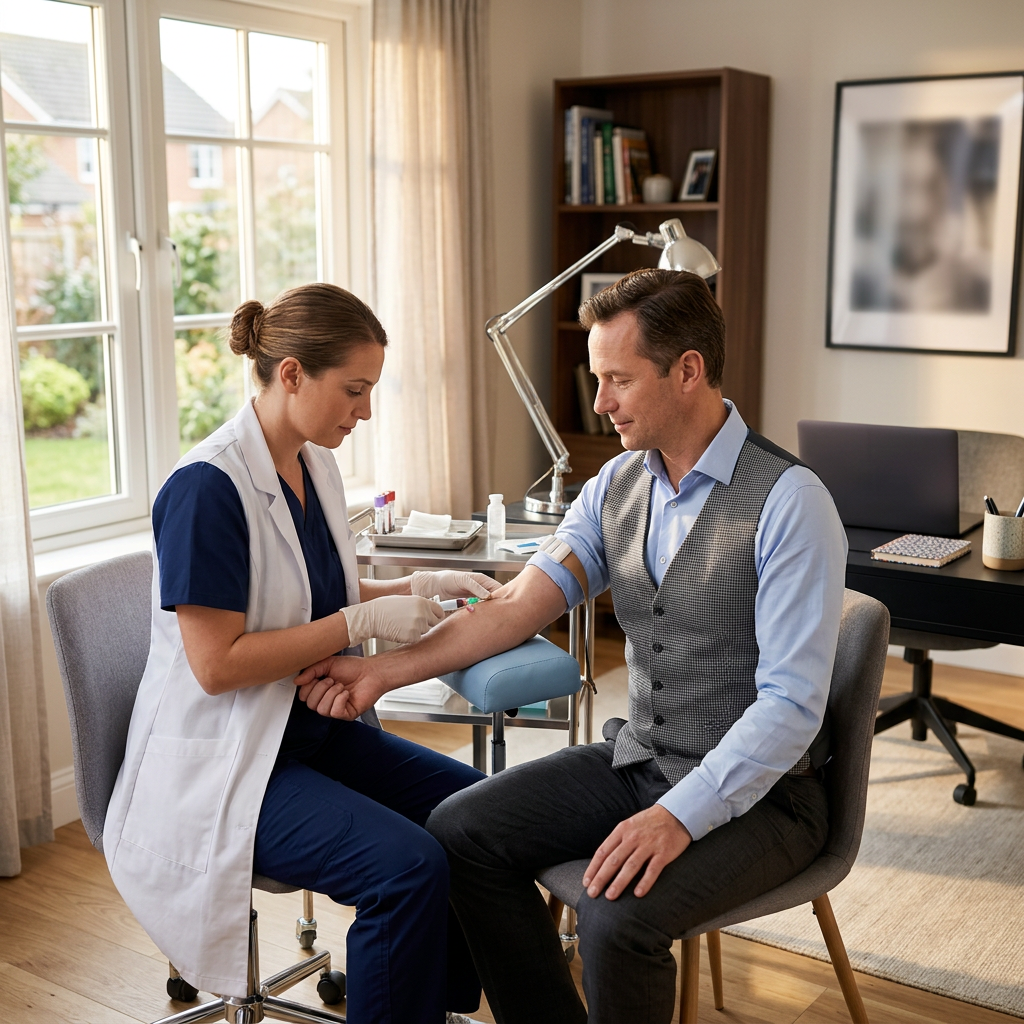
Most home blood draw services operate through a simple online platform. You select the biomarker panel you need, choose a date and time that works for your schedule, and confirm your address. A licensed phlebotomist arrives at your home or office within the scheduled window, carrying all necessary supplies in a sealed, temperature-controlled kit. The entire visit typically takes between 10 and 20 minutes, and the actual venipuncture (the needle portion) lasts under 60 seconds for most people. Here is what to expect before and during the appointment:
Fasting requirements: Most comprehensive panels require 8 to 12 hours of fasting beforehand, so morning appointments are ideal.
Hydration: Drinking water the night before and morning of your draw makes veins easier to locate and reduces discomfort.
Identification and consent: The phlebotomist verifies your identity, reviews the requisition, and confirms which tests are being ordered.
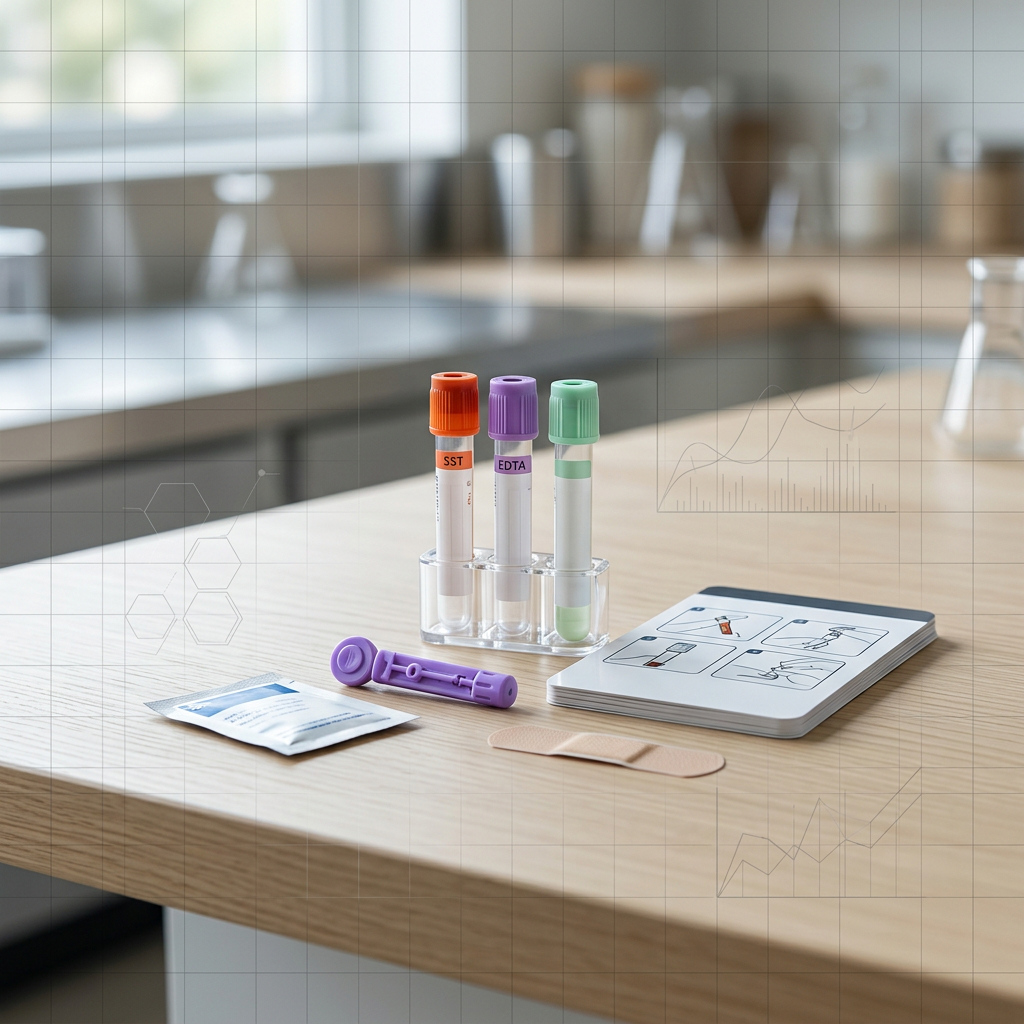
Sample handling: Vials are labeled at your side, sealed in a biohazard bag, and transported to a Health Canada-regulated laboratory within strict time and temperature windows.
Post-draw care: A small bandage is applied, and you receive aftercare instructions, including hydration tips and when to expect results.
What Happens After the Phlebotomist Leaves
Once samples reach the lab, they undergo the same analytical processes used for specimens collected in hospitals and walk-in clinics. Automated analyzers and trained technicians process each vial according to standardized laboratory protocols, and results are typically available within 24 to 72 hours, depending on the panel. Platforms like Biomi go a step further by pairing raw lab data with physician-reviewed health scores and personalized recommendations, making results actionable rather than just informational.

Why Canadians Are Choosing Home Over the Clinic
The shift toward mobile blood draw services reflects broader changes in how Canadians think about healthcare access. Convenience matters, but accuracy and clinical trust matter more. The good news is that home phlebotomy delivers on all three fronts.
Accuracy, Safety, and Regulatory Standards
One of the most common concerns about blood collection services outside a traditional lab is whether the results are equally reliable. The short answer: yes. Phlebotomists who perform home draws hold the same certifications as those working in hospital labs. In many provinces, they are registered through professional bodies such as the Canadian Phlebotomy Technician Group and follow identical venipuncture and chain-of-custody protocols.
Sample integrity depends on proper collection technique, correct tube selection, and adherence to transport conditions. Reputable services use insulated carriers with temperature monitoring to ensure specimens arrive at the lab in optimal condition. Published research consistently shows no statistically significant difference in analyte stability between home-collected and clinic-collected specimens when handling protocols are followed. For Canadians concerned about cutting corners, the regulatory framework governing blood work in Canada applies regardless of where the draw takes place.
Convenience That Actually Changes Health Behavior
Convenience is often framed as a luxury, but in preventive health, it functions as a clinical intervention. When the friction of scheduling, commuting, and waiting is removed, people complete their blood work more consistently. This consistency is what transforms a single snapshot into meaningful longitudinal data. Tracking biomarkers over time reveals trends that a one-off annual physical simply cannot capture, such as gradual shifts in thyroid function, cholesterol ratios, or inflammatory markers that signal risk years before symptoms appear.
The convenience factor is especially relevant for busy professionals, parents managing household schedules, and remote workers in areas with limited lab access. Canadians living outside major urban centers like Toronto often face longer wait times and fewer clinic options, making a home visit not just preferable but practically necessary for staying on top of preventive health blood work.
Conclusion
An at-home blood draw offers the same clinical rigor as a traditional lab visit while removing the scheduling headaches that cause so many Canadians to postpone critical health testing. The process is simple, the results are lab-grade, and the convenience encourages the kind of regular monitoring that catches problems early. Whether you are tracking a specific biomarker blood test panel or building a baseline for long-term optimization, home phlebotomy services make it easier to follow through. For those ready to take the next step, comparing Biomi's health plans is a practical starting point for finding the right level of testing.
Explore Biomi's at-home blood testing options at biomi.ca and take control of your preventive health today.
Frequently Asked Questions (FAQs)
How do you get blood drawn at home?
You book an appointment through an online platform, and a certified phlebotomist arrives at your chosen location to perform a standard venipuncture using the same equipment and protocols used in clinical labs.
Is home blood collection as accurate as lab blood draws?
Yes, when performed by a licensed phlebotomist and transported under proper conditions, home-collected samples produce results that are clinically equivalent to those drawn in a hospital or clinic setting.
What should I do before getting a blood draw?
Fast for 8 to 12 hours if your test panel requires it, stay well hydrated with water, and wear a short-sleeved shirt or loose sleeves for easy access to your arm.
What is included in a comprehensive blood test?
A comprehensive panel typically covers 50 to 65 or more biomarkers including complete blood count, metabolic panel, lipid profile, thyroid markers, hormonal levels, and inflammatory indicators.
How often should I get blood work done?
Most health professionals recommend a minimum of once per year for general screening, though individuals actively managing health goals or chronic conditions benefit from testing every three to six months.
À propos de l'auteur

Medical Research Content Advisor
Combines medical research and functional medicine expertise to create educational content on health biomarkers, disease prevention, and longevity.
Articles connexes
- Biological Age Blood Test: What It Measures and Why It Matters
Curious about your biological age blood test results? Explore key biomarkers, what they reveal, and how to start optimizing your longevity today.
- At-Home Blood Draw for Health Testing in Calgary: How It Works
Discover how at-home blood draw testing works in Calgary, from booking to physician-reviewed results. Book your mobile blood collection today.
- What Is Biomi? Biomarker Testing and Biological Age Explained
Discover what Biomi is and how biomarker tracking reveals your biological age vs chronological age. Start your health journey today.
- Home Blood Draw: What to Expect Before Your Appointment
Booking a home blood test? Learn exactly what to expect before your appointment, from prep tips to physician-reviewed results with Biomi.
- What Is Longevity Testing? How It Works and What to Expect
Curious about longevity testing? Learn how this biomarker blood test works, what to expect, and how it reveals your biological age. Start today.
Lire l'article: Biological Age Blood Test: What It Measures and Why It MattersLire l'article: At-Home Blood Draw for Health Testing in Calgary: How It WorksLire l'article: What Is Biomi? Biomarker Testing and Biological Age ExplainedLire l'article: Home Blood Draw: What to Expect Before Your AppointmentLire l'article: What Is Longevity Testing? How It Works and What to Expect