English
Blood Panel Cost in Canada: What You Should Pay
Par Dr. Emily Carter

Introduction
The blood panel cost in Canada varies dramatically depending on what you test, where you test, and who reviews the results. Provincial healthcare covers basic lab work ordered by a physician, but Canadians seeking a complete blood panel price that reflects genuine preventive insight often find public options too narrow. Private blood testing fills that gap, yet price tags range from under $100 for a handful of markers to over $600 for premium panels with physician review and at-home collection. Understanding what drives these numbers helps you avoid overpaying for minimal testing or underinvesting in the data that actually protects your long-term health.
Key Takeaway: A basic private blood test in Canada typically costs $75 to $200, while a comprehensive panel with 50+ biomarkers, physician review, and convenient collection runs $300 to $600, and the added clinical depth often delivers better value per dollar than repeated single-test orders.
What Shapes Blood Test Price in Canada
Several factors converge to determine what you will pay for private lab work. Not all panels are created equal, and the sticker price alone tells you very little about the clinical value you receive. Breaking down the key cost drivers makes it easier to evaluate whether a given service is fairly priced or padding margins with unnecessary extras.
Core Factors Behind Pricing Differences
The number of biomarkers tested is the single largest variable in any blood panel cost comparison. A panel measuring 10 markers costs a fraction of one measuring 60, yet the broader panel often catches metabolic, hormonal, and inflammatory patterns that a narrow screen misses entirely. Beyond marker count, the following factors shape the final price.
Biomarker scope: Basic panels cover CBC and lipids, while comprehensive panels add thyroid, hormonal, metabolic, and inflammation markers that provide a fuller clinical picture.
Physician review: Some services include a licensed physician interpreting results and flagging actionable findings, which adds cost but significantly increases the usefulness of raw data.
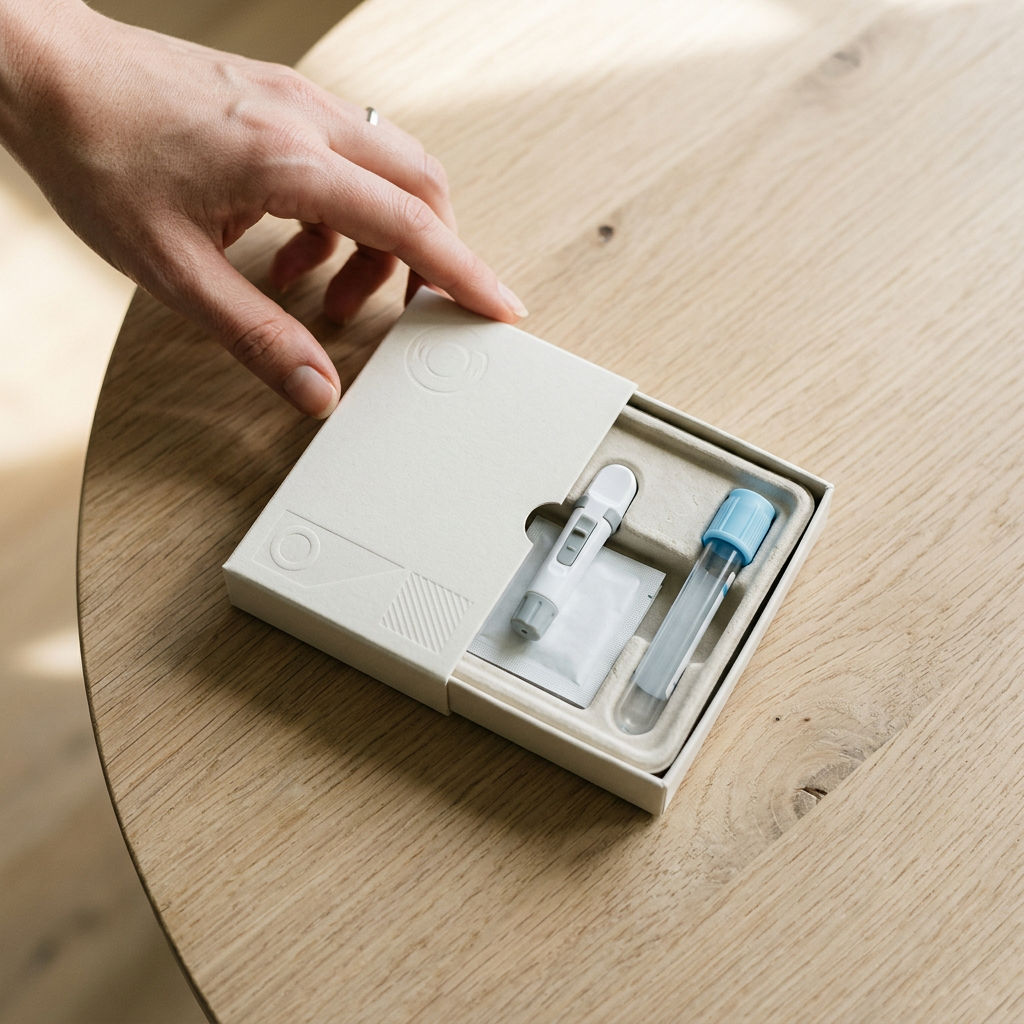
Collection method: In-clinic phlebotomy is typically cheaper to administer, while at-home blood collection adds convenience and a modest fee for mobile phlebotomist visits or self-collection kits.
Reporting and tracking: Services that provide a secure dashboard, health scores, or longitudinal trend tracking invest in technology infrastructure that basic labs do not offer.
Turnaround time: Expedited results from accredited labs carry a premium over standard processing windows.
Public Coverage vs. Private Blood Testing
Provincial health insurance covers blood work that a doctor orders based on a specific clinical indication, meaning you typically need symptoms or a diagnosed condition to get tests funded. If you want proactive preventive health screening without a medical referral, private services are the primary route. Research into commonly ordered laboratory tests in Canada shows that individual test costs at public labs range from a few dollars to over $30 per analyte, but patients rarely see those itemized prices because provincial billing absorbs them. In private settings, those per-test costs are bundled into panel packages, and the total depends on how many markers the package includes. The result is that affordable blood testing through private providers often delivers more data per dollar than piecemeal public orders, especially for individuals who want a proactive health snapshot rather than a reactive diagnostic workup.
Comparing Blood Panel Costs Across Service Tiers
Choosing the right panel comes down to matching your health goals and budget with the level of detail you actually need. A basic screen suits someone checking a few routine markers annually, while a comprehensive panel serves those committed to tracking trends across metabolic, hormonal, and cardiovascular systems over time. The table below maps typical Canadian pricing to what each tier includes.
Blood Panel Cost Comparison by Tier
This comparison reflects the general pricing landscape for private blood panel services in Canada as of 2025. Exact prices vary by provider, but these ranges represent what most health-conscious Canadians encounter when shopping for biomarker testing.
Feature | Basic Panel | Comprehensive Panel | Premium Panel |
|---|---|---|---|
Typical Price Range | $75 – $200 | $300 – $450 | $450 – $600+ |
Biomarkers Tested | 10 – 20 | 40 – 60 | 60 – 80+ |
Physician Review | Rarely included | Usually included | Always included |
At-Home Collection | Not available | Optional (added fee) | Typically included |
Health Dashboard | Basic PDF report | Online dashboard | Longitudinal tracking |
Best For | Annual routine check | Proactive health monitoring | Optimization and longevity |
The jump from basic to comprehensive is where most Canadians get the greatest return. A comprehensive blood panel price of $300 to $450 typically includes thyroid, hormonal, inflammatory, and metabolic markers that a basic screen skips entirely. Those additional data points are often the ones that reveal early-stage imbalances, making the incremental cost a worthwhile investment in catching problems before they escalate. Comparing plan options side by side is the fastest way to see exactly which markers each tier covers.
At-Home Blood Test vs. Lab Visit: Does Convenience Cost More?
At-home collection typically adds $25 to $75 to the overall cost, depending on whether the provider dispatches a mobile phlebotomist or ships a self-collection kit. For many professionals, that premium pays for itself in time saved. Research on self-organized blood collection in primary care settings confirms that sample quality from properly managed home draws matches in-clinic accuracy, so the convenience factor does not come at a clinical trade-off. Providers like Biomi bundle at-home collection into their service tiers so the cost is transparent from the start rather than tacked on as a surprise fee. If you value time efficiency and privacy, home-based testing at a slight premium consistently outperforms the experience of scheduling, commuting to, and waiting at a lab.

Getting the Most Value from Your Lab Work Cost
Price is only half the equation. The real question is whether the panel you pay for delivers actionable insight or just numbers on a page. A $150 test that leaves you guessing is more expensive in practice than a $400 panel that pinpoints exactly what to address. Evaluating value requires looking beyond the sticker price.
Why Comprehensive Testing Is More Cost-Effective Long Term
Reactive healthcare, where you test only after symptoms appear, often leads to more expensive interventions down the line. A single specialist referral, imaging scan, or hospital visit can cost the healthcare system (and you, in lost time) far more than a preventive blood work cost of a few hundred dollars annually. Studies on the cost-effectiveness of advanced testing demonstrate that comprehensive panels catch metabolic and hormonal shifts months or years before they become clinical problems.
Consider a scenario where elevated fasting insulin is flagged two years before a Type 2 diabetes diagnosis would have occurred. The dietary and lifestyle adjustments made during that window can prevent the need for medication, specialist monitoring, and the cascading costs of managing a chronic condition. A full blood panel that tracks insulin alongside 50+ other markers gives you that early warning system. This is why preventive blood testing is increasingly seen not as an expense but as an investment with measurable returns.
How to Evaluate a Blood Testing Service Before You Buy
When comparing services, look past the headline price and check what is actually bundled in. A panel advertised at $199 with no physician review and a basic PDF leaves interpretation entirely to you, which limits clinical utility. Biomi, for example, includes physician-reviewed results, a secure health dashboard, and structured longevity testing across all tiers, so the price reflects a complete service rather than just lab processing. Ask three questions before committing: How many biomarkers are included? Who reviews the results? And can you track trends over time? Those answers matter more than whether you save $50 on a stripped-down alternative. For Canadians considering ordering a blood test online, verifying these details upfront prevents buyer's remorse and ensures you receive data worth acting on.
Conclusion
Blood panel pricing in Canada ranges widely, but the value you extract from testing depends more on the scope and quality of the service than on the dollar amount alone. Basic panels serve a purpose for routine checks, yet comprehensive testing in the $300 to $600 range delivers the depth needed for genuine preventive care. Prioritize panels that include physician review, meaningful biomarker breadth, and trend tracking over time. Investing in the right blood testing service today is one of the most practical steps you can take toward catching health issues early and avoiding costlier interventions later.
Frequently Asked Questions (FAQs)
How much does a blood test cost in Canada?
A private blood test in Canada costs between $75 and $600 depending on the number of biomarkers, whether physician review is included, and the collection method chosen.
What is the cost of a blood panel with 50 or more biomarkers?
A comprehensive panel covering 50+ biomarkers typically costs $300 to $450 through private Canadian providers, with premium tiers reaching $600 or more when advanced markers and at-home collection are included.
What does a complete blood test cost compared to ordering individual tests?
Bundled panels almost always cost less per biomarker than ordering individual tests separately, making a complete panel the more economical choice when you need data across multiple health systems.
What is included in a full blood panel?
A full blood panel generally includes CBC, metabolic markers, lipid profile, thyroid function, hormonal markers, inflammatory indicators, and vitamin or mineral levels, with exact contents varying by provider and tier.
What is the difference between basic and comprehensive blood panels?
Basic panels test 10 to 20 markers focused on routine health indicators like CBC and cholesterol, while comprehensive panels test 40 to 60+ markers spanning thyroid, hormonal, metabolic, and inflammatory systems for a fuller clinical picture.
Is at-home blood testing cheaper than a lab visit?
At-home collection typically adds $25 to $75 to the total cost compared to an in-clinic draw, though some providers bundle the fee into their panel pricing so there is no separate charge.
How much does preventive blood testing cost annually?
Most Canadians investing in preventive testing spend $300 to $600 per year on one or two comprehensive panels, which remains significantly less expensive than the downstream costs of undetected chronic conditions.
À propos de l'auteur

Senior Health Content Strategist
Specializes in preventive health, biomarker analysis, and longevity science.
Articles connexes
- Biological Age Blood Test: What It Measures and Why It Matters
Curious about your biological age blood test results? Explore key biomarkers, what they reveal, and how to start optimizing your longevity today.
- At-Home Blood Draw for Health Testing in Calgary: How It Works
Discover how at-home blood draw testing works in Calgary, from booking to physician-reviewed results. Book your mobile blood collection today.
- What Is Biomi? Biomarker Testing and Biological Age Explained
Discover what Biomi is and how biomarker tracking reveals your biological age vs chronological age. Start your health journey today.
- Home Blood Draw: What to Expect Before Your Appointment
Booking a home blood test? Learn exactly what to expect before your appointment, from prep tips to physician-reviewed results with Biomi.
- What Is Longevity Testing? How It Works and What to Expect
Curious about longevity testing? Learn how this biomarker blood test works, what to expect, and how it reveals your biological age. Start today.
Lire l'article: Biological Age Blood Test: What It Measures and Why It MattersLire l'article: At-Home Blood Draw for Health Testing in Calgary: How It WorksLire l'article: What Is Biomi? Biomarker Testing and Biological Age ExplainedLire l'article: Home Blood Draw: What to Expect Before Your AppointmentLire l'article: What Is Longevity Testing? How It Works and What to Expect