English
At-Home Blood Tests in Canada: Everything You Need to Know (2026)
Introduction
At-home blood testing in Canada has moved well beyond novelty status. Canadians facing weeks-long waits for routine lab work through the public system are increasingly turning to private blood test options that deliver lab-grade results without a clinic visit. A blood test kit shipped to your door, completed on your schedule, and reviewed by a licensed physician is now a realistic alternative to the traditional model. With preventive health screening gaining momentum across every province, understanding how these services actually work, what they measure, and whether the results are trustworthy has never been more relevant. The gap between what Canadians want from their healthcare and what the public system can deliver in a timely manner is exactly where home blood testing fills a critical role.
How At-Home Blood Testing Works in Canada
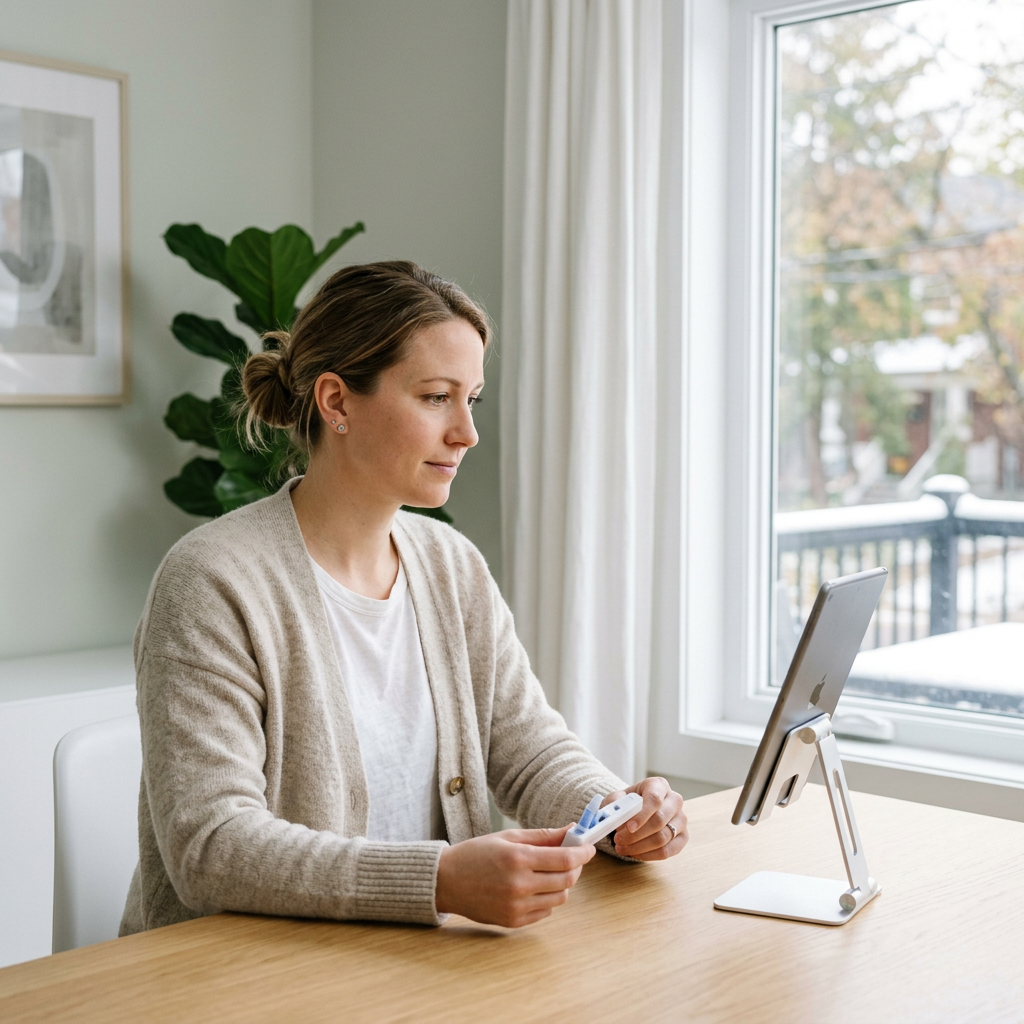
The process of completing a home blood test in Canada is designed to be straightforward, even for people who have never done anything beyond a standard clinic visit. While the specifics vary slightly between providers, the general workflow follows a consistent pattern that prioritizes simplicity and accuracy from start to finish.
The Step-by-Step Collection Process
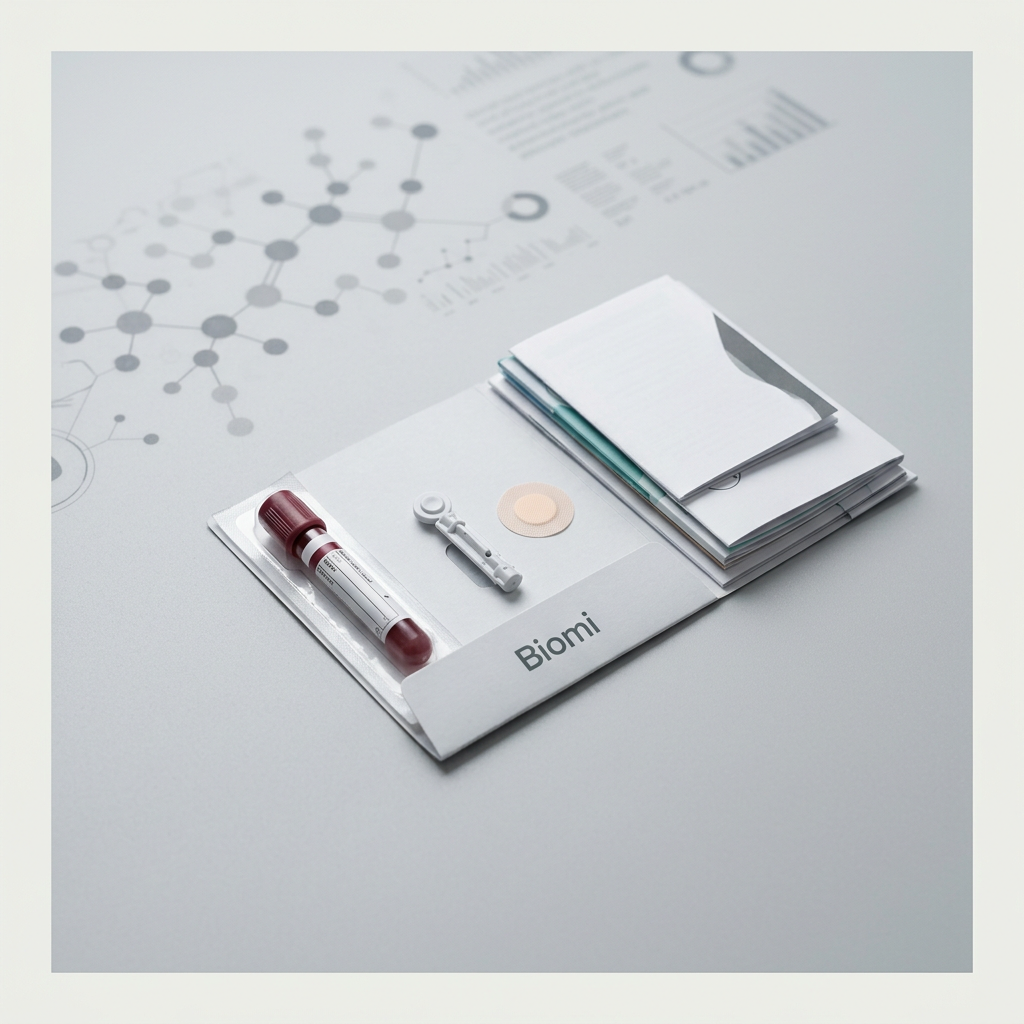
Most at-home blood test kits in Canada arrive with everything needed to collect a sample safely. Here is what the process typically looks like:
Order and receive your kit: Select a testing plan online, and a collection kit arrives at your door within a few business days, complete with instructions, collection devices, and a prepaid return envelope.
Collect your sample: Depending on the provider, this involves either a simple finger-prick microcollection or, for comprehensive panels, an at-home phlebotomy appointment where a mobile technician draws blood from your arm.
Ship or hand off the sample: Sealed samples are returned to an accredited Canadian laboratory using temperature-controlled packaging and priority courier logistics.
Receive physician-reviewed results: Within days, a licensed physician reviews your results, which are then delivered through a secure online portal with clear explanations for each biomarker.
Accredited Labs and Medical Oversight
One of the most common concerns about home blood testing is whether the lab work matches clinical laboratory standards. Reputable Canadian providers use the same accredited laboratories that hospitals and clinics rely on, meaning the equipment, protocols, and quality controls are identical. The difference is simply where the blood is collected, not where or how it is analyzed.
Physician oversight is another layer that separates credible services from consumer-grade wellness gadgets. When a licensed doctor reviews your comprehensive blood panel, they can flag abnormalities that an algorithm alone might miss, and they can recommend next steps tailored to your specific health profile. This medical review process ensures that at-home blood testing in Canada functions as a genuine healthcare service rather than a novelty product.
What At-Home Blood Tests Can Detect and Why It Matters
The real value of a home blood test lies in the breadth and depth of biomarkers it covers. Unlike a basic public-system requisition that might check only a handful of markers, private services often test 50 to 65 or more biomarkers in a single draw, giving you a panoramic view of your internal health rather than a narrow snapshot.
Key Biomarker Categories Worth Tracking
Biomarker testing in Canada through at-home services typically spans several critical health domains. Cardiovascular markers such as LDL, HDL, triglycerides, and ApoB help quantify heart disease risk years before symptoms develop. Metabolic panels covering fasting glucose, HbA1c, and insulin resistance indicators reveal how effectively your body processes energy, which matters for diabetes prevention and long-term metabolic health.
Thyroid function markers like TSH, free T3, and free T4 are frequently undertested in the public system, yet thyroid imbalances affect energy, weight, mood, and sleep quality. Hormonal panels covering testosterone, estradiol, DHEA-S, and cortisol provide data that is especially relevant for Canadians in their 30s through 50s who notice shifts in recovery, body composition, or stress resilience. Nutrient markers, including vitamin D, B12, ferritin, and folate, round out a complete picture by identifying deficiencies that often go undiagnosed for years.
Private vs. Public Blood Testing: What You Actually Get
Through the public system, a family doctor typically requisitions blood work based on symptoms or basic annual screening guidelines. The result is often a limited panel: CBC, basic metabolic panel, maybe cholesterol and fasting glucose. Wait times for a lab appointment can stretch from days to weeks depending on the province, and results may take another week or more to reach you. Follow-up often means booking another appointment just to discuss the numbers.
Private blood testing flips this model. You choose the scope of your panel, complete the test on your timeline, and receive detailed, physician-reviewed results through a digital dashboard. Providers like Biomi go further by offering longitudinal tracking, meaning each test builds on the last so you can monitor trends over months and years. For health-conscious Canadians who want more than the minimum, this shift from reactive to proactive care represents a fundamental upgrade. Research supports this direction: studies show that proactive biomarker monitoring can identify risk factors for chronic disease long before clinical symptoms appear.
Accuracy, Reliability, and Making Sense of Your Results
Skepticism about at-home blood test accuracy is understandable, especially when health decisions are on the line. The good news is that accuracy depends far more on the laboratory processing the sample than on where the blood was drawn. Canadian providers that partner with ISO-accredited labs deliver results that meet the same standards as any hospital lab in Ontario, British Columbia, or Alberta.
What Determines the Reliability of Your Results
Sample integrity is the most important variable. Proper collection technique, correct sample volume, and temperature-controlled shipping all affect whether results are accurate. This is why reputable services include detailed instructions, pre-paid priority shipping materials, and sometimes even scheduled at-home phlebotomy visits for more comprehensive panels that require a venous draw. When these protocols are followed, the difference in accuracy between a home-collected sample and a clinic-collected one is negligible.
Fasting requirements also matter. Many biomarkers, especially glucose, insulin, and lipid panels, require 8 to 12 hours of fasting before collection. At-home testing makes this easier in some ways because you can collect your sample first thing in the morning without commuting to a lab on an empty stomach. Following the kit's preparation instructions precisely is the single most important step you can take to ensure reliable home blood test results.
Interpreting Results and Taking Action
Raw numbers without context are not particularly useful. A testosterone level of 15 nmol/L might be perfectly normal for one person and a red flag for another, depending on age, sex, symptoms, and baseline trends. This is where physician-reviewed blood results add irreplaceable value. A licensed doctor interprets your data within the context of your health profile, not just against a generic reference range.
Biomi structures its results through a health scoring system that translates complex biomarker data into actionable categories. Rather than deciphering medical jargon on your own, you see clear indicators of where you stand and what changes, whether in diet, supplementation, sleep, or exercise, could move the needle. For Canadians who want to go beyond simply knowing their numbers, this guided interpretation transforms data into a practical roadmap. According to the Canadian Task Force on Preventive Health Care, periodic health assessments that include targeted screening can meaningfully reduce the burden of preventable chronic conditions.
Conclusion
At-home blood testing gives Canadians a faster, more comprehensive, and increasingly affordable path to understanding their health. By combining accredited laboratory analysis with physician review and longitudinal tracking, these services fill a gap the public system was never designed to close. Whether you are managing a specific concern or simply want a data-driven baseline for preventive health, choosing a provider that prioritizes biomarker depth, medical oversight, and clear result interpretation will deliver the most value. The shift from reactive symptom management to proactive health optimization starts with better data, and that data is now available from home.
Ready to take control of your health with lab-grade blood testing from home? Explore Biomi's testing plans and get started today.
Frequently Asked Questions (FAQs)
How do at-home blood tests work in Canada?
You order a kit online, collect a blood sample at home using the provided materials or through a mobile phlebotomist, ship it to an accredited Canadian lab, and receive physician-reviewed results through a secure digital portal within days.
Are home blood tests accurate in Canada?
Yes, when processed by accredited Canadian laboratories using the same equipment and protocols as hospital labs, at-home blood test results are clinically equivalent in accuracy to those collected in a traditional clinic setting.
What can a home blood test detect?
Comprehensive panels can detect markers related to cardiovascular health, metabolic function, thyroid performance, hormone levels, nutrient deficiencies, liver and kidney function, and inflammation, often covering 50 to 65 or more biomarkers in a single test.
Is private blood testing worth it in Canada?
For Canadians who want faster turnaround, broader biomarker coverage, and physician-guided interpretation beyond what public system requisitions typically offer, private testing provides significantly more actionable health data per test.
Are home blood tests available in Ontario and British Columbia?
Yes, multiple private providers offer at-home blood collection services across Ontario, British Columbia, and other Canadian provinces, with samples processed at nationally accredited laboratories regardless of your location.
About the author

Health & Wellness Editorial Team
Related articles
- Biological Age Blood Test: What It Measures and Why It Matters
Curious about your biological age blood test results? Explore key biomarkers, what they reveal, and how to start optimizing your longevity today.
- At-Home Blood Draw for Health Testing in Calgary: How It Works
Discover how at-home blood draw testing works in Calgary, from booking to physician-reviewed results. Book your mobile blood collection today.
- What Is Biomi? Biomarker Testing and Biological Age Explained
Discover what Biomi is and how biomarker tracking reveals your biological age vs chronological age. Start your health journey today.
- Home Blood Draw: What to Expect Before Your Appointment
Booking a home blood test? Learn exactly what to expect before your appointment, from prep tips to physician-reviewed results with Biomi.
- What Is Longevity Testing? How It Works and What to Expect
Curious about longevity testing? Learn how this biomarker blood test works, what to expect, and how it reveals your biological age. Start today.
Read article: Biological Age Blood Test: What It Measures and Why It MattersRead article: At-Home Blood Draw for Health Testing in Calgary: How It WorksRead article: What Is Biomi? Biomarker Testing and Biological Age ExplainedRead article: Home Blood Draw: What to Expect Before Your AppointmentRead article: What Is Longevity Testing? How It Works and What to Expect