English
Heart Rate Variability: What Your HRV Score Reveals

Introduction
Heart rate variability, or HRV, measures the subtle fluctuations in timing between consecutive heartbeats, offering a remarkably precise window into how well the autonomic nervous system is functioning. Unlike a simple resting heart rate that tells you how fast your heart beats per minute, HRV captures the dynamic interplay between the sympathetic (fight-or-flight) and parasympathetic (rest-and-digest) branches of your nervous system. For health-conscious Canadians looking to move beyond surface-level wellness metrics, HRV tracking provides one of the most accessible and meaningful biomarkers available today. A consistently low score can signal chronic stress, poor recovery, or emerging health risks months before conventional symptoms appear.
Key Takeaway: Your HRV score reflects how adaptable your nervous system is to physical, mental, and environmental stressors, and improving it through targeted lifestyle changes can meaningfully reduce your long-term health risk.
Understanding HRV and Why It Matters
The time intervals between heartbeats are never perfectly uniform. Even when you feel calm and your pulse seems steady, the gaps between beats vary by milliseconds. These tiny variations are not random noise. They reflect real-time adjustments your autonomic nervous system makes in response to breathing, posture, emotional state, and a host of other physiological inputs.
What HRV Actually Measures
HRV measurement focuses on the time domain between successive R-R intervals, the peaks in an electrocardiogram that mark each heartbeat. The most common metric used in consumer health is RMSSD (root mean square of successive differences), which captures beat-to-beat variation over short recording periods. A higher RMSSD generally indicates that your parasympathetic nervous system is actively engaged, meaning your body can shift fluidly between states of exertion and recovery. Several factors produce this variation:
Respiratory sinus arrhythmia: Heart rate naturally accelerates during inhalation and decelerates during exhalation, driven by vagal nerve activity
Baroreflex sensitivity: Blood pressure changes trigger rapid adjustments in heart rate that contribute directly to HRV
Circadian rhythm: HRV typically peaks during deep sleep and reaches its lowest point during periods of intense physical or cognitive demand
Autonomic balance: The ratio of sympathetic to parasympathetic tone shifts constantly, and HRV captures that balance in real time
HRV vs Resting Heart Rate
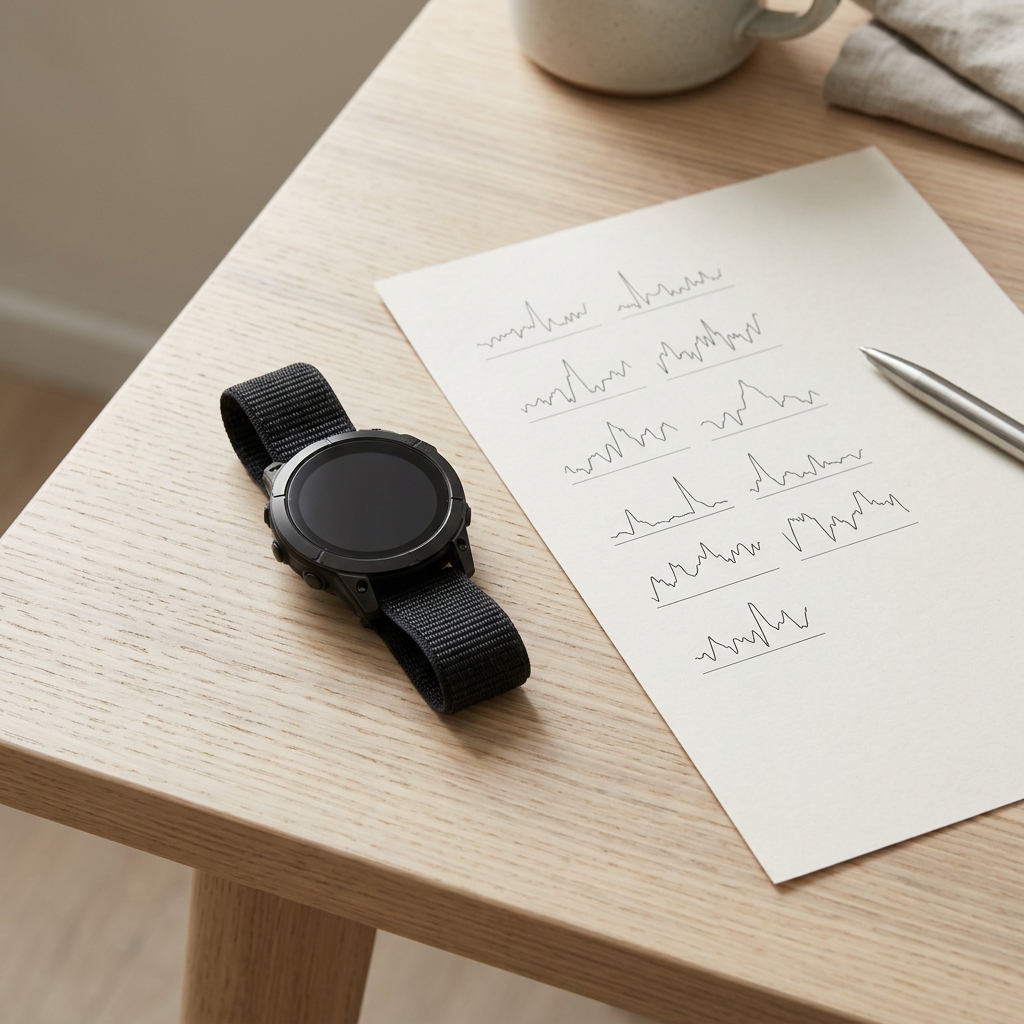
Resting heart rate tells you how many times your heart beats per minute at rest, which is useful but limited. Two people can share a resting heart rate of 65 BPM while having drastically different HRV scores, revealing very different levels of recovery capacity and stress resilience. Resting heart rate reflects the output; HRV reflects the regulatory intelligence behind that output. Think of it this way: resting heart rate is the speedometer, while HRV is the engine diagnostic telling you how efficiently the entire system is running under the surface.
Interpreting Your HRV Score
Knowing your HRV number is only useful when you understand what it means in context. Age, fitness level, sex, genetics, and even the time of day you measure all influence where your score falls. The goal is not to chase a specific number but to understand your personal baseline and track meaningful changes over time using longitudinal data.
What Counts as a Normal Range
HRV normal range varies significantly by age. Younger adults in their twenties typically see RMSSD values between 40 and 100 milliseconds, while those over 60 may register between 15 and 40 ms without any underlying pathology. Endurance athletes often display values well above 100 ms, reflecting exceptionally strong parasympathetic tone. Research published in peer-reviewed cardiovascular journals has consistently demonstrated that declining HRV predicts autonomic dysfunction and increased cardiovascular risk even in otherwise asymptomatic individuals.
The critical point is that population averages serve as rough guideposts, not targets. Your HRV score from last Tuesday compared to your score from three months ago is far more clinically relevant than comparing yourself to a generic benchmark. Consistent downward trends warrant attention. Single-day dips after a poor night of sleep or a stressful workday are expected and normal. Platforms like Biomi help contextualize these fluctuations by integrating HRV data alongside other health biomarkers for a more complete picture.
What Low and High HRV Scores Signal
Low HRV generally signals that the sympathetic nervous system is dominant, meaning the body is stuck in a stress response. Chronic low readings are associated with increased inflammation, poor sleep quality, elevated cortisol, higher cardiovascular risk, and reduced cognitive performance. This does not mean a single low reading is cause for alarm, but patterns of persistently low HRV deserve investigation through preventive screening.
High HRV, conversely, reflects robust parasympathetic activity and strong adaptive capacity. It correlates with better stress management, faster physical recovery, improved cardiovascular health markers, and enhanced emotional regulation. However, extremely high HRV in certain contexts (particularly with irregular rhythm patterns) can occasionally indicate arrhythmia, which is why context and complementary data always matter more than any single metric in isolation.

How to Monitor and Improve Your HRV
The accessibility of HRV monitoring has improved dramatically in recent years. What once required clinical-grade electrocardiography is now available through consumer wearables and smartphone apps, though accuracy varies considerably across devices and methods.
Choosing the Right HRV Tracker
The best HRV tracker for your needs depends on how you plan to use the data. Chest strap monitors like the Polar H10 remain the gold standard for accuracy because they use electrical signals similar to an ECG. Wrist-based optical sensors found in devices from Apple, Garmin, and WHOOP use photoplethysmography (PPG), which estimates HRV through blood flow changes detected by LED light. PPG is convenient and increasingly reliable for trend tracking, though clinical cardiovascular guidelines still favor ECG-based measurement for diagnostic purposes.
Consistency matters more than device choice. Measure at the same time each day, ideally first thing in the morning before getting out of bed, using the same device and the same body position. Morning readings taken during a relaxed state give the cleanest baseline. Biomi's approach to HRV health pairs wearable data with comprehensive biomarker testing, giving users the physiological context that a wearable alone cannot provide.
Evidence-Based Strategies for HRV Optimization
HRV responds measurably to lifestyle interventions, often within weeks of consistent practice. Sleep is the single most impactful lever. HRV sleep quality analysis consistently shows that individuals who achieve seven to nine hours of uninterrupted sleep with adequate deep sleep stages maintain significantly higher daytime HRV. Alcohol, even in moderate amounts, suppresses HRV for 24 to 48 hours after consumption, making it one of the easiest variables to test against your own data.
Structured aerobic exercise improves HRV over time by strengthening vagal tone, but overtraining does the opposite. Tracking HRV before workouts helps calibrate intensity: a morning score significantly below your baseline suggests your body has not fully recovered, and a lighter session would be more productive. Breathwork practices such as slow diaphragmatic breathing at roughly six breaths per minute have been shown to acutely increase HRV within minutes. Chronic stress management through meditation, social connection, and workload boundaries supports sustained improvements in health optimization that show up clearly in longitudinal HRV trends.
Conclusion
Heart rate variability offers a uniquely sensitive lens into autonomic nervous system function, stress resilience, and overall health trajectory. Rather than fixating on a single number, the real value lies in tracking your personal trend over weeks and months while pairing that data with broader physiological context from blood biomarkers and lifestyle factors. Sleep, exercise calibration, breathwork, and stress management are all proven levers that can shift your HRV meaningfully. For anyone committed to longevity and preventive health, HRV monitoring belongs in the same toolkit as regular blood panels and cardiovascular screening.
Frequently Asked Questions (FAQs)
What is heart rate variability?
Heart rate variability is the measurement of time variation between consecutive heartbeats, reflecting how effectively the autonomic nervous system regulates cardiovascular function in response to internal and external stressors.
What is a good HRV score?
A good HRV score depends on age, fitness, and individual baseline, but generally an RMSSD above 40 ms for adults under 50 and above 20 ms for those over 60 suggests healthy autonomic function.
What does low HRV mean?
Low HRV typically indicates sympathetic nervous system dominance, which can reflect chronic stress, poor recovery, inflammation, or increased risk for cardiovascular and metabolic conditions over time.
How to improve HRV?
Prioritizing consistent sleep of seven to nine hours, practicing slow diaphragmatic breathing, moderating alcohol intake, and calibrating exercise intensity based on recovery status are the most effective strategies for raising HRV.
How does sleep affect HRV?
Sleep is the primary recovery window when parasympathetic activity peaks, so disrupted or insufficient sleep directly suppresses HRV by preventing the nervous system from completing its restorative processes.
How is HRV calculated?
HRV is calculated by analyzing the time intervals between successive heartbeats (R-R intervals), most commonly using the RMSSD metric, which computes the root mean square of differences between adjacent intervals.
How to check HRV at home in Canada?
Canadians can check HRV at home using consumer wearables like Apple Watch, Garmin, or WHOOP, or by using a chest strap paired with a dedicated HRV app such as Elite HRV or HRV4Training for more accurate readings.
About the author

Medical Research Content Advisor
Combines medical research and functional medicine expertise to create educational content on health biomarkers, disease prevention, and longevity.
Related articles
- Biomarker Testing in Canada: What It Is, What It Costs, and How to Get Started
Discover how biomarker testing Canada works, what it costs, and how to start your health journey with physician-reviewed results and at-home collection.
- Biological Age Tests Compared: Which One Actually Tells You How Old You Really Are?
Confused about biological age tests? We compare the top methods to help you find the best biological age test for accurate, actionable results.
- 60-Biomarker At-Home Blood Test in Toronto: What You Need to Know in 2026
Discover what a 60-biomarker at-home blood test in Toronto reveals about your health in 2026. Book your Biomi Peak plan today.
- Most Affordable Longevity Blood Tests in Canada: What You Get at Every Price Point
Looking for the cheapest longevity blood test in Canada? See what's included at each price tier, from basic panels to full biological age testing.
- What Is Biomarker Testing? A Complete Guide to Longevity Markers
Discover what biomarker testing is and how it reveals key longevity markers for better health decisions. Start your health journey with Biomi today.
Read article: Biomarker Testing in Canada: What It Is, What It Costs, and How to Get StartedRead article: Biological Age Tests Compared: Which One Actually Tells You How Old You Really Are?Read article: 60-Biomarker At-Home Blood Test in Toronto: What You Need to Know in 2026Read article: Most Affordable Longevity Blood Tests in Canada: What You Get at Every Price PointRead article: What Is Biomarker Testing? A Complete Guide to Longevity Markers