English
Live Longer, Live Better: The Longevity Biomarkers Canadians Are Now Tracking From Home

Introduction
The concept of longevity has evolved far beyond simply adding years to your life. For a growing number of Canadians, the goal is to extend healthspan: the years spent feeling sharp, energized, and free of chronic disease. This shift has fueled a surge of interest in longevity biomarkers, the measurable indicators in your blood that reveal how well your body is actually ageing beneath the surface. Rather than relying solely on an annual checkup that often catches problems late, Canadians are turning to at-home blood collection to monitor their internal health on their own terms. The gap between what a standard physical tells you and what your blood actually reveals is wider than most people realize.
Why Healthspan Matters More Than Lifespan
Living to ninety means little if the last two decades are spent managing preventable conditions. The distinction between health span and lifespan is at the heart of modern preventive health, and it is reshaping how Canadians think about wellness. Instead of measuring success by how long you survive, the new standard is how long you thrive.
The Shift From Reactive to Proactive Health
Traditional healthcare in Canada operates primarily on a reactive model. You visit a doctor when something feels wrong, receive a diagnosis, and then begin treatment. By the time symptoms appear, conditions like cardiovascular disease, metabolic syndrome, or thyroid dysfunction may have been developing silently for years. A growing body of research confirms that early disease detection through blood test biomarkers can identify risk factors long before they become clinical problems. Preventive health screening flips the script, giving you actionable data while intervention is still straightforward.
Earlier intervention windows: Biomarker changes often precede symptoms by five to ten years, creating a critical window for lifestyle adjustments.
Personalized baselines: Tracking your own data over time reveals trends that population-level reference ranges can miss entirely.
Reduced long-term costs: Catching a metabolic imbalance early is far less expensive than managing full-blown diabetes or heart disease.
Greater autonomy: You stop relying exclusively on a once-a-year snapshot and start building a continuous picture of your health trajectory.
What Biological Age Actually Tells You
Your chronological age is just a number on your driver's license. Your biological age, determined through specific biomarker panels, reflects how your cells, organs, and systems are actually performing. Two forty-year-olds can have dramatically different biological ages depending on sleep quality, nutrition, stress load, and exercise habits. Biological age testing synthesizes data points from inflammatory markers, metabolic indicators, and hormonal levels to produce a score that is far more predictive of future health outcomes than your birthdate alone. According to Mayo Clinic researchers, the gap between biological and chronological age is one of the strongest predictors of all-cause mortality and disease risk.
The Key Biomarkers That Drive Longevity
Not all blood tests are created equal. A standard requisition from your family doctor typically covers a narrow set of markers, often just a complete blood count and basic metabolic panel. The biomarkers that matter most for longevity extend well beyond these basics, touching on cardiovascular health, hormonal balance, thyroid function, and systemic inflammation.
Cardiovascular, Thyroid, and Hormonal Markers
Cardiovascular health markers like ApoB, Lp(a), and hsCRP provide a far more nuanced picture of heart disease risk than a standard cholesterol panel. ApoB measures the number of atherogenic particles circulating in your blood, which is a stronger predictor of cardiac events than LDL alone. Research published in Circulation has reinforced that ApoB should be a primary target in cardiovascular risk assessment.
Thyroid function testing goes beyond the basic TSH check most Canadians receive. A comprehensive panel includes free T3, free T4, and thyroid antibodies, which together reveal subclinical thyroid conditions that standard screening routinely misses. These subclinical imbalances can drive fatigue, weight gain, and cognitive decline for years before they cross the threshold into a formal diagnosis.
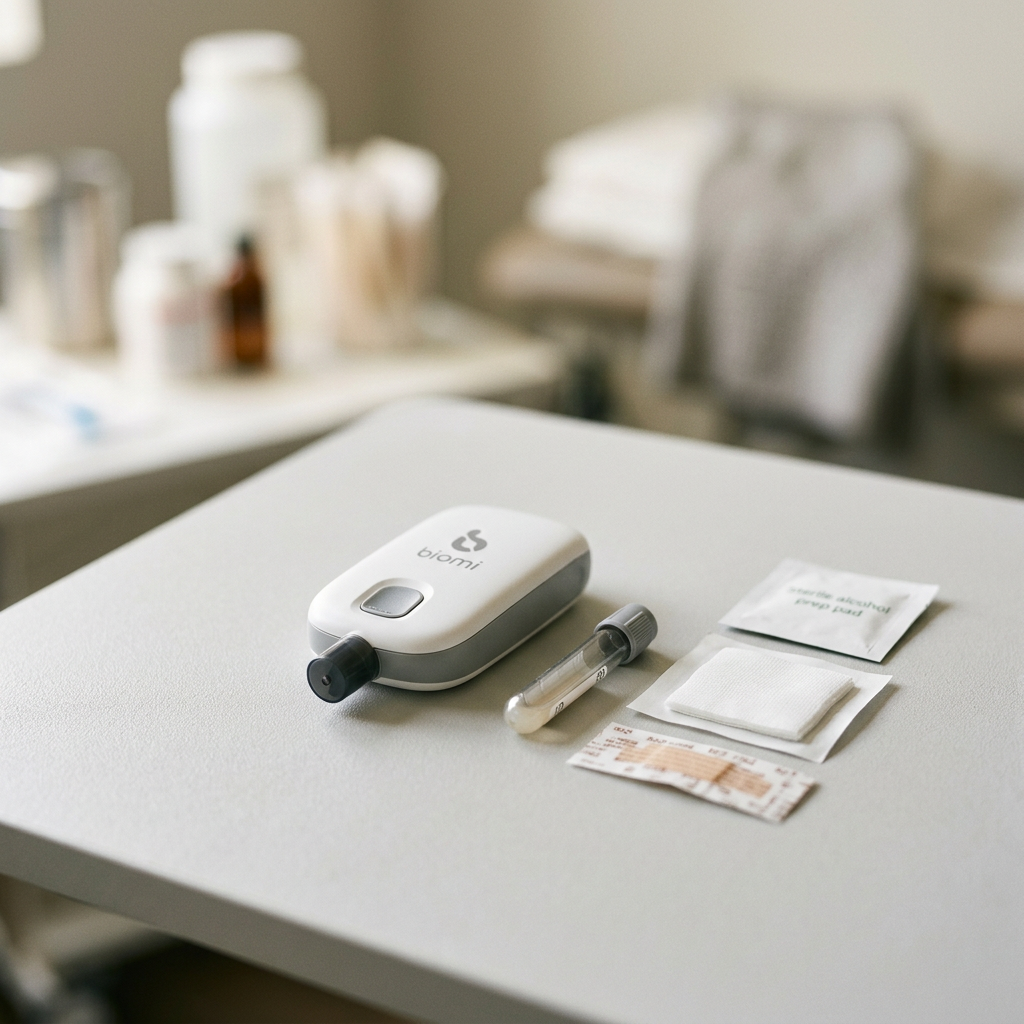
Hormonal markers, including testosterone, estradiol, DHEA-S, and cortisol, paint a picture of how your endocrine system is managing stress, recovery, and aging. For professionals dealing with high cognitive loads and irregular sleep, these markers often reveal the earliest signs of burnout and accelerated aging. Platforms like Biomi include these panels in their comprehensive testing tiers, making it practical to track cardiovascular, thyroid, and hormonal health together rather than piecemeal through separate clinic visits.
Why Longitudinal Tracking Changes Everything
A single blood test is a snapshot. Longitudinal health tracking transforms that snapshot into a trend line, and trends are where the real insight lives. A fasting glucose reading of 5.4 mmol/L might look perfectly normal in isolation, but if it has risen steadily from 4.8 over three years, you are looking at a trajectory toward prediabetes. Without consistent data points, that trend is invisible to both you and your doctor.
This is where at-home blood collection in Canada is proving transformative. By removing the friction of booking clinic appointments, waiting for requisitions, and fitting lab visits into a packed schedule, at-home testing makes it realistic to collect data quarterly or biannually. You build a personal health database that grows more valuable with every test. When results are physician-reviewed and displayed on a dashboard that tracks changes over time, patterns become obvious, and early course corrections become possible. The ability to compare testing plans and select the depth of analysis that matches your goals means this approach scales with your health ambitions.
Conclusion
The longevity conversation in Canada is moving out of specialized clinics and into the homes of health-conscious professionals who refuse to wait for problems to surface. Tracking the right biomarkers consistently, from cardiovascular and thyroid panels to hormonal and inflammatory markers, gives you the data to make informed decisions about nutrition, exercise, sleep, and stress management. At-home testing platforms have removed the logistical barriers that once made this level of insight exclusive to biohackers and executive health programs. The most important step is the first one: establishing your baseline and committing to a rhythm of health optimization that compounds over time.
Start tracking your longevity biomarkers today with Biomi and take control of how you age.
Frequently Asked Questions (FAQs)
What are longevity biomarkers?
Longevity biomarkers are measurable indicators in your blood, such as inflammatory markers, metabolic panels, and hormonal levels, that reveal how your body is aging internally and help predict your risk of age-related diseases.
How does at-home blood collection work in Canada?
A testing kit is shipped to your home, where you collect a blood sample following simple instructions, then send it to a certified Canadian laboratory for analysis, with results delivered through a secure online dashboard.
What is biological age, and how is it measured?
Biological age is a measure of how well your body is functioning compared to population averages, calculated by analyzing a combination of blood biomarkers related to inflammation, metabolism, organ function, and hormonal balance.
How often should Canadians get biomarker testing?
Testing every three to six months provides enough data points to identify meaningful trends without over-testing, though the ideal frequency depends on your health goals and whether you are actively making lifestyle changes.
How does biomarker testing compare to an annual physical?
An annual physical typically covers a limited set of basic markers, while comprehensive biomarker testing evaluates fifty to sixty-five or more indicators that reveal subclinical risks a standard checkup is not designed to detect.
About the author

Health & Wellness Editorial Team
Related articles
- Biological Age Blood Test: What It Measures and Why It Matters
Curious about your biological age blood test results? Explore key biomarkers, what they reveal, and how to start optimizing your longevity today.
- At-Home Blood Draw for Health Testing in Calgary: How It Works
Discover how at-home blood draw testing works in Calgary, from booking to physician-reviewed results. Book your mobile blood collection today.
- What Is Biomi? Biomarker Testing and Biological Age Explained
Discover what Biomi is and how biomarker tracking reveals your biological age vs chronological age. Start your health journey today.
- Home Blood Draw: What to Expect Before Your Appointment
Booking a home blood test? Learn exactly what to expect before your appointment, from prep tips to physician-reviewed results with Biomi.
- What Is Longevity Testing? How It Works and What to Expect
Curious about longevity testing? Learn how this biomarker blood test works, what to expect, and how it reveals your biological age. Start today.
Read article: Biological Age Blood Test: What It Measures and Why It MattersRead article: At-Home Blood Draw for Health Testing in Calgary: How It WorksRead article: What Is Biomi? Biomarker Testing and Biological Age ExplainedRead article: Home Blood Draw: What to Expect Before Your AppointmentRead article: What Is Longevity Testing? How It Works and What to Expect