English
At-Home Blood Draw: What to Expect Step by Step
Introduction
The idea of collecting a blood sample at home can feel unfamiliar, especially for anyone whose only experience with blood tests involves a clinic waiting room and a phlebotomist. But at-home blood collection has become a practical, accessible option for Canadians who want to monitor their health on their own terms. Convenient blood testing at home eliminates scheduling headaches and long commutes, replacing them with a straightforward kit that works in any clean, comfortable space. The process is simpler than most people expect, and understanding each step before starting makes the experience even smoother.
Preparing for Your At-Home Blood Draw
Preparation is the foundation of a successful home blood test in Canada. A few simple steps taken the night before and morning of collection can make a noticeable difference in both comfort and sample quality.
What Comes in the Kit
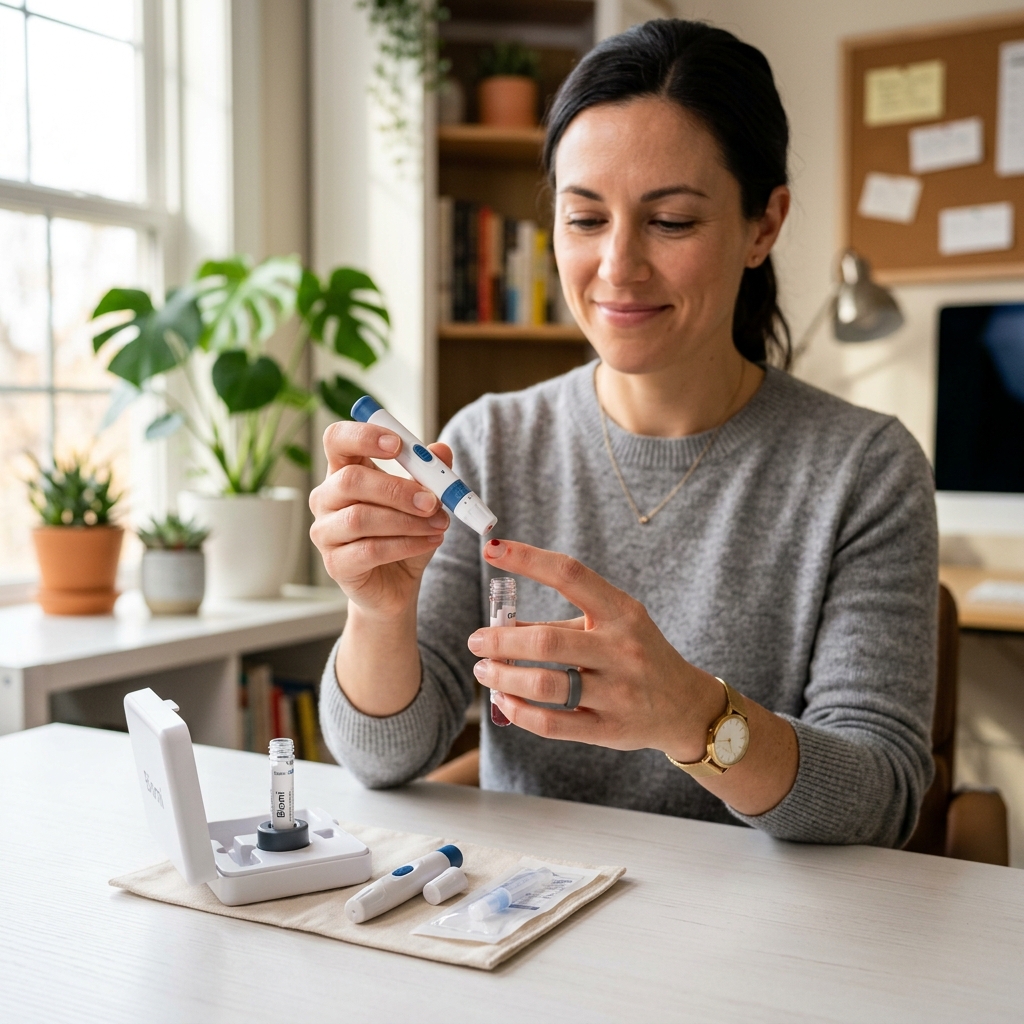
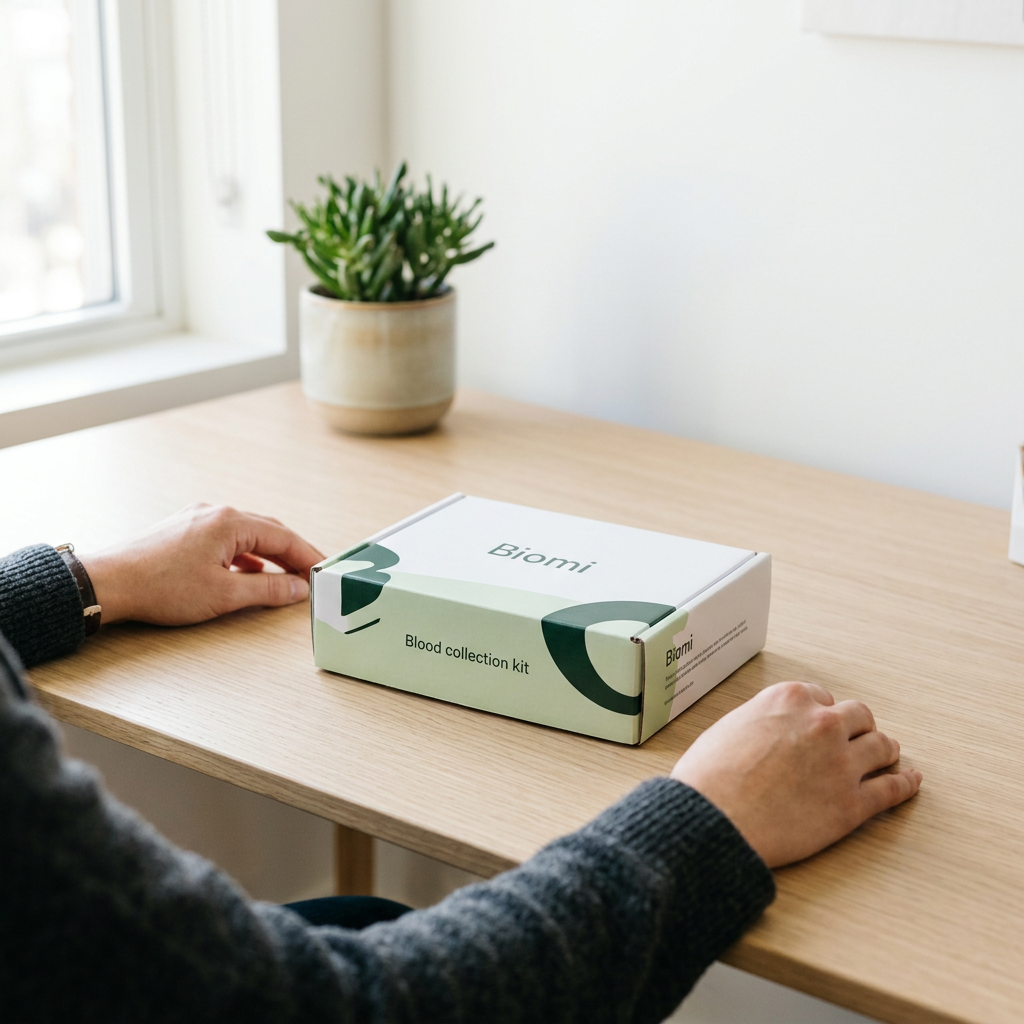
When an at-home blood test kit arrives, everything needed is inside a single compact package. Most kits are designed for capillary blood sampling, which uses a small fingerstick device rather than a traditional needle and vein draw. Here is what a typical kit includes:
Lancets: Single-use, spring-loaded devices that create a tiny prick on the fingertip for sample collection
Collection tube or card: A micro-container or dried blood spot card designed to hold the exact volume of blood needed for analysis
Alcohol wipes and gauze: Sterile prep supplies to clean the finger before the prick and stop any minor bleeding afterward
Prepaid return envelope: A pre-addressed, postage-paid mailer for shipping the sample to the lab the same day
Step-by-step instructions: A clear guide, often with a companion video link, walking through the entire process from start to finish
How to Get Ready the Night Before
Most at-home blood work panels require an overnight fast of 8 to 12 hours for accurate biomarker readings, particularly for glucose and lipid markers. Drinking plenty of water during this fasting window is essential because good hydration improves blood flow to the fingertips and makes collection faster. Avoid alcohol the evening before, as it can temporarily skew liver enzyme and triglyceride levels. Set the kit out on a clean, flat surface so everything is within reach in the morning.
Planning collection for the first thing in the morning keeps the fasting window natural and allows time to ship the sample early in the day. A study on pre-analytical variables in blood collection highlights how factors like hydration, fasting duration, and timing directly influence sample integrity, reinforcing why these small preparation steps matter.
Performing the Collection and Getting Your Results
Once preparation is complete, the actual at-home blood collection takes about ten minutes from start to sealed envelope. Knowing what each moment feels like removes the guesswork and helps produce a clean, usable sample on the first attempt.
The Step-by-Step Collection Process
Start by washing your hands with warm water for at least 30 seconds. Warm water is not just about cleanliness; it increases circulation to the fingertips, which helps blood flow freely after the prick. Dry hands thoroughly, then use the included alcohol wipe to clean the side of the ring or middle finger. The side of the fingertip has fewer nerve endings than the pad, so the sensation is noticeably milder.
Press the lancet firmly against the cleaned finger and activate it. The result is a brief, sharp pinch that lasts less than a second. Gently massage the hand from palm toward fingertip using a milking motion to encourage steady droplets. Allow the blood to drip directly into the collection tube or onto each circle of the dried blood spot card without smearing. Research published by the National Institutes of Health confirms that properly collected capillary samples produce results comparable to venous draws for many common biomarkers. Once the required volume is filled, apply the gauze and seal the sample inside the prepaid mailer.
Shipping and Turnaround Time
Drop the sealed package at the nearest mailbox or postal outlet as soon as possible after collection, ideally within the same morning. Samples collected with modern stabilizing agents remain viable during standard transit times across Canada, whether shipped from Toronto, Ontario, or smaller communities in other provinces. Most providers process the sample within a few business days of receiving it at the lab. A notification typically arrives by email or through a secure dashboard when blood biomarker results are ready to review.

Understanding Your Results and What Comes Next
Receiving results is where the real value of an at-home health screening begins. Numbers on a page only matter when paired with context about what they mean and what actions to consider based on what they reveal.
Reading Physician-Reviewed Results
Reputable at-home testing services route results through a licensed physician who reviews the data before it reaches the user. This physician review is what separates a lab-grade health test from a consumer curiosity product. Results will typically include reference ranges for each health biomarker tested, along with flags for any values that fall outside the normal range.
The focus should be on trends rather than isolated numbers. A single slightly elevated cholesterol reading is less informative than tracking that same marker over three or four tests across a year. Platforms like Biomi translate raw data into actionable health scores and personalized guidance, making it easier to understand what the numbers actually mean for daily decisions around sleep, nutrition, and recovery. If any result raises a concern, the reviewing physician can recommend follow-up steps, including an in-person visit if necessary.
Accuracy Compared to Traditional Lab Visits
One of the most common hesitations around at-home blood testing is whether the results are truly reliable. For the majority of standard biomarkers, including metabolic panels, thyroid markers, and key hormonal indicators, at-home fingerstick collection methods have been validated against traditional venous draws. Health Canada provides guidelines on medical test kits for home use that outline the standards these products must meet. Labs that process at-home samples use the same analytical equipment and quality controls as clinical facilities, so the primary variable is collection technique, which is exactly why following the kit instructions carefully matters so much.
Deciding If At-Home Testing Is Right for You
At-home blood draws work especially well for people who want to track health proactively rather than reactively. For a working professional in Toronto, Ontario, or anywhere else in Canada who finds it difficult to carve out time for a clinic visit during business hours, home collection removes that friction entirely. It is also a strong option for anyone building a preventive health testing routine that involves repeat testing every few months, since consistency becomes much easier when testing happens from home.
There are situations where a traditional lab visit remains the better choice. Tests that require a large volume of blood, specialized handling, or immediate centrifugation are still best performed in a clinical setting. For most standard panels, though, the convenience and accuracy of a well-designed at-home blood test kit make it a practical alternative. The key is choosing a provider that uses certified labs, includes physician oversight, and offers clear guidance on how to interpret the data.
Biomi's testing tiers, ranging from a core health snapshot to a comprehensive 65-plus biomarker panel, are built specifically for Canadians who want to order blood tests online without sacrificing the rigor of a clinical experience. Each plan includes physician-reviewed results and longitudinal tracking so users can see how markers change over time.
Conclusion
An at-home blood draw is a straightforward process: prepare the night before, collect a small fingerstick sample in the morning, mail it off, and receive physician-reviewed results within days. The accuracy of modern capillary collection methods means quality is not sacrificed for convenience. By understanding what to expect at each stage, anyone can approach a first at-home blood test with confidence and build a proactive health monitoring routine that fits a busy schedule rather than disrupting it.
Ready to take the first step? Explore Biomi's at-home testing plans at biomi.ca and start tracking health on your own terms.
Frequently Asked Questions (FAQs)
How does at-home blood testing work?
A kit arrives in the mail containing a lancet, collection tube or card, and prepaid return envelope, and after collecting a small fingerstick sample following the included instructions, the sample is shipped to a certified lab for analysis and physician review.
How accurate are at-home blood tests?
At-home fingerstick samples processed by certified laboratories produce results comparable to traditional venous draws for most standard biomarkers, including metabolic, thyroid, and hormonal panels.
What should I expect from at-home blood collection?
Expect a brief fingertip prick lasting less than a second, followed by about five to ten minutes of gently collecting blood drops into a tube or onto a collection card.
Are at-home blood tests covered by insurance in Canada?
Most private insurance plans in Canada do not currently cover at-home blood test kits, though some employer wellness programs may reimburse the cost as a preventive health benefit.
What are the pros and cons of at-home blood test kits?
The main advantages are convenience, privacy, and flexible scheduling, while the trade-offs include a more limited test menu compared to full venous draws and the need to follow collection instructions precisely for accurate results.
About the author

Health & Wellness Editorial Team
Related articles
- Biological Age Blood Test: What It Measures and Why It Matters
Curious about your biological age blood test results? Explore key biomarkers, what they reveal, and how to start optimizing your longevity today.
- At-Home Blood Draw for Health Testing in Calgary: How It Works
Discover how at-home blood draw testing works in Calgary, from booking to physician-reviewed results. Book your mobile blood collection today.
- What Is Biomi? Biomarker Testing and Biological Age Explained
Discover what Biomi is and how biomarker tracking reveals your biological age vs chronological age. Start your health journey today.
- Home Blood Draw: What to Expect Before Your Appointment
Booking a home blood test? Learn exactly what to expect before your appointment, from prep tips to physician-reviewed results with Biomi.
- What Is Longevity Testing? How It Works and What to Expect
Curious about longevity testing? Learn how this biomarker blood test works, what to expect, and how it reveals your biological age. Start today.
Read article: Biological Age Blood Test: What It Measures and Why It MattersRead article: At-Home Blood Draw for Health Testing in Calgary: How It WorksRead article: What Is Biomi? Biomarker Testing and Biological Age ExplainedRead article: Home Blood Draw: What to Expect Before Your AppointmentRead article: What Is Longevity Testing? How It Works and What to Expect