English
Biological Age Blood Test: What It Measures and How Accurate It Is
Quick Answer
A biological age blood test measures biomarkers across metabolic, cardiovascular, inflammatory, and hormonal systems to estimate how well your body is functioning compared to your chronological age. When physician-reviewed and built on validated clinical markers, these tests are considered a scientifically credible way to assess aging, though results should be interpreted as trend indicators rather than absolute verdicts.
Introduction
Your driver's license shows one number, but your cells may be operating on an entirely different timeline. A biological age test uses blood biomarkers to estimate how efficiently your organs, metabolism, and immune system are working relative to the years you have lived. For health-conscious professionals in 2026, this data has become a serious decision-making tool, informing everything from nutrition strategy to when to escalate care. The science behind it draws on decades of clinical research linking specific lab values to morbidity and mortality risk. What remains less understood is how these tests actually calculate a single age number, and how much trust that number deserves.
Key Takeaways:
A biological age blood test analyzes clinical biomarkers like glucose, cholesterol, inflammation, and kidney function to estimate cellular aging.
Blood-based testing is grounded in decades of peer-reviewed clinical research, while epigenetic clocks remain a newer and less standardized alternative.
Accuracy improves significantly when results are physician-reviewed and tracked longitudinally rather than treated as a one-time score.
What a Biological Age Blood Test Actually Measures
A biological age test does not measure aging directly. Instead, it quantifies dozens of physiological signals in your blood and runs them through a validated algorithm that compares your values to reference populations, producing an estimate of how your body is functioning relative to your calendar age. The strength of this approach lies in using markers that clinical medicine already trusts to predict long-term health outcomes.
The Core Biomarker Categories
Most credible longevity blood test panels cover several overlapping systems, each contributing a piece of the aging puzzle. Understanding what each category tells you helps demystify why the final score is more than a single lab value. The following categories form the foundation of a comprehensive metabolic blood panel used in a biological age test designed for adults.
Metabolic markers: Fasting glucose, HbA1c, and insulin reflect how efficiently your body regulates energy and sugar.
Cardiovascular markers: LDL, HDL, triglycerides, and apolipoprotein B indicate vascular health and cardiac risk.
Inflammatory markers: High-sensitivity CRP and albumin capture chronic low-grade inflammation, a hallmark of accelerated aging.
Kidney and liver function: Creatinine, eGFR, ALT, and AST show how well your filtration and detoxification systems perform.
Hormonal and hematologic markers: Thyroid hormones, testosterone, cortisol, and complete blood counts round out a hormonal health profile biomarker panel.
How These Biomarkers Become a Single Number
The calculation engine behind a biological age score is where the science gets interesting. Algorithms weight each biomarker according to peer-reviewed evidence about its association with disease and mortality, then compare your composite value to age-stratified population data. Published research has demonstrated that standard laboratory blood test parameters track biological aging independently of chronological age across large cohorts. This is what separates rigorous biomarker health analysis from wellness gimmickry: every input has an evidence trail linking it to real health outcomes.

How Accurate Are These Tests, Really?
Accuracy is the question every prospective user asks, and the honest answer requires distinguishing between analytical accuracy (does the lab measure the biomarker correctly?) and interpretive accuracy (does the algorithm translate those biomarkers into a meaningful age?). Both matter, and both vary significantly across providers.
Blood-Based Testing vs Epigenetic Age Testing
The two dominant approaches to measuring biological age operate on very different scientific foundations, and readers curious about alternatives often want a clear side-by-side view. Blood biomarker panels rely on decades of established clinical medicine, while epigenetic clocks measure DNA methylation patterns using newer computational models. The table below breaks down the practical differences relevant to anyone weighing options.
Feature | Blood Biomarker Test | Epigenetic Age Test |
|---|---|---|
What it measures | Clinical markers across organ systems | DNA methylation patterns |
Scientific maturity | Decades of peer-reviewed clinical use | Emerging, roughly 15 years of research |
Actionability | Directly linked to lifestyle interventions | Less clear intervention pathways |
Physician relevance | Uses markers doctors already act on | Requires specialist interpretation |
Test-to-test consistency | High when standardized | Variable across providers |
For most people, blood-based testing offers the more grounded starting point because it uses biomarkers that already inform routine medical decisions. Epigenetic testing companies compared side by side show wider methodology variation, which affects how confidently results can be interpreted across visits. A deeper breakdown of epigenetic vs blood biomarker testing can help you weigh which method fits your goals.
What Determines Whether a Result Is Trustworthy
Not all biological age tests deliver the same reliability, and the differences come down to three factors: the quality of the lab performing the assays, the breadth of biomarkers included, and whether a licensed physician reviews the results. A validated machine learning model trained on high-quality clinical data will outperform a narrow panel that measures only a handful of markers. Physician-reviewed blood test results add a crucial interpretive layer, catching errors, contextualizing outliers, and translating scores into meaningful next steps. Services like Biomi's at-home blood test in Canada combine an accredited lab process with clinician oversight, which is the configuration research consistently associates with the most credible outputs.

Conclusion
A biological age blood test is one of the most practical windows into how your body is actually aging, translating dozens of clinical signals into a single, comparable score. The science is strongest when tests draw on validated biomarkers, use physician oversight, and are repeated over time to reveal trends rather than isolated snapshots. Blood-based testing currently offers a more clinically grounded path than epigenetic alternatives, though both fields continue to evolve. For readers ready to move from curiosity to data, the key is choosing a provider whose methodology is transparent and whose results connect to real actions. Understanding the chronological vs biological age calculation is where meaningful preventive care begins.
Curious what your biomarkers say about your internal age? Explore Biomi's physician-reviewed testing to see how at-home blood collection turns into a longitudinal view of your health.
Frequently Asked Questions (FAQs)
What is my biological age?
Your biological age is an estimate of how well your body is functioning internally based on biomarker patterns, which can differ meaningfully from the number of years you have lived.
How does a biological age blood test work?
It measures a panel of clinical biomarkers, then applies a validated algorithm that compares your values to reference populations to produce a composite age score.
Is biological age different from chronological age?
Yes, chronological age counts calendar years while biological age reflects the physiological state of your cells and organs, which can trend younger or older based on health and lifestyle.
What biomarkers are included in a longevity test?
Comprehensive panels typically cover metabolic, cardiovascular, inflammatory, kidney, liver, hematologic, and hormonal markers, drawing on essential health biomarkers validated in clinical research.
Is an at-home blood collection kit accurate?
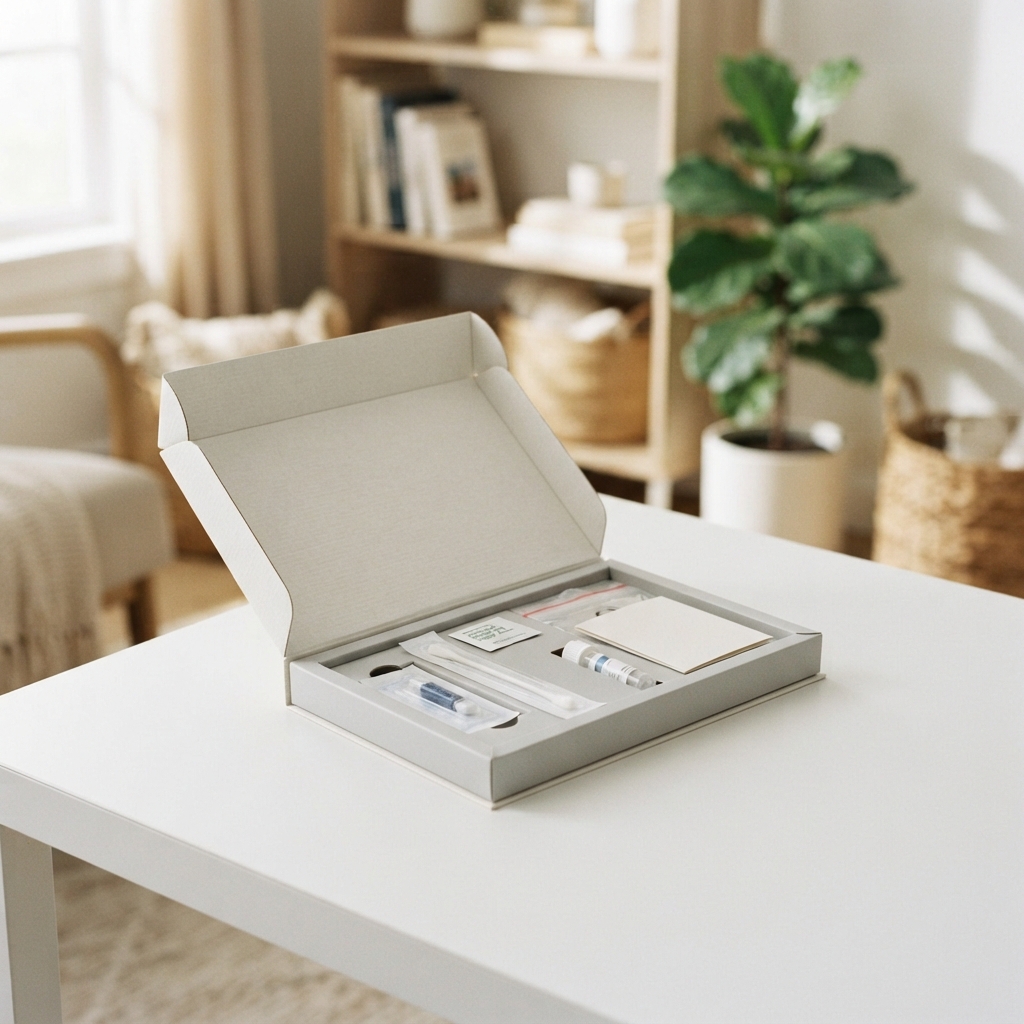
When processed by an accredited clinical laboratory using standardized protocols, at-home collection produces results comparable to a traditional in-clinic blood draw.
How often should I get a biological age blood test?
Most experts recommend testing every 6 to 12 months so you can track how lifestyle changes, interventions, or medical treatments influence your biomarker trends over time.
Can blood tests determine my health speed?
Repeated biological age testing reveals whether your internal systems are aging faster, slower, or in line with your chronological age, giving a directional read on your health trajectory.
About the Author
Dr. Emily Carter is a Senior Health Content Strategist specializing in preventive health, biomarker analysis, and longevity science. Her writing translates complex clinical research into practical guidance for readers who want authoritative, data-driven answers about their health.
About the author

Senior Health Content Strategist
Specializes in preventive health, biomarker analysis, and longevity science.
Related articles
- Biological Age Blood Test: What It Measures and Why It Matters
Curious about your biological age blood test results? Explore key biomarkers, what they reveal, and how to start optimizing your longevity today.
- At-Home Blood Draw for Health Testing in Calgary: How It Works
Discover how at-home blood draw testing works in Calgary, from booking to physician-reviewed results. Book your mobile blood collection today.
- What Is Biomi? Biomarker Testing and Biological Age Explained
Discover what Biomi is and how biomarker tracking reveals your biological age vs chronological age. Start your health journey today.
- Home Blood Draw: What to Expect Before Your Appointment
Booking a home blood test? Learn exactly what to expect before your appointment, from prep tips to physician-reviewed results with Biomi.
- What Is Longevity Testing? How It Works and What to Expect
Curious about longevity testing? Learn how this biomarker blood test works, what to expect, and how it reveals your biological age. Start today.
Read article: Biological Age Blood Test: What It Measures and Why It MattersRead article: At-Home Blood Draw for Health Testing in Calgary: How It WorksRead article: What Is Biomi? Biomarker Testing and Biological Age ExplainedRead article: Home Blood Draw: What to Expect Before Your AppointmentRead article: What Is Longevity Testing? How It Works and What to Expect