English
How Employer Wellness Programs Boost ROI in Canada

Introduction
Canadian employers lose billions annually to absenteeism, presenteeism, and chronic disease-related disability claims, yet most corporate benefits packages remain stubbornly reactive. A well-designed employer wellness program shifts the equation by catching health risks before they escalate into costly claims and lost productivity. HR leaders and executive teams are no longer asking whether preventive health investment matters; they are asking how to quantify the return. The gap between traditional benefits and biomarker-driven corporate wellness solutions in Canada shows why many legacy programs don't improve employee health ROI.
The Business Case for Preventive Employer Wellness
The financial toll of poor employee health extends far beyond insurance premiums. According to research compiled by Mercer, absenteeism alone costs Canadian employers an estimated $16.6 billion per year. That figure does not account for the harder-to-measure drag of presenteeism, where employees show up but underperform due to unaddressed health issues. A preventive health program for employers intercepts these costs at the source by identifying metabolic, cardiovascular, and hormonal risks long before they trigger sick days or disability claims.
Where Traditional Benefits Fall Short
Most conventional benefits packages cover prescriptions, dental, and vision, which are important but fundamentally reactive. They reimburse treatment after a diagnosis rather than preventing the diagnosis in the first place. Comparing an employer wellness program to traditional benefits highlights a structural flaw: legacy plans have no mechanism for measuring whether employee health is actually improving over time.
Reactive coverage: Traditional plans pay for medications and procedures only after symptoms appear, missing the window for low-cost prevention.
No baseline data: Without an employee health risk assessment at the start, employers have no way to identify who is at risk or measure aggregate improvement.
Low engagement: Generic perks like gym subsidies see utilisation rates below 20%, delivering negligible population-level impact.
Administrative complexity: Managing multiple vendor relationships for separate wellness add-ons creates overhead that discourages adoption.
What the Data Says About ROI
A growing body of Canadian evidence supports the financial case for proactive workplace health investment. A Benefits Canada report found that comprehensive workplace wellness programs yield returns between $1.50 and $3.80 for every dollar invested, depending on program design and measurement rigour. These returns come from reduced short-term disability claims, fewer emergency health events, and measurably lower turnover among participating employees. The key variable is not whether you offer wellness, but whether your program generates trackable health outcomes tied to preventive health testing.
Biomarker Tracking as the Foundation of Measurable Wellness
The difference between a wellness program that looks good on paper and one that delivers measurable employee health ROI often comes down to a single factor: objective data. Biomarker tracking gives employers a clinical-grade view into workforce health trends, replacing anecdotal feedback with hard numbers that finance teams and boards can act on.
How Corporate Health Screening Drives Outcomes
A corporate health screening built around biomarker panels captures metrics like cholesterol ratios, HbA1c (a diabetes risk indicator), thyroid function, cortisol, and inflammatory markers. These are not abstract data points. Elevated HbA1c in a 40-year-old employee signals pre-diabetes risk that, left unaddressed, can escalate to a chronic condition costing employers tens of thousands per year in treatment, absence, and accommodation.
When employees receive personalised results and actionable guidance, they make targeted changes to diet, sleep, and activity. Repeated testing at six or twelve-month intervals then confirms whether those changes are working. This creates a feedback loop that decodes health data into a story employers and employees can follow together. The result is a workforce that does not just feel supported, but is demonstrably healthier year over year.
Why At-Home Blood Tests Change Participation Rates
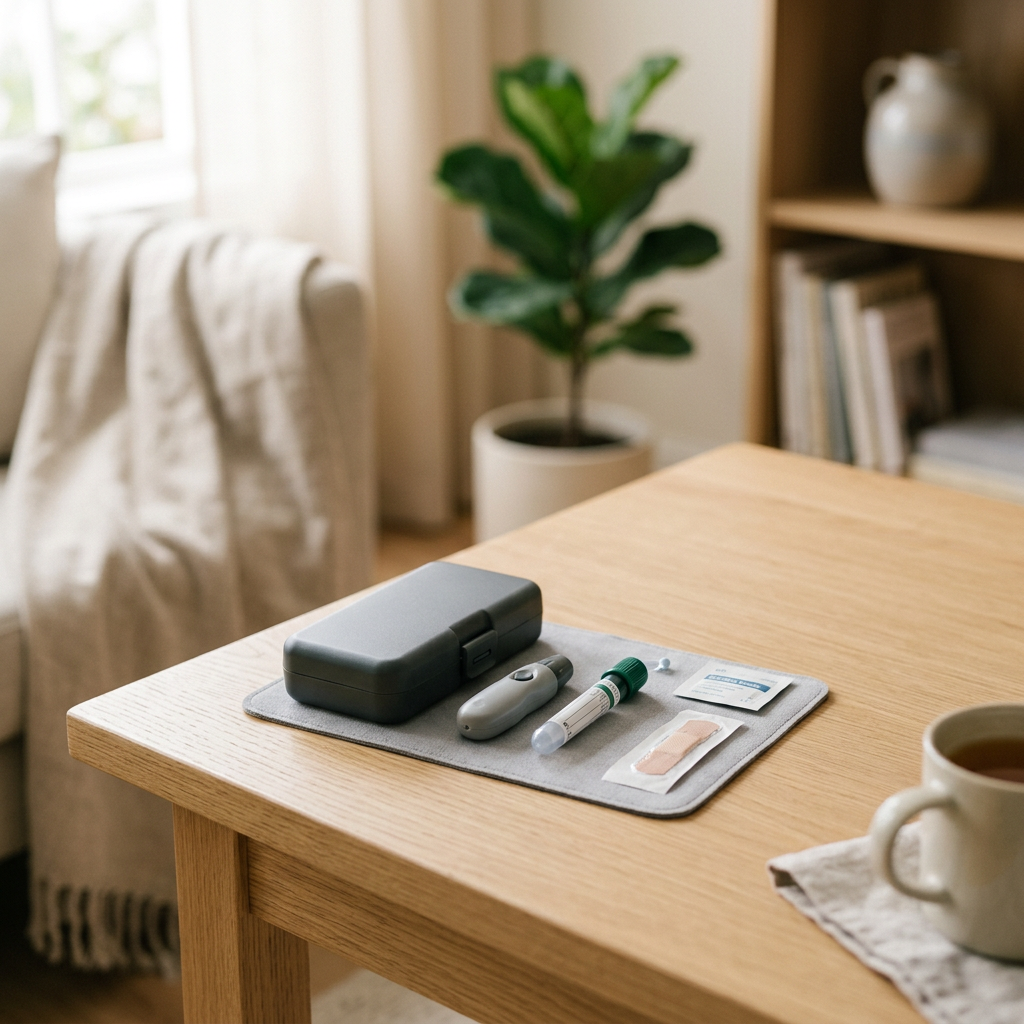
One of the biggest barriers to corporate wellness adoption is inconvenience. Sending employees to off-site clinics during business hours creates scheduling friction, lost productivity, and low completion rates. At-home blood collection kits eliminate this friction. Employees collect a sample on their own schedule, mail it to a certified lab, and receive physician-reviewed results through a secure dashboard. Biomi's turnkey wellness benefit administration model handles enrollment, kit distribution, and results delivery, removing the administrative burden that typically falls on HR teams. For distributed and hybrid workforces across Canada, this approach makes corporate health screening accessible regardless of geography. A workplace wellness toolkit from the CCSC confirms that removing logistical barriers is one of the strongest predictors of program participation.

Conclusion
Employer wellness programs that rely on objective biomarker data outperform traditional benefits by catching health risks early, reducing costly claims, and giving leadership teams a workplace health data dashboard they can actually use. The ROI is not theoretical; it shows up in lower absenteeism, reduced disability spend, and stronger retention among employees who feel genuinely invested in. For Canadian HR leaders ready to move beyond reactive perks, the path forward is a preventive, data-driven approach that treats employee health as a measurable business metric.
Explore how Biomi helps Canadian employers launch turnkey biomarker wellness programs with measurable health outcomes.
Frequently Asked Questions (FAQs)
What is an employer wellness program?
An employer wellness program is a company-sponsored initiative designed to improve employee health through preventive services such as health screenings, fitness resources, mental health support, and data-driven health tracking.
How does corporate wellness reduce healthcare costs?
Corporate wellness reduces healthcare costs by identifying and addressing health risks before they develop into chronic conditions that require expensive treatment, extended absences, or disability claims.
How to measure employee wellness program success?
Success is measured by tracking longitudinal biomarker improvements, absenteeism rates, short-term disability claims, employee engagement scores, and overall program participation rates against baseline data.
What biomarkers should employers track?
Employers should prioritise biomarkers, including HbA1c, cholesterol panels, thyroid hormones, cortisol, inflammatory markers like CRP, and vitamin D, as these correlate directly with productivity-affecting conditions.
How to choose an employer wellness platform?
Choose a platform that offers physician-reviewed results, at-home collection for accessibility, a secure data dashboard for employer-level reporting, flexible funding models, and minimal administrative overhead for your HR team.
About the author

Health & Wellness Editorial Team
Related articles
- Biological Age Blood Test: What It Measures and Why It Matters
Curious about your biological age blood test results? Explore key biomarkers, what they reveal, and how to start optimizing your longevity today.
- At-Home Blood Draw for Health Testing in Calgary: How It Works
Discover how at-home blood draw testing works in Calgary, from booking to physician-reviewed results. Book your mobile blood collection today.
- What Is Biomi? Biomarker Testing and Biological Age Explained
Discover what Biomi is and how biomarker tracking reveals your biological age vs chronological age. Start your health journey today.
- Home Blood Draw: What to Expect Before Your Appointment
Booking a home blood test? Learn exactly what to expect before your appointment, from prep tips to physician-reviewed results with Biomi.
- What Is Longevity Testing? How It Works and What to Expect
Curious about longevity testing? Learn how this biomarker blood test works, what to expect, and how it reveals your biological age. Start today.
Read article: Biological Age Blood Test: What It Measures and Why It MattersRead article: At-Home Blood Draw for Health Testing in Calgary: How It WorksRead article: What Is Biomi? Biomarker Testing and Biological Age ExplainedRead article: Home Blood Draw: What to Expect Before Your AppointmentRead article: What Is Longevity Testing? How It Works and What to Expect