English
Professional Phlebotomist Visit: Ensuring Accurate Results
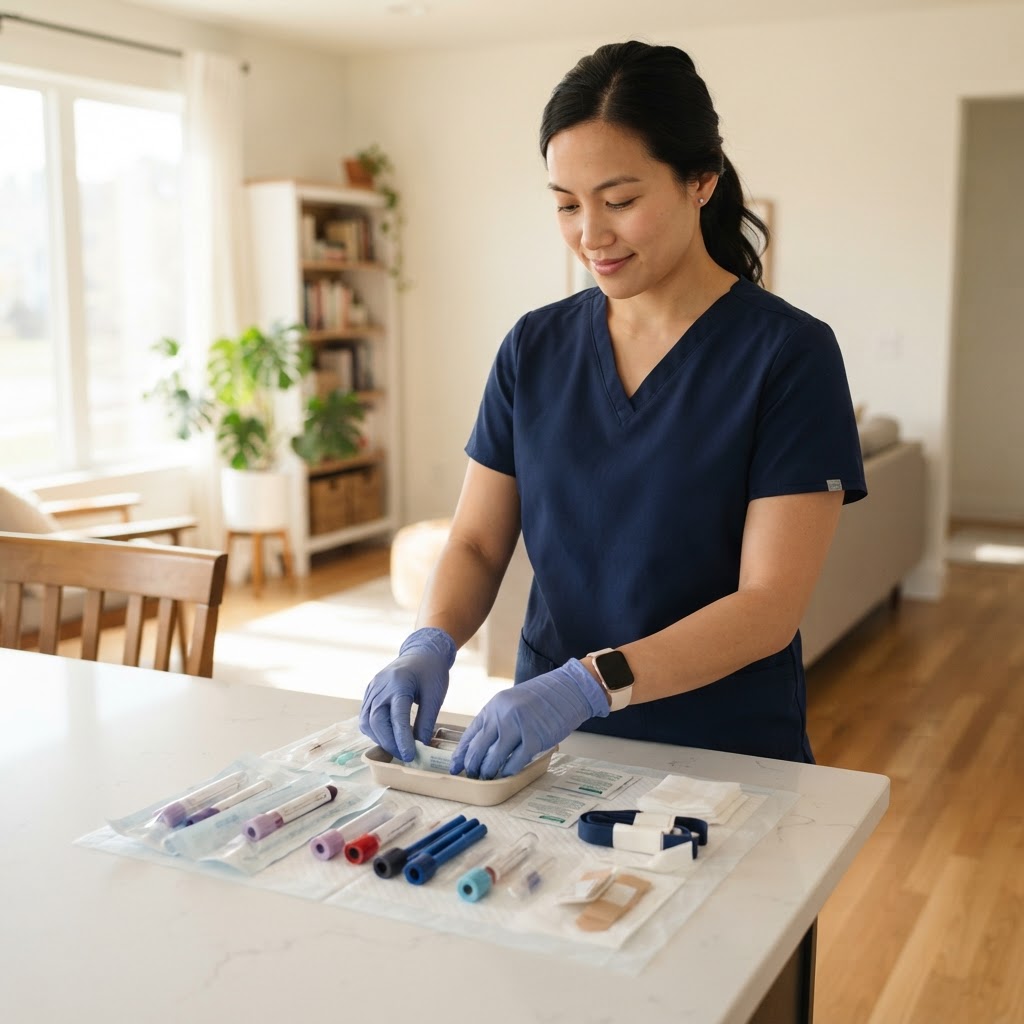
Introduction
A professional phlebotomist visit is the single most important factor determining whether your at-home blood results are accurate enough to guide real health decisions. A certified phlebotomist is trained specifically in venipuncture, tube handling, and sample preservation, which directly protects the integrity of every biomarker measured. Most patients assume any medical professional draws blood the same way, but subtle errors in technique or timing can skew results well beyond acceptable clinical thresholds. As at-home diagnostics grow across Canada in 2026, understanding what separates a specialist from a general mobile nurse has become essential to trusting your numbers.
Key Takeaways:
Certified phlebotomists specialize in techniques that prevent hemolysis and sample degradation, protecting result accuracy.
Proper preparation, including fasting and hydration, is as critical to accurate results as the draw itself.
Verifying credentials and understanding the collection process helps you choose a reliable mobile provider.
Why Professional Phlebotomy Determines Result Accuracy
The quality of a blood sample is decided in the minutes it takes to collect it, not in the lab. A skilled phlebotomist controls variables like tourniquet time, needle gauge, tube order, and mixing technique, each of which can alter measured values if mishandled. When these details are managed correctly, the sample arrives at the lab in a state that reflects your true internal chemistry rather than collection artifacts.
The Technical Skills That Protect Your Sample
Professional phlebotomy relies on precise, repeatable technique that minimizes preanalytical error, the most common source of inaccurate laboratory results. A certified blood technician applies a specific set of practices during every draw:
Tourniquet control: Releasing pressure within one minute prevents hemoconcentration that falsely elevates certain markers.
Correct tube order: Drawing tubes in the proper sequence avoids additive cross-contamination between samples.
Gentle mixing: Inverting tubes the right number of times prevents both clotting and hemolysis.
Vein selection: Choosing an appropriate vein reduces trauma and the risk of a compromised sample.
Proper labeling: Immediate, accurate identification protects specimen integrity from collection through reporting.
How Technique Affects Clinical Sample Integrity
Even a technically successful draw can produce unusable results if the sample is damaged during handling, which is why standardized collection procedures exist for trained personnel. Hemolysis, the rupturing of red blood cells, is one of the leading causes of rejected samples and can distort potassium, LDH, and several metabolic readings. This is where the distinction in mobile blood collection matters, because a specialist treats sample preservation as the core objective rather than a secondary task. Understanding the at-home blood draw process helps patients appreciate why expertise, not just convenience, drives reliable data.

Phlebotomist vs Nurse and How to Prepare
Choosing the right professional and preparing correctly are the two levers patients directly control when pursuing medical sample accuracy at home. While both nurses and phlebotomists can legally draw blood, their training focus differs in ways that affect specimen quality for biomarker analysis.
Comparing a Phlebotomist vs Nurse Draw
The core difference lies in specialization: a phlebotomist performs venipuncture and sample handling as their primary discipline, while a nurse's training spans broad patient care with blood collection as one duty among many. For routine clinical draws, either can suffice, but for precise biomarker panels used in preventive tracking, the specialist's focus on preanalytical variables offers a measurable advantage. Research consistently links blood collection quality to personnel training and technique.
The table below compares the two options across factors that matter for at-home diagnostic accuracy.
Factor | Certified Phlebotomist | General Mobile Nurse |
|---|---|---|
Primary training focus | Venipuncture and sample handling | Broad patient care |
Draw volume experience | High daily repetition | Variable |
Preanalytical error management | Core competency | Secondary skill |
Best suited for | Precise biomarker panels | General care plus collection |
For data-driven preventive testing where a single skewed value can misdirect decisions, a certified specialist is the safer default. This is why leading mobile sample collection services like Biomi prioritize trained phlebotomists for their at-home appointments.
How to Prepare for Your Visit
Preparation directly influences result validity, because factors like hydration, fasting, and recent activity shift biomarker concentrations before the needle ever touches your arm. Most panels require an 8 to 12 hour fast, though water is encouraged since well-hydrated veins make for a cleaner draw and easier collection. Following local collection guidelines and avoiding intense exercise the morning of your appointment further protects accuracy. Reviewing what to expect from a blood draw ahead of time reduces anxiety and helps the process run smoothly, which supports better at-home bloodwork accuracy.
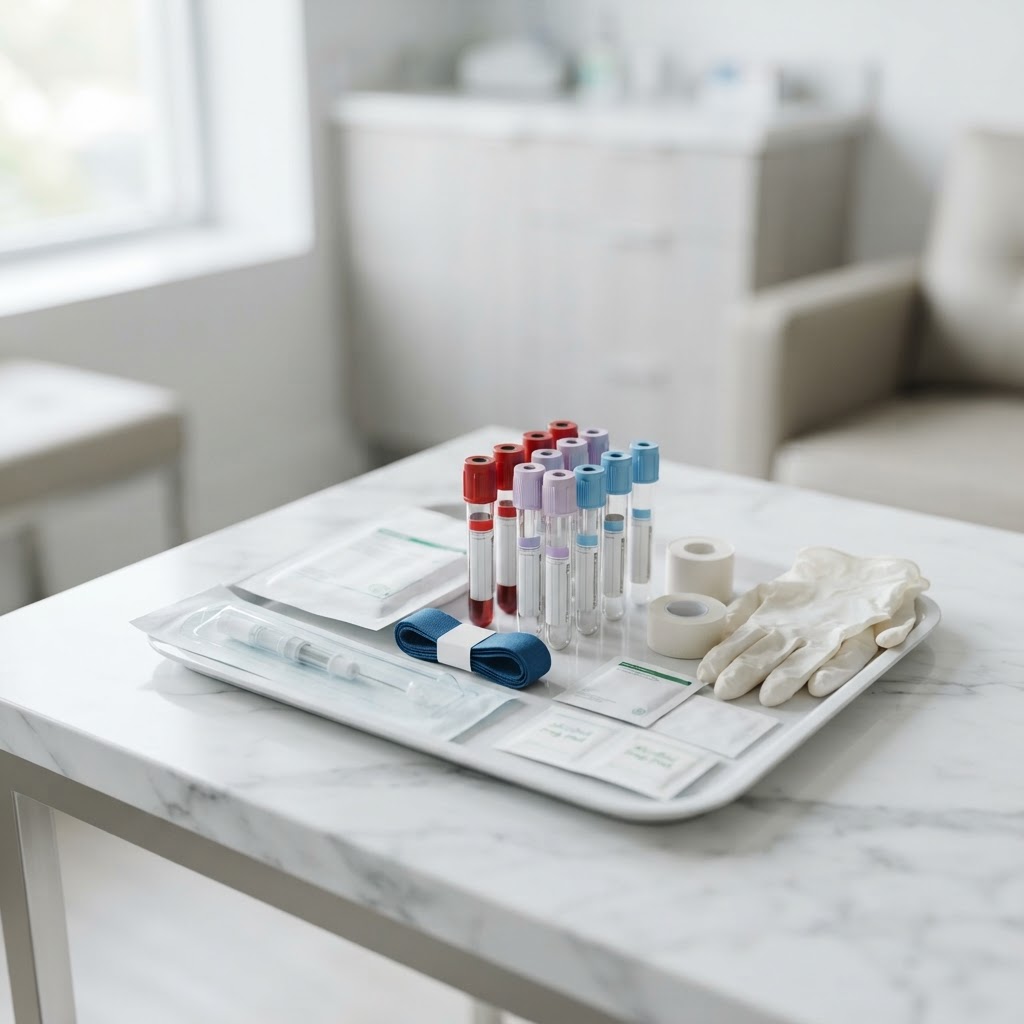
Conclusion
A professional phlebotomist visit turns convenient at-home testing into clinically trustworthy data by protecting sample integrity from the first tube to lab delivery. The distinction between a specialist and a general practitioner is not academic; it directly shapes whether your biomarker results reflect reality. Prepare properly, verify your provider's credentials, and treat the collection itself as a critical step in your health journey. For those tracking longevity markers over time, pairing expert collection with tools for longitudinal health tracking and data-driven health optimization transforms a single draw into a foundation for proactive care. Accurate data begins with the person holding the needle.
Ready to make every blood draw count toward smarter health decisions? Explore preventive testing with Biomi to see how expert collection supports precise biomarker tracking.
Frequently Asked Questions (FAQs)
What happens during a phlebotomist visit?
During a phlebotomist visit, a certified professional verifies your identity, confirms your preparation, selects a suitable vein, draws blood into properly ordered tubes, and labels the samples for transport to an accredited lab.
Is a phlebotomist visit safe for home testing?
Yes, a phlebotomist visit is safe for home testing because certified technicians follow the same sterile, single-use equipment and infection-control protocols used in clinical settings.
How do I verify my phlebotomist's credentials?
You can verify credentials by asking your mobile provider for the technician's certification and confirming registration with the relevant provincial or national phlebotomy body.
What is the difference between a phlebotomist vs nurse draw?
A phlebotomist specializes in venipuncture and sample handling as their primary discipline, while a nurse performs blood draws as one part of broader patient care duties.
Are phlebotomist visits available in Toronto and Vancouver?
Yes, mobile phlebotomy is available in major Canadian cities including Toronto and Vancouver, where providers schedule certified technicians for at-home collection.
How long does a home phlebotomist visit take?
A typical home phlebotomist visit takes about 15 to 20 minutes, including identity verification, the draw itself, and proper sample labeling.
About the author
Senior Health Content Strategist
Specializes in preventive health, biomarker analysis, and longevity science.
Related articles
- Biological Age Blood Test: What It Measures and Why It Matters
Curious about your biological age blood test results? Explore key biomarkers, what they reveal, and how to start optimizing your longevity today.
- At-Home Blood Draw for Health Testing in Calgary: How It Works
Discover how at-home blood draw testing works in Calgary, from booking to physician-reviewed results. Book your mobile blood collection today.
- What Is Biomi? Biomarker Testing and Biological Age Explained
Discover what Biomi is and how biomarker tracking reveals your biological age vs chronological age. Start your health journey today.
- Home Blood Draw: What to Expect Before Your Appointment
Booking a home blood test? Learn exactly what to expect before your appointment, from prep tips to physician-reviewed results with Biomi.
- What Is Longevity Testing? How It Works and What to Expect
Curious about longevity testing? Learn how this biomarker blood test works, what to expect, and how it reveals your biological age. Start today.
Read article: Biological Age Blood Test: What It Measures and Why It MattersRead article: At-Home Blood Draw for Health Testing in Calgary: How It WorksRead article: What Is Biomi? Biomarker Testing and Biological Age ExplainedRead article: Home Blood Draw: What to Expect Before Your AppointmentRead article: What Is Longevity Testing? How It Works and What to Expect