English
At-Home Bloodwork: Is It Accurate and Worth It?
Par Dr. Emily Carter

Introduction
At-home bloodwork has become a practical option for Canadians who want lab-grade health data without waiting weeks for a clinic appointment. The core question most people ask before ordering a kit is simple: can a blood sample collected at home really produce results as accurate as one drawn in a lab? The answer, backed by peer-reviewed research and regulatory oversight, is yes, provided the service uses accredited laboratories and proper collection protocols. Where accuracy concerns once kept people hesitant, the science has caught up, and the convenience factor now tips the scales for anyone serious about preventive health.
Key Takeaway: Home blood testing processed through accredited Canadian laboratories delivers clinically comparable results to traditional clinic draws, making it a reliable and time-efficient choice for proactive biomarker tracking.
How At-Home Blood Testing Actually Works
Understanding the mechanics behind an at-home blood test removes most of the mystery around its reliability. The process is designed to mirror clinical standards from the moment the sample leaves your body to the moment results appear on your dashboard.
The Collection and Processing Workflow
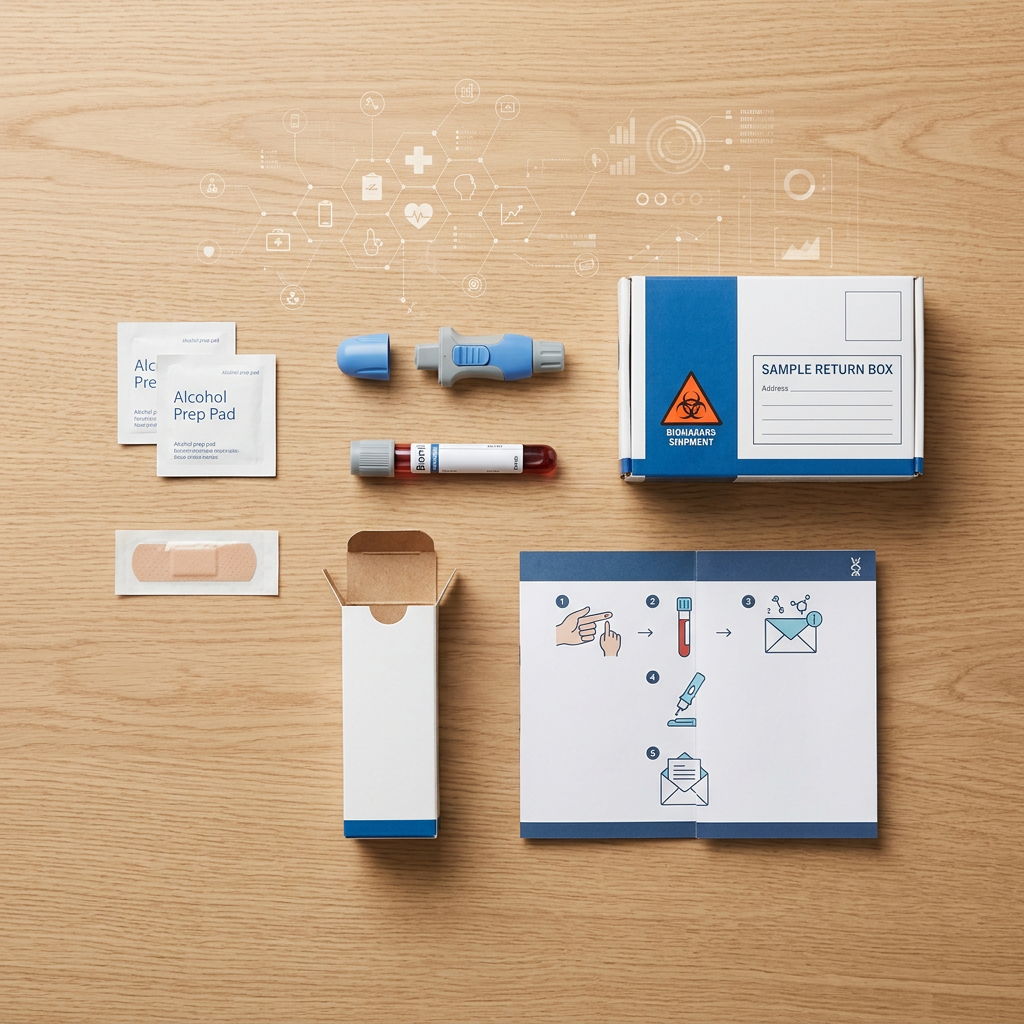
Most in-home blood testing services in Canada follow one of two collection methods: a finger-prick micro-sample device or a full venous draw performed by a mobile phlebotomist who visits your home. Here is what the typical workflow involves:
Kit delivery: A pre-labeled collection kit arrives at your door with clear instructions, tubes, and a prepaid return package.
Sample collection: You either complete a finger-prick yourself or have a licensed phlebotomist draw blood, following best practices for proper sample handling that align with clinical standards.
Lab transit: The sample ships via temperature-controlled packaging to a CLIA-certified or provincially accredited laboratory.
Analysis and reporting: Results are processed using the same analyzers found in hospital labs, then delivered digitally within days.
What Makes the Results Clinically Valid
The accuracy of a blood test depends far more on the laboratory analyzing it than on where the sample was collected. Accredited labs in Canada must meet strict quality assurance protocols, whether the sample originated in a walk-in clinic or a living room in Toronto. The equipment, reagents, and technician qualifications are identical. Services that use venous draws performed by certified phlebotomists eliminate the technique variability sometimes associated with self-collected finger-prick samples, producing results that are functionally indistinguishable from a traditional clinic blood draw.
Accuracy, Regulation, and How It Compares to Traditional Labs
Skepticism about at-home health screening is reasonable, but the regulatory landscape and published research tell a consistent story. When done right, home collection meets the same bar as clinic collection.
At-Home Blood Tests vs Traditional Labs: A Side-by-Side Look
The following table breaks down how the two approaches compare across the factors that matter most to someone weighing convenience against confidence.
Factor | At-Home Blood Test | Traditional Clinic Lab |
|---|---|---|
Sample collection | Mobile phlebotomist or self-collection kit | In-clinic venous draw by lab technician |
Lab processing | Accredited laboratory (same analyzers) | Accredited laboratory |
Result accuracy | Clinically comparable when venous draw is used | Clinical standard |
Wait time for appointment | Often same-week or next-day booking | Days to weeks depending on province |
Result turnaround | Typically 2 to 5 business days | 2 to 7 business days |
Biomarker range | Up to 65+ markers depending on plan | Limited to physician requisition |
Convenience | No travel, no waiting rooms | Requires travel and wait times |
The most significant difference is accessibility, not accuracy. Both methods funnel samples into the same accredited lab infrastructure. Where at-home testing gains a clear edge is in scheduling flexibility, broader biomarker panels available without a requisition, and the elimination of travel. For Canadians in cities like Calgary or Vancouver where clinic wait times can stretch into weeks, at-home blood testing in Canada removes a logistical barrier that often delays preventive care entirely.
What the Science and Regulators Say
Health Canada requires that any medical device used for blood collection, including home-use test kits, meet licensing and regulatory compliance standards before reaching consumers. This means the collection devices in reputable at-home kits have been evaluated for safety and effectiveness under the same framework applied to clinical equipment.
On the research side, peer-reviewed validation studies have examined self-collection methods and consistently found that when samples are handled correctly and processed by certified labs, the results align closely with those from conventional venous draws. The critical variable is not the location of collection but the quality controls surrounding it. Services like Biomi, which use licensed phlebotomists for venous draws and partner with accredited Canadian laboratories, eliminate the technique-related variability that can affect finger-prick-only kits.

Is At-Home Bloodwork Worth the Investment?
Accuracy is only half the equation. The real question for most people is whether the convenience and depth of information justify the cost, especially when some provincial health plans cover standard lab work through a physician.
The Preventive Health Advantage
Standard physician-ordered blood work typically covers a narrow set of markers: complete blood count, basic metabolic panel, maybe cholesterol. Preventive blood work at home through a dedicated service can test 60 or more biomarkers covering thyroid function, hormonal balance, inflammation, nutrient levels, and cardiovascular risk in a single session. This level of comprehensive biomarker analysis is what separates routine screening from genuine health optimization.
For data-driven professionals tracking metrics like sleep quality, recovery, and long-term performance, having quarterly or biannual snapshots of internal health provides something a yearly physical cannot: trend data. Longitudinal tracking reveals whether lifestyle changes are actually moving the needle on specific markers, turning bloodwork from a one-time event into an ongoing health strategy. Biomi's dashboard, for instance, translates raw biomarker data into health scores and personalized guidance, bridging the gap between receiving results and knowing what to do with them.
Who Benefits Most
At-home bloodwork delivers the highest value for people whose schedules, locations, or health goals make traditional lab visits impractical or insufficient. Busy professionals in cities like Toronto who cannot afford half a day for a walk-in lab appointment gain hours back. Individuals managing chronic conditions or optimizing athletic performance get preventive health insights far more frequently than annual physicals allow. Corporate teams benefit too: employers looking to offer meaningful longevity-focused health benefits can deploy at-home testing across distributed workforces without coordinating clinic logistics.
What to Look for When Choosing a Provider
Not all at-home blood test services are created equal. The gap between a reliable provider and a questionable one comes down to a few non-negotiable factors that directly affect result quality.
Key Selection Criteria
First, verify that the service partners with provincially accredited or CLIA-certified laboratories. This is the single most important factor for accuracy. Second, check whether the collection method uses a venous draw by a licensed phlebotomist rather than relying solely on finger-prick micro-samples. Venous draws yield more blood volume, enabling a wider panel of tests with higher analytical precision.
Third, look for physician review of results. A credible service will have licensed medical professionals review your data before it reaches you, adding a layer of clinical interpretation that raw numbers alone cannot provide. Finally, evaluate the reporting interface. A PDF of lab values is not particularly useful without context. The best at-home blood testing services in Canada pair results with actionable recommendations, trend tracking, and clear explanations of how at-home bloodwork works within a secure digital dashboard.
Red Flags to Avoid
Be cautious of providers that skip physician involvement, use non-accredited labs, or make diagnostic claims without proper medical oversight. Services that cannot clearly state which laboratory processes their samples or what certifications that lab holds should be treated with skepticism. Similarly, providers offering unrealistically low prices may cut corners on collection quality or lab processing standards that directly affect your results.
Conclusion
At-home bloodwork is not a compromise on quality; it is a more convenient pathway to the same clinically valid results you would receive at a lab. The accuracy depends on the provider's lab partnerships, collection method, and regulatory compliance, not on whether you were sitting in a clinic or on your couch. For Canadians who value proactive health monitoring and want deeper insight than a standard annual physical provides, home blood testing offers a practical, science-backed solution worth serious consideration.
Frequently Asked Questions (FAQs)
How do at-home blood tests work?
A collection kit or mobile phlebotomist is sent to your home, the blood sample is drawn and shipped to an accredited laboratory, and results are delivered digitally within a few business days.
Is at-home blood testing accurate?
Yes, when samples are collected properly and processed by accredited labs, at-home blood tests produce results clinically comparable to those from traditional clinic draws.
What biomarkers can be tested at home?
Depending on the service plan, at-home panels can cover 60 or more biomarkers including cholesterol, thyroid hormones, vitamin levels, inflammation markers, and metabolic indicators.
Are home blood tests reliable?
Home blood tests are reliable when the provider uses licensed phlebotomists for venous draws and partners with certified laboratories that follow the same quality controls as hospital labs.
How long do at-home blood test results take?
Most providers deliver results within 2 to 5 business days after the laboratory receives the sample, which is comparable to or faster than many clinic timelines.
What are the benefits of preventive blood testing?
Preventive testing detects early warning signs in biomarkers before symptoms appear, enabling lifestyle or medical interventions that can reduce the risk of chronic disease.
Can I get at-home bloodwork done in Toronto or Vancouver?
Yes, several services operate across major Canadian cities including Toronto, Vancouver, and Calgary, offering same-week appointments with mobile phlebotomists who come to your home or office.
À propos de l'auteur

Senior Health Content Strategist
Specializes in preventive health, biomarker analysis, and longevity science.
Articles connexes
- Biological Age Blood Test: What It Measures and Why It Matters
Curious about your biological age blood test results? Explore key biomarkers, what they reveal, and how to start optimizing your longevity today.
- At-Home Blood Draw for Health Testing in Calgary: How It Works
Discover how at-home blood draw testing works in Calgary, from booking to physician-reviewed results. Book your mobile blood collection today.
- What Is Biomi? Biomarker Testing and Biological Age Explained
Discover what Biomi is and how biomarker tracking reveals your biological age vs chronological age. Start your health journey today.
- Home Blood Draw: What to Expect Before Your Appointment
Booking a home blood test? Learn exactly what to expect before your appointment, from prep tips to physician-reviewed results with Biomi.
- What Is Longevity Testing? How It Works and What to Expect
Curious about longevity testing? Learn how this biomarker blood test works, what to expect, and how it reveals your biological age. Start today.
Lire l'article: Biological Age Blood Test: What It Measures and Why It MattersLire l'article: At-Home Blood Draw for Health Testing in Calgary: How It WorksLire l'article: What Is Biomi? Biomarker Testing and Biological Age ExplainedLire l'article: Home Blood Draw: What to Expect Before Your AppointmentLire l'article: What Is Longevity Testing? How It Works and What to Expect