English
How to Order a Blood Test Online in Canada
Par Dr. Ethan Brooks
Introduction
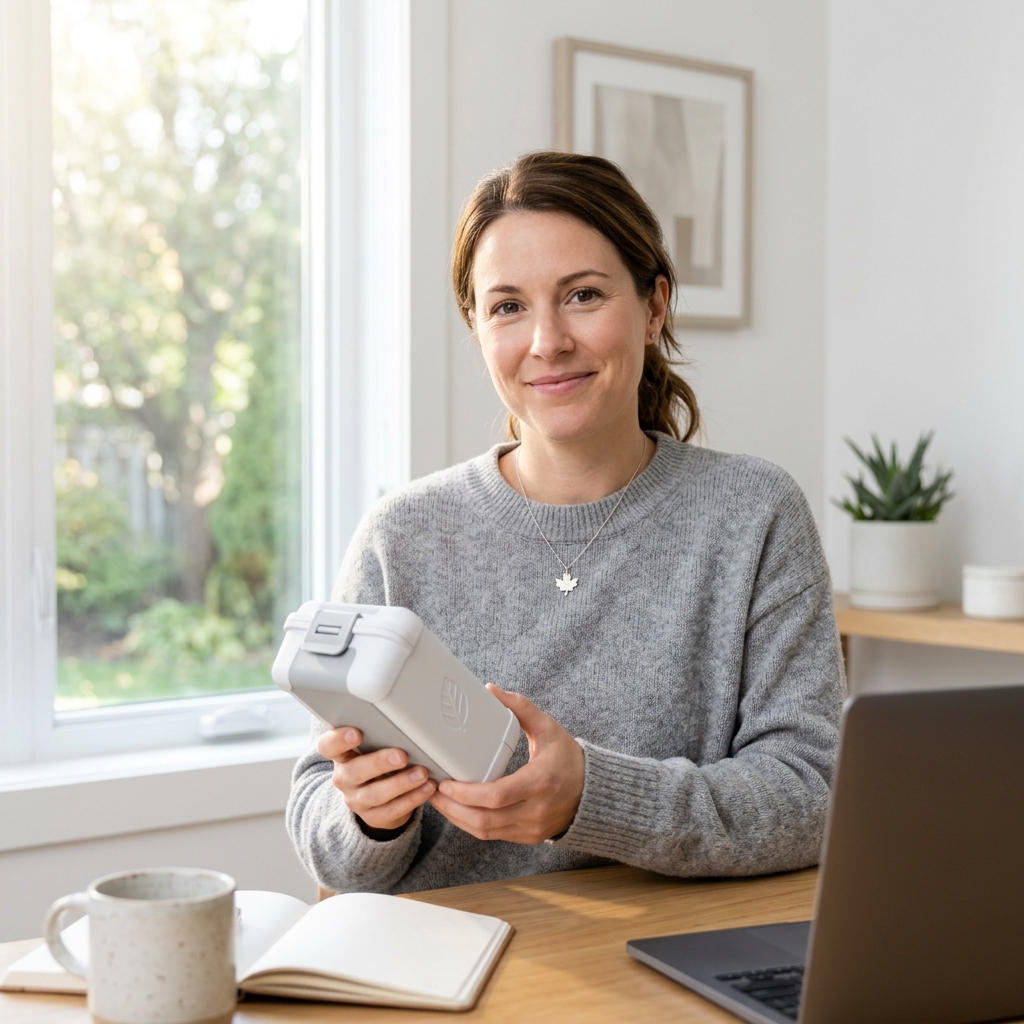
Ordering a blood test online in Canada is now a straightforward process that bypasses the traditional route of booking a doctor's appointment, waiting for a referral, and scheduling a separate lab visit. Digital health testing platforms have made it possible for Canadians to select specific panels, complete collection at home or at a nearby clinic, and receive physician-reviewed results through a secure dashboard. The shift toward preventive health testing in Canada reflects a broader trend: more people want access to their own health data without waiting for symptoms to appear. Yet many Canadians still assume a physician referral is the only path to blood work, which creates a gap between intent and action.
Key Takeaway: You can order a full panel blood test in Canada online without a doctor's referral by choosing a reputable digital health platform, completing sample collection at home or at a partner lab, and receiving detailed, physician-reviewed results within days.
Understanding the Online Blood Test Process
The process of ordering blood work online differs from the traditional model in several important ways, but the clinical quality of the results remains equivalent. Knowing what to expect at each stage removes the uncertainty that keeps many people from getting tested proactively.
Step-by-Step: From Order to Results
Most digital health testing services in Canada follow a similar workflow. Once you understand these steps, you can complete the entire process in under a week with minimal disruption to your schedule.
Choose your panel: Select from options ranging from a basic metabolic snapshot to a comprehensive panel covering 60 or more biomarkers, including thyroid, hormonal, and cardiovascular markers.
Place your order online: Create an account, enter your health details, and pay for your selected test, with no referral or prescription required.
Collect your sample: Depending on the service, you either receive an at-home blood draw kit or book a visit at a partner lab location near you.
Ship or submit your sample: At-home kits include prepaid return packaging, while lab visits process your sample on-site.
Review your results: Results are typically available within 3 to 7 business days through a secure online portal, often accompanied by physician commentary and reference ranges.
What to Look for in a Service Provider
Not all online blood testing services are created equal, and choosing the right one matters for both accuracy and the usefulness of your results. The best services use medical-grade blood testing processed through accredited Canadian laboratories, which means your results meet the same standards as any hospital lab order. Look for platforms that provide comprehensive biomarker guides explaining what each marker measures and why it matters. Transparency around lab accreditation, physician oversight, and data privacy should be non-negotiable. Services that offer longitudinal tracking, where you can compare results over time, add significantly more value than one-off testing.
Comparing Online and Traditional Blood Testing in Canada
Understanding how the online model stacks up against the traditional referral-based system helps clarify why so many Canadians are making the switch. Both approaches produce clinically valid results, but they differ substantially in accessibility, speed, and scope.
Online Testing vs. Traditional Lab Visits
The comparison below highlights the practical differences between ordering an at-home blood test in Canada through a digital platform and going through the conventional route of a physician referral followed by a visit to a diagnostic lab.
Factor | Online Blood Test | Traditional Lab Visit |
|---|---|---|
Referral Required | No | Yes, from a physician |
Wait Time to Test | Kit arrives in 2-5 days | 1-4 weeks for appointment |
Collection Location | Home or partner lab | Diagnostic lab only |
Biomarker Selection | User-selected panels (up to 65+) | Physician-determined |
Results Delivery | Secure online dashboard | Phone call or follow-up visit |
Cost Coverage | Out-of-pocket (some HSA eligible) | Often covered by provincial plan |
Longitudinal Tracking | Built-in on most platforms | Manual record-keeping |
The most significant advantage of the online model is control. You decide which biomarkers to test, when to test them, and how often. Traditional blood work through a family doctor typically covers only the markers that the physician deems necessary based on symptoms or age-based guidelines. For anyone focused on preventive health testing, the ability to monitor markers like testosterone, cortisol, vitamin D, and inflammatory indicators on your own schedule makes a measurable difference. Several established platforms in Canada have offered private blood test ordering for years, demonstrating that the infrastructure for direct-to-consumer lab work is well proven.
How At-Home Blood Collection Actually Works
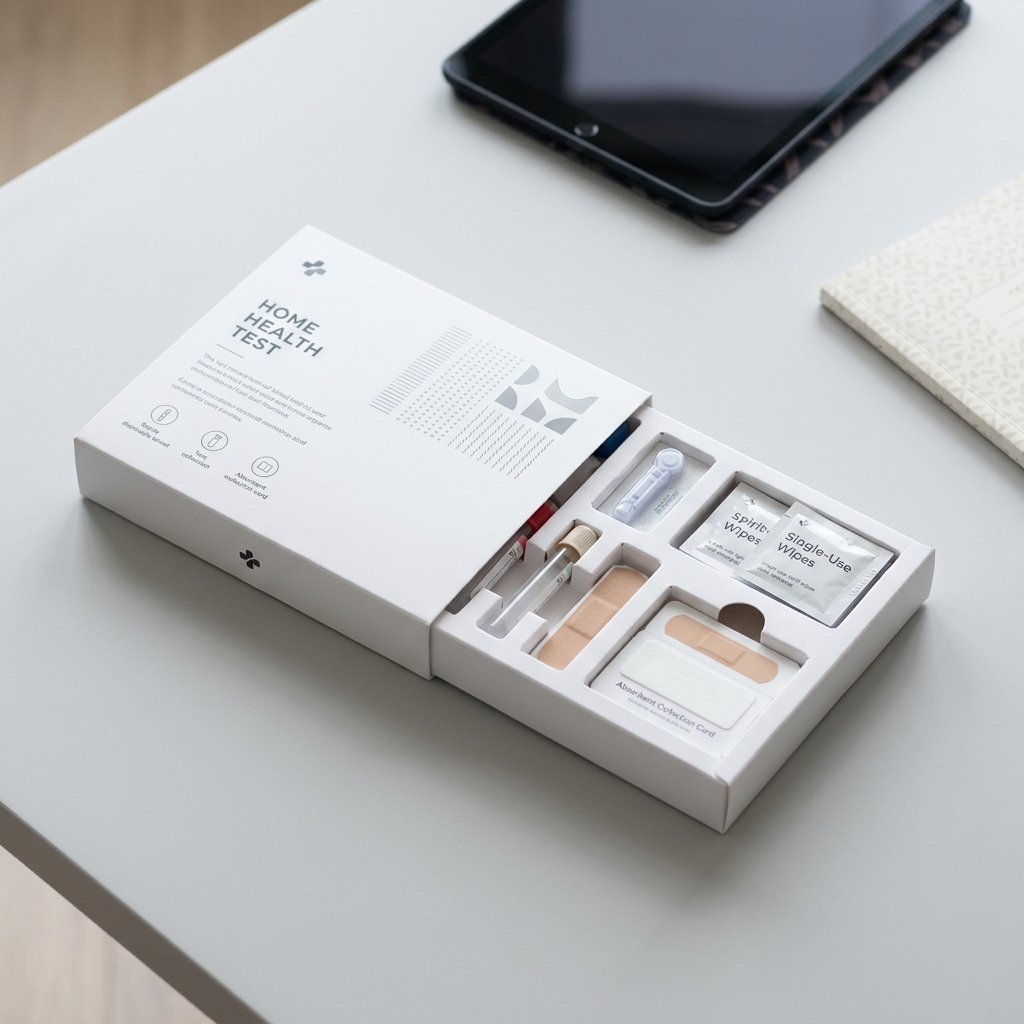
The at-home collection process is the part that raises the most questions, and for good reason. Most people have only experienced blood draws in clinical settings with a phlebotomist. At-home kits used by reputable Canadian services typically involve either a finger-prick microsample device or a small venous draw facilitated by a mobile phlebotomist who comes to your location. Finger-prick kits are designed for simplicity: you follow the included instructions, fill a small collection tube, and ship the sample back in temperature-controlled packaging. Research on at-home blood collection best practices confirms that properly handled microsamples produce results comparable to those from traditional venous draws for most common biomarkers.
For those who prefer a full venous draw, some services in Ontario and other provinces dispatch licensed phlebotomists to your home. What to expect during an at-home blood draw is similar to a clinic visit: the professional arrives with all necessary equipment, performs the draw in about 10 minutes, and handles sample transport to the lab. This option is ideal for panels requiring larger sample volumes, such as those testing 60 or more biomarkers simultaneously. Biomi offers at-home collection as part of its service tiers, pairing the convenience of home testing with the depth of a comprehensive panel.

Making Sense of Your Results
Getting your blood drawn is only half the equation. The real value of online blood testing lies in how you interpret and act on the data. A well-designed platform does not just hand you a spreadsheet of numbers; it contextualizes every marker against clinically validated reference ranges and, in the best cases, against your own historical data.
Understanding Biomarkers and Reference Ranges
A full blood panel typically includes markers across several categories: metabolic health (glucose, HbA1c, insulin), lipid profile (LDL, HDL, triglycerides), thyroid function (TSH, free T3, free T4), hormonal balance (testosterone, estrogen, cortisol), inflammation (CRP, homocysteine), and nutrient status (vitamin D, B12, iron, ferritin). Each marker has a reference range, but "normal" does not always mean "optimal." A fasting glucose of 5.6 mmol/L, for example, falls within the standard range but sits at the upper boundary where early metabolic dysfunction may already be developing.
This is where physician-reviewed results add genuine value. Platforms that include commentary from licensed medical professionals help you understand not just where your numbers fall, but what patterns emerge when markers are read together. Learning to read blood biomarker results in context, rather than in isolation, is the foundation of proactive health management. Biomi takes this a step further by generating a health score and comparing biological age against chronological age, giving users a single, intuitive metric alongside the detailed breakdown.
How Often Should You Test?
For most health-conscious adults, testing every 6 to 12 months provides enough data to identify trends without creating unnecessary expense. If you are actively managing a condition, optimizing athletic performance, or tracking the effects of a dietary or supplementation change, quarterly testing gives you tighter feedback loops. The key is consistency: testing at roughly the same time of year, under similar conditions (fasted, same time of day), produces reliable reference points for comparison. Seasonal variation in markers like vitamin D and cortisol is well documented, so understanding your own baseline across seasons is more informative than any single snapshot.
Conclusion
Ordering a blood test online in Canada is a practical, clinically sound alternative to the traditional referral pathway that puts health screening directly in your hands. The process, from selecting a panel to reviewing physician-interpreted results, can be completed entirely from home in under a week. Whether you are monitoring long-term trends, investigating specific concerns, or simply establishing a baseline, at-home blood tests offer a level of convenience and comprehensiveness that the conventional model rarely matches. The most important step is the first one: choosing a reputable service, placing your order, and committing to the habit of proactive health monitoring.
Frequently Asked Questions (FAQs)
How do I order a blood test online in Canada?
You select a testing panel on a digital health platform, place your order without a physician referral, receive a collection kit or book a lab appointment, and get results delivered to a secure online dashboard within days.
Can I do a blood test from home in Canada?
Yes, several Canadian services provide at-home blood collection kits or send licensed phlebotomists to your location for a full venous draw.
What is included in a full blood panel?
A comprehensive panel typically covers metabolic markers, lipid profiles, thyroid function, hormonal levels, inflammatory indicators, and nutrient status across 40 to 65 or more individual biomarkers.
How often should I get blood work done?
Most adults benefit from testing every 6 to 12 months for trend tracking, though quarterly testing is appropriate when actively managing a health condition or optimization protocol.
Is preventive blood testing covered by insurance in Canada?
Provincial health plans generally cover blood work ordered by a physician for diagnostic purposes, while elective or preventive panels ordered directly by individuals are typically out-of-pocket, though some may qualify under HSA or private insurance benefits.
What blood tests are available in Ontario?
Ontario residents can access a wide range of private panels online, including metabolic, hormonal, thyroid, cardiovascular, and nutrient-focused tests through digital health platforms and private lab networks.
Is at-home blood testing as accurate as a lab in Canada?
When samples are collected according to proper protocols and processed through accredited Canadian laboratories, at-home blood testing produces results that are clinically equivalent to those from in-person lab draws.
À propos de l'auteur

Medical Research Content Advisor
Combines medical research and functional medicine expertise to create educational content on health biomarkers, disease prevention, and longevity.
Articles connexes
- Biological Age Blood Test: What It Measures and Why It Matters
Curious about your biological age blood test results? Explore key biomarkers, what they reveal, and how to start optimizing your longevity today.
- At-Home Blood Draw for Health Testing in Calgary: How It Works
Discover how at-home blood draw testing works in Calgary, from booking to physician-reviewed results. Book your mobile blood collection today.
- What Is Biomi? Biomarker Testing and Biological Age Explained
Discover what Biomi is and how biomarker tracking reveals your biological age vs chronological age. Start your health journey today.
- Home Blood Draw: What to Expect Before Your Appointment
Booking a home blood test? Learn exactly what to expect before your appointment, from prep tips to physician-reviewed results with Biomi.
- What Is Longevity Testing? How It Works and What to Expect
Curious about longevity testing? Learn how this biomarker blood test works, what to expect, and how it reveals your biological age. Start today.
Lire l'article: Biological Age Blood Test: What It Measures and Why It MattersLire l'article: At-Home Blood Draw for Health Testing in Calgary: How It WorksLire l'article: What Is Biomi? Biomarker Testing and Biological Age ExplainedLire l'article: Home Blood Draw: What to Expect Before Your AppointmentLire l'article: What Is Longevity Testing? How It Works and What to Expect