English
How Wellness Testing Gives You a Real Health Baseline

Introduction
Feeling fine is not the same as being healthy. Many of the most consequential health conditions, from insulin resistance to thyroid dysfunction, develop silently over months or years before a single symptom appears. Wellness testing cuts through that silence by measuring what is actually happening inside the body at a molecular level. Rather than relying on a brief annual checkup, preventive health testing uses objective biomarker data to establish a clear picture of how your organs, hormones, and metabolic systems are truly performing. The gap between "I feel okay" and "my numbers confirm I'm okay" is where the most important health decisions get made.
Why a Health Baseline Changes Everything
A health baseline is a documented snapshot of your body's key biomarkers at a specific point in time. Without one, every future test result exists in a vacuum, with no context for whether a value represents improvement, decline, or stability. Establishing this reference point transforms how you and your healthcare provider interpret new data and make decisions.
The Limits of Reactive Healthcare
Standard healthcare models are designed around diagnosis and treatment. You visit a doctor when something feels wrong, receive testing based on symptoms, and get treated accordingly. The problem is that establishing a baseline rarely happens within this reactive framework, which means early-stage shifts in metabolic or cardiovascular markers often go undetected.
Symptom lag: Conditions like prediabetes, fatty liver disease, and subclinical hypothyroidism can progress for years without noticeable symptoms.
Narrow panels: Most annual physicals check only a handful of markers, missing hormonal imbalances, vitamin deficiencies, and inflammatory indicators.
Generic reference ranges: Lab results flagged as "normal" are based on population averages, not on what is optimal for your age, sex, or lifestyle.
No personal trend data: A single result tells you very little without historical comparison, making it impossible to detect gradual changes.
What a True Baseline Looks Like
A meaningful health baseline goes far beyond a basic complete blood count. It captures a broad set of biomarkers spanning metabolic function, lipid profiles, hormonal balance, thyroid activity, inflammation, liver and kidney function, and key nutrient levels like vitamin D and B12. When these markers are measured together, they produce a multi-dimensional map of internal health that reveals patterns no single test could show on its own. This is why an advanced biomarker panel covering 60 or more markers delivers fundamentally different insight than a standard annual physical.
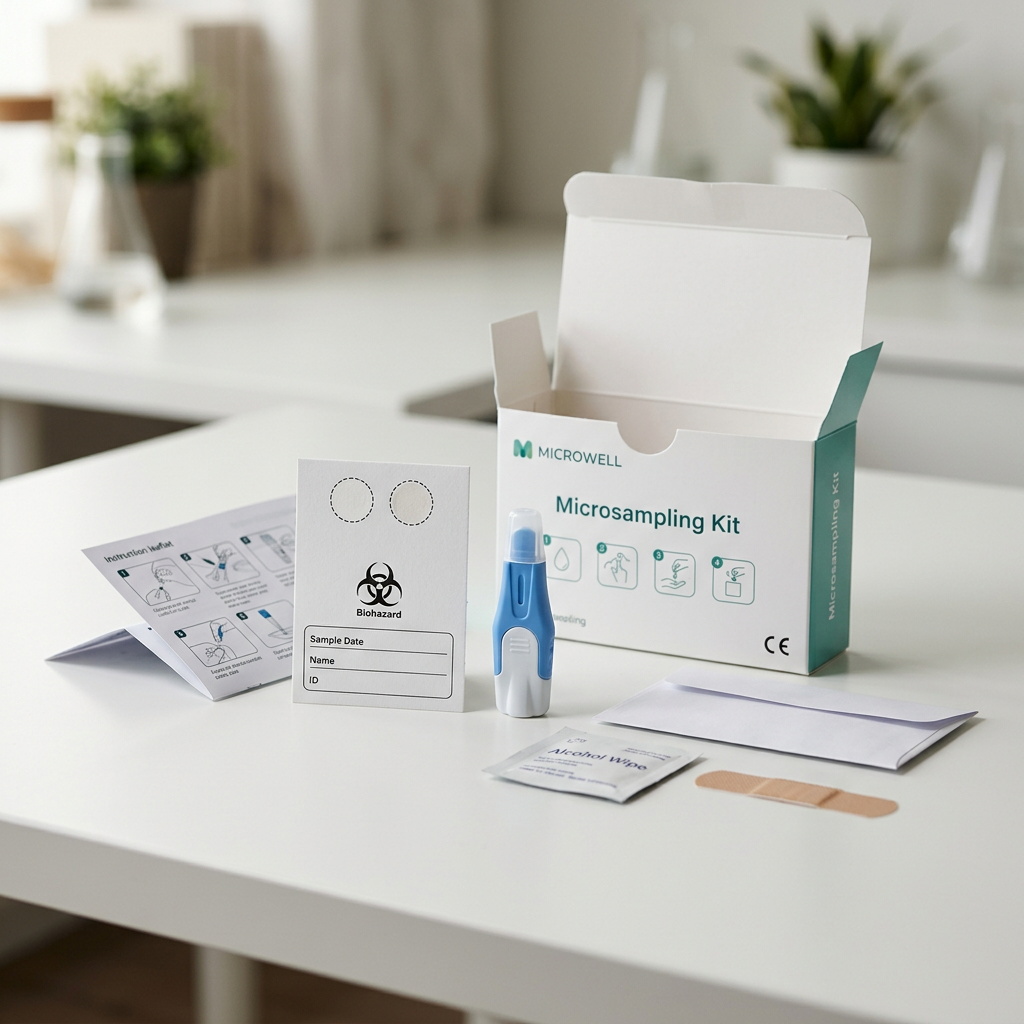
How Biomarker Testing Drives Proactive Health Decisions
Once a baseline is established, every subsequent test becomes exponentially more valuable. Longitudinal health tracking allows you to see how your body responds to dietary changes, exercise programs, sleep interventions, and supplementation over time. This is the foundation of data-driven health optimization, where decisions are guided by evidence rather than guesswork.
Tracking Trends Instead of Chasing Symptoms
Consider the difference between discovering elevated fasting glucose on a random test versus watching your fasting glucose creep upward over three consecutive tests across 18 months. The first scenario prompts a vague recommendation to "eat better." The second reveals a clear metabolic trajectory that demands specific, targeted action before a diabetes diagnosis enters the picture.
The same logic applies to cardiovascular health. A cardiovascular biomarker panel that includes ApoB, Lp(a), hs-CRP, and a full lipid breakdown offers a far more precise risk assessment than total cholesterol alone. According to research on biomarker science, measuring these specific proteins and particles allows clinicians to stratify cardiovascular risk with much greater accuracy. When tracked over time, even small directional shifts become visible, giving you the chance to intervene years before a cardiac event would otherwise occur.
Personalised Health Insights Over Population Averages
One of the most significant advantages of biomarker testing is the shift from population-based reference ranges to personalised interpretation. A testosterone level of 350 ng/dL might fall within the "normal" range on a standard lab report, but if your previous test showed 550 ng/dL, that 36% decline demands investigation. Physician-reviewed blood tests that compare your current results against your own historical data unlock a level of precision that generic checkups simply cannot deliver.
This personalised approach is especially relevant for health-conscious professionals who are already making intentional choices about nutrition, exercise, and recovery. Without detailed data, it is impossible to know whether a new supplement protocol is actually improving iron stores, whether a training program is elevating cortisol beyond healthy levels, or whether a dietary change has meaningfully improved lipid ratios. Platforms like Biomi address this by transforming complex lab data into personalised health insights and actionable scores, making it straightforward to see what is working and what needs adjustment.

Building Your Baseline: Practical Steps
Knowing that a baseline matters is one thing. Actually building one requires choosing the right test, understanding what you are measuring, and committing to a tracking cadence that produces meaningful trend data.
Choosing the Right Panel
The most common mistake people make is opting for the bare minimum. A basic metabolic panel checks electrolytes and kidney function but tells you nothing about thyroid hormones, inflammatory markers, or sex hormone levels. For a baseline that genuinely reflects your health status, look for a panel that covers at least 50 to 60 markers across metabolic, hormonal, cardiovascular, liver, kidney, and nutritional categories. The Canadian Task Force guidelines provide a useful reference point for understanding which preventive screenings are recommended at various ages, though a comprehensive biomarker panel will go well beyond those minimums.
Biomi's Peak plan, for example, covers 60 biomarkers, including heart, thyroid, and hormonal markers, alongside a biological versus chronological age comparison. This kind of breadth is what separates wellness testing from an annual physical, where a doctor may order only five to ten markers based on symptoms or age-based screening protocols.
Setting a Testing Cadence
A single test establishes a starting point. Two or more tests, spaced appropriately, create a trend line. For most adults, testing every six months strikes the right balance between gathering meaningful data and allowing enough time for interventions to produce measurable effects. Quarterly testing may make sense during periods of significant lifestyle change, such as a new training program, medication adjustment, or dietary overhaul.
What matters most is consistency. Testing at the same time of year, under similar fasting conditions, and through the same lab methodology ensures that comparisons between results are valid. Longitudinal tracking only works when variables are controlled, and a secure dashboard that stores every result in one place makes pattern recognition far easier than juggling paper reports from different clinics. For organisations, corporate wellness testing programs can build this cadence into employee benefits, making it easier for teams across Canada to participate consistently.
Conclusion
A real health baseline is not something you get from a 15-minute checkup. It requires broad biomarker coverage, physician-reviewed interpretation, and a commitment to tracking data over time. The payoff is substantial: the ability to detect problems years before symptoms appear, validate that your health choices are working, and make decisions grounded in evidence rather than assumption. Whether you are an individual pursuing health optimisation or a company looking to support employee well-being, establishing a measurable baseline is the most concrete step you can take toward genuinely proactive health.
Start building your health baseline today at Biomi and gain the clarity to take control of your well-being.
Frequently Asked Questions (FAQs)
What biomarkers should I track for optimal health?
A comprehensive panel should include markers across metabolic, cardiovascular, hormonal, thyroid, liver, kidney, and nutritional categories, with at least 50 to 60 individual biomarkers to give a thorough picture of internal health.
How often should I get wellness testing?
Most adults benefit from testing every six months to establish meaningful trend data, though quarterly testing may be appropriate during periods of significant lifestyle or medication changes.
What is the difference between wellness testing and annual physicals?
Annual physicals typically assess a narrow set of markers based on symptoms or age-based screening guidelines, while wellness testing uses broad biomarker panels to proactively detect imbalances before symptoms develop.
How can wellness testing prevent disease?
By tracking biomarkers over time, wellness testing reveals early-stage shifts in metabolic, cardiovascular, and hormonal function that allow for targeted intervention years before a condition would otherwise be diagnosed.
What does a cardiovascular biomarker panel include?
A thorough cardiovascular panel typically measures ApoB, Lp(a), hs-CRP, triglycerides, HDL, LDL, total cholesterol, and lipoprotein particle counts to provide a detailed assessment of heart disease risk.
About the author

Health & Wellness Editorial Team
Related articles
- Biological Age Blood Test: What It Measures and Why It Matters
Curious about your biological age blood test results? Explore key biomarkers, what they reveal, and how to start optimizing your longevity today.
- At-Home Blood Draw for Health Testing in Calgary: How It Works
Discover how at-home blood draw testing works in Calgary, from booking to physician-reviewed results. Book your mobile blood collection today.
- What Is Biomi? Biomarker Testing and Biological Age Explained
Discover what Biomi is and how biomarker tracking reveals your biological age vs chronological age. Start your health journey today.
- Home Blood Draw: What to Expect Before Your Appointment
Booking a home blood test? Learn exactly what to expect before your appointment, from prep tips to physician-reviewed results with Biomi.
- What Is Longevity Testing? How It Works and What to Expect
Curious about longevity testing? Learn how this biomarker blood test works, what to expect, and how it reveals your biological age. Start today.
Read article: Biological Age Blood Test: What It Measures and Why It MattersRead article: At-Home Blood Draw for Health Testing in Calgary: How It WorksRead article: What Is Biomi? Biomarker Testing and Biological Age ExplainedRead article: Home Blood Draw: What to Expect Before Your AppointmentRead article: What Is Longevity Testing? How It Works and What to Expect