English
How Often Should You Do Longevity Testing? A Science-Backed Guide

Introduction
Longevity testing has moved from the fringes of biohacking culture into the mainstream toolkit of health-conscious Canadians who want more than a once-a-year snapshot from their family doctor. The appeal is clear: by tracking health biomarkers over time, you can spot subtle shifts long before symptoms appear and make targeted lifestyle changes that actually stick. Yet the single most common question after that first round of preventive health testing is deceptively simple: "When should I test again?" The answer depends on a handful of variables, including your age, baseline health, the specific markers you are tracking, and whether you are optimizing for performance or managing emerging risk. Getting the cadence right is what turns a stack of isolated lab reports into a longitudinal health narrative that can genuinely extend your healthspan.
What Determines the Right Testing Frequency
There is no universal calendar that works for everyone. The optimal interval between longevity health screenings hinges on individual biology, personal goals, and the rate at which specific biomarkers are expected to change. Understanding these variables is the first step toward building a testing schedule that delivers actionable data rather than noise.
Key Factors That Shape Your Schedule
Several clinical and lifestyle factors should inform how often you retest. The Canadian Task Force on Preventive Health Care provides general guidance for population-level screening, but personalized longevity programs require a more granular approach. Consider the following when setting your cadence.
Age and sex-specific risk curves: Hormonal, metabolic, and cardiovascular markers shift at different rates depending on your decade of life and biological sex, so testing intervals should tighten as you enter higher-risk windows.
Baseline results: If your first panel reveals borderline or out-of-range values, retesting in 8 to 12 weeks lets you verify whether a lifestyle intervention is working before the window for early correction closes.
Biomarker half-life: Fast-moving markers like fasting glucose or hsCRP can change meaningfully within weeks, while slower markers such as HbA1c or apolipoprotein B reflect roughly 90-day averages and need longer intervals to show real trends.
Intervention type: Dietary changes, new supplement protocols, or medication adjustments each have different expected response timelines, and your retest should align with those timelines.
Personal optimization goals: Someone focused on healthspan extension may test more frequently than someone simply maintaining already-optimal ranges.
Why Retesting Too Soon or Too Late Both Waste Resources
Retesting after only two or three weeks is rarely useful for most markers. Many analytes need a minimum biological window to reflect genuine physiological change rather than day-to-day fluctuation. The Canadian Diagnostic Association's retesting interval guidelines exist precisely to reduce unnecessary draws that produce noise instead of signal. On the other end of the spectrum, waiting 18 months or longer between panels can mean missing the exact inflection point where early disease detection biomarkers would have flagged a correctable issue. The sweet spot lies in matching your retest window to the biological clock of each marker category, not to an arbitrary date on the calendar.
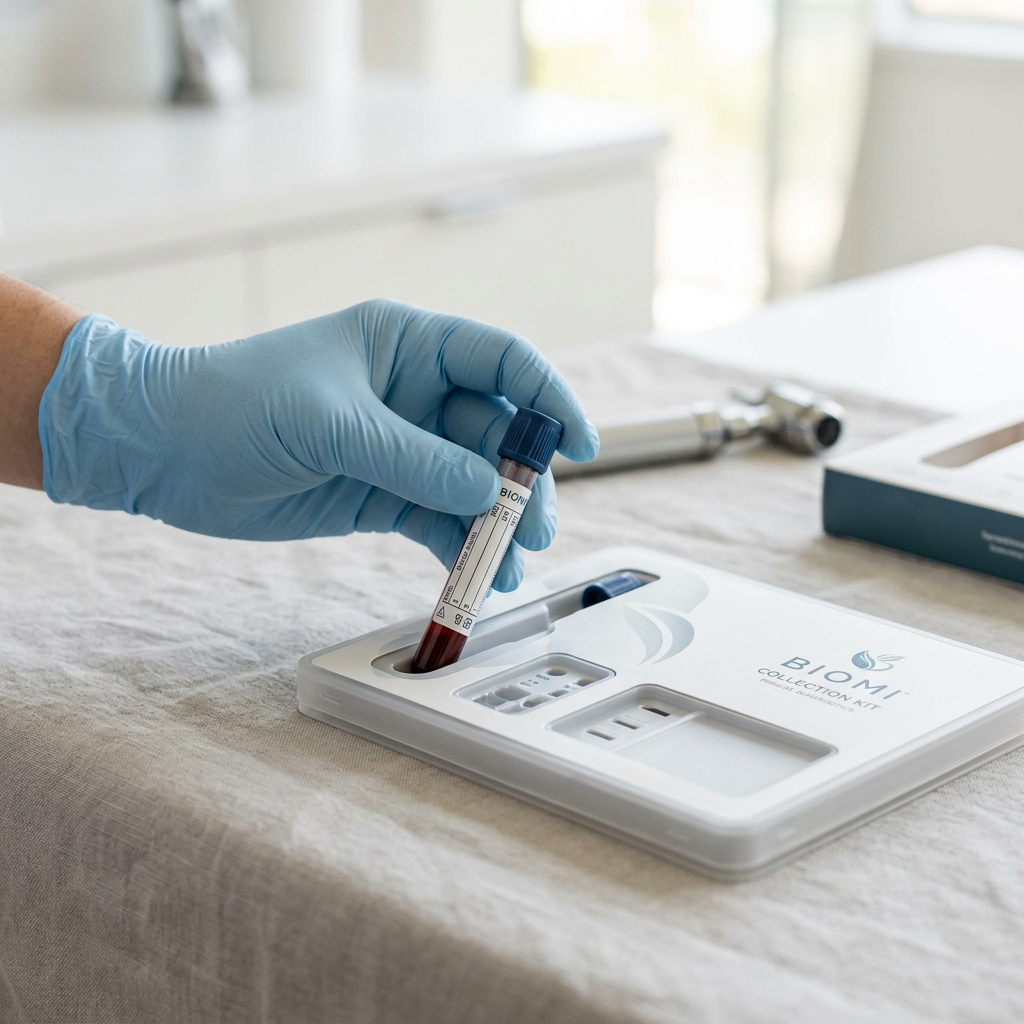
Recommended Testing Schedules by Profile
Different starting points demand different rhythms. Below are three common profiles that represent the majority of people pursuing advanced health screening in Canada, along with evidence-informed scheduling recommendations for each.
Healthy Adults Focused on Optimization
If your baseline panel comes back with all markers in optimal or near-optimal ranges and you have no significant family history of chronic disease, a twice-yearly testing cadence strikes the right balance. This aligns with emerging research published in Cell, which demonstrated that longitudinal multi-omic profiling at regular intervals reveals clinically meaningful deviations well before traditional diagnostics would catch them. A six-month cycle gives enough biological time for markers like lipid panels, thyroid hormones, and inflammatory markers to shift in response to seasonal, dietary, or training-related changes.
For the subset of healthy adults who are actively experimenting with interventions (a new strength program, a shift to time-restricted eating, or targeted supplementation), a focused retest at the 10- to 12-week mark after the intervention begins can validate whether the change is producing measurable results. This does not need to be a full panel. A targeted draw covering the relevant analytes keeps costs reasonable while maintaining long-term biomarker tracking integrity.
Individuals Managing Risk Factors or Borderline Results
When your initial results reveal borderline metabolic markers, such as elevated fasting insulin, rising LDL particle counts, or early signs of thyroid dysfunction, the testing rhythm should tighten. A quarterly cadence (every 12 to 13 weeks) for the first year provides enough data points to establish a reliable trend line and confirm whether interventions are bending the curve in the right direction. This is where a comprehensive blood panel delivers the most value, because isolated markers viewed in a vacuum can be misleading.
After the first year, if your markers have stabilized within target ranges, you can transition to the twice-yearly cadence recommended for healthy adults. The key principle is responsiveness: your schedule should contract when you are actively intervening and expand once stability is confirmed. A data-driven health assessment approach treats each result as a checkpoint rather than a final answer. Biomi structures its dashboard around this philosophy, letting users compare current results against their own historical baselines rather than population averages alone.

Corporate Wellness and Scaling Longevity Programs
Employers are increasingly recognizing that reactive sick-leave management costs far more than structured preventive health screening programs. But building a testing cadence into a company's benefits plan requires balancing clinical rigor with administrative simplicity.
Designing an Effective Corporate Testing Cadence
For corporate wellness programs, a baseline-plus-one model works well as a starting framework: every enrolled employee completes a full panel at onboarding into the program and a follow-up panel six months later. This two-test minimum within a calendar year generates enough longitudinal data for employees to see their own trajectory and for wellness leaders to evaluate population-level trends across the organization.
Companies with higher-risk workforces or those offering premium health benefits can layer in an optional mid-year targeted screen. This approach keeps participation high because employees are not overwhelmed by frequent draws, while still providing the data density needed for personalized health optimization. The administrative side matters too. Platforms like Biomi offer turnkey enrollment tools and flexible funding models that remove friction for HR teams managing these programs at scale.
Making the Business Case for Longitudinal Tracking
Single-point-in-time health screenings generate awareness but rarely change behavior. Longitudinal tracking, by contrast, creates accountability loops. When employees can see that their inflammatory markers dropped after three months of a new sleep protocol, or that their biological age score improved after regular exercise, the data becomes personally motivating. This feedback mechanism is what distinguishes a checkbox wellness perk from a program that actually reduces downstream healthcare costs and absenteeism.
Conclusion
The right longevity testing frequency is not a fixed number. It is a responsive rhythm shaped by your baseline health, the markers you are tracking, and whether you are actively intervening or maintaining. Healthy adults benefit from testing twice a year; those managing borderline results should consider quarterly panels during their first year of intervention, and corporate programs can generate meaningful engagement with a structured baseline-plus-follow-up model. The common thread across every profile is consistency: isolated tests inform, but repeated tests over time transform raw numbers into a health strategy you can actually act on.
Ready to build your own testing timeline? Explore Biomi's biomarker tracking plans to start turning data into actionable health decisions.
Frequently Asked Questions (FAQs)
How often should I get health biomarker tests?
Most healthy adults benefit from testing every six months, while those with borderline results or active interventions should retest quarterly until their markers stabilize.
Which biomarkers predict longevity?
Key longevity-associated biomarkers include hsCRP, fasting insulin, ApoB, HbA1c, DHEA-S, and markers of biological age such as DNA methylation patterns.
How does continuous health tracking improve outcomes?
Repeated testing over time reveals directional trends that single snapshots miss, enabling earlier interventions and more precise adjustments to diet, exercise, and supplementation.
What lifestyle changes improve longevity markers?
Consistent resistance training, adequate sleep (7 to 9 hours), a nutrient-dense diet, stress management practices, and targeted supplementation have all been shown to measurably improve key longevity biomarkers.
Is longevity testing covered by insurance in Canada?
Most provincial health plans cover standard requisitioned blood work ordered by a physician, but advanced longevity panels with expanded biomarker sets are typically self-pay or funded through employer wellness benefits.
About the author

Senior Health Content Strategist
Specializes in preventive health, biomarker analysis, and longevity science.
Related articles
- Biological Age Blood Test: What It Measures and Why It Matters
Curious about your biological age blood test results? Explore key biomarkers, what they reveal, and how to start optimizing your longevity today.
- At-Home Blood Draw for Health Testing in Calgary: How It Works
Discover how at-home blood draw testing works in Calgary, from booking to physician-reviewed results. Book your mobile blood collection today.
- What Is Biomi? Biomarker Testing and Biological Age Explained
Discover what Biomi is and how biomarker tracking reveals your biological age vs chronological age. Start your health journey today.
- Home Blood Draw: What to Expect Before Your Appointment
Booking a home blood test? Learn exactly what to expect before your appointment, from prep tips to physician-reviewed results with Biomi.
- What Is Longevity Testing? How It Works and What to Expect
Curious about longevity testing? Learn how this biomarker blood test works, what to expect, and how it reveals your biological age. Start today.
Read article: Biological Age Blood Test: What It Measures and Why It MattersRead article: At-Home Blood Draw for Health Testing in Calgary: How It WorksRead article: What Is Biomi? Biomarker Testing and Biological Age ExplainedRead article: Home Blood Draw: What to Expect Before Your AppointmentRead article: What Is Longevity Testing? How It Works and What to Expect