English
Restaurant Health Scores Explained: What They Really Mean

Introduction
You have probably noticed a letter grade or number posted near a restaurant entrance and wondered what it actually tells you about the food on your plate. Restaurant health scores are one of the most visible forms of public health data in Canada, yet most people have no idea how they are generated or what criteria they reflect. These scores compress an entire operational audit into a single metric, covering everything from refrigerator temperatures to handwashing protocols. The gap between what diners assume a health inspection score represents and what it actually measures is surprisingly wide, and that gap matters for anyone who cares about making informed decisions around food safety.
How Restaurant Health Scores Are Determined
A food health score is not a subjective opinion from a single visit. It is the outcome of a structured, criteria-based evaluation performed by trained public health inspectors who assess dozens of operational factors within a food establishment.
What Inspectors Actually Evaluate
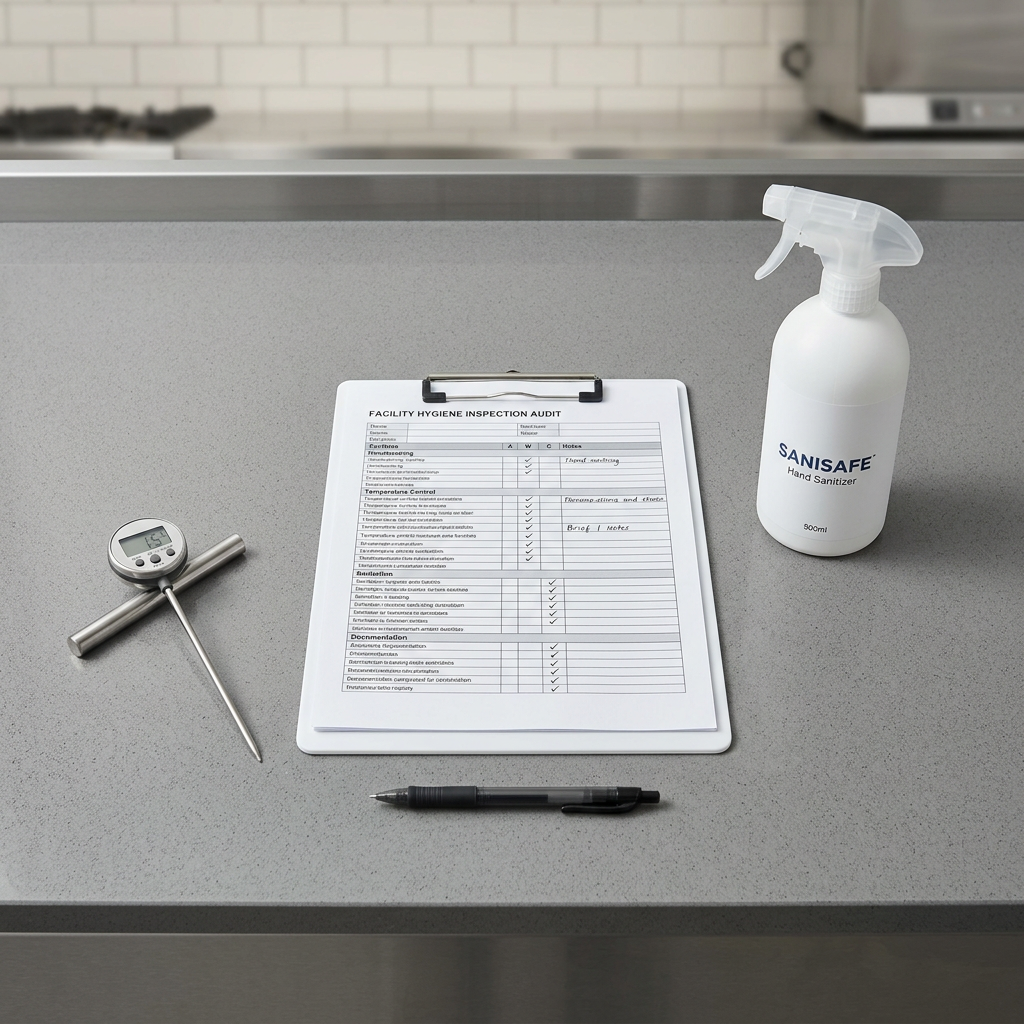
Public health inspectors follow standardized protocols rooted in provincial and municipal food safety legislation. The specifics vary by jurisdiction, but the core categories are remarkably consistent across Canada. Canada's food safety complaint and inspection framework provides the federal foundation, while municipal health units carry out the ground-level inspections. Here is what a typical evaluation covers:
Temperature control: Inspectors verify that hot foods are held above 60°C and cold foods below 4°C to prevent bacterial growth in the danger zone.
Cross-contamination prevention: Separate cutting boards, proper storage hierarchy (raw meats below ready-to-eat items), and sanitized surfaces are all scrutinized.
Hygiene practices: Handwashing stations must be stocked and accessible, and staff must demonstrate proper handwashing protocols during food preparation.
Pest management: Any evidence of rodents, insects, or inadequate sealing around entry points results in deductions or critical infractions.
Equipment and facility maintenance: Dishwashers must reach proper sanitizing temperatures, ventilation must be adequate, and plumbing cannot pose a contamination risk.
How Infractions Translate Into a Score
Not all violations carry the same weight. Inspectors typically categorize findings as critical, major, or minor. A critical infraction, such as storing raw chicken above ready-to-eat salads, triggers immediate corrective action and severely impacts the restaurant's health rating. Minor infractions, like a missing thermometer in a display case, still count but carry far less consequence. The final sanitation grade represents a weighted tally of these infractions against the total criteria evaluated. Some jurisdictions use numerical scores (0 to 100), others use letter grades (A, B, C), and some use pass, conditional pass, or fail designations. This inconsistency is one of the reasons understanding how to read scoring systems matters so much, whether you are evaluating a restaurant or your own health data.

Provincial Differences and How to Look Up Scores
Canada does not have a unified national restaurant inspection grading system. Each province, and often each municipality within a province, operates its own framework. This means a "pass" in British Columbia does not necessarily reflect the same standards as a "pass" in Ontario, making any restaurant health score comparison across regions inherently tricky.
Ontario vs. British Columbia: Two Different Approaches
Ontario restaurant health inspection scores are managed at the municipal level by local public health units. In Toronto, for example, the DineSafe program publishes inspection results using a green (pass), yellow (conditional pass), or red (closed) system. You can search any establishment through Toronto's health inspection monitoring portal, which lists every infraction, its severity, and the date of the most recent visit. Restaurant health scores in Toronto are among the most accessible in the country, though the pass/fail system obscures the difference between a restaurant with zero infractions and one that barely cleared the threshold.
British Columbia takes a different approach. Health authorities like Fraser Health and Vancouver Coastal Health publish detailed inspection reports that include the specific violations found, but they do not assign a single letter or number grade. Instead, Fraser Health's food facility inspection reports let you review the raw data yourself. This model provides more transparency but requires the reader to interpret the findings, which is not always straightforward for someone unfamiliar with food inspection grades and their relative severity.
Other provinces fall somewhere between these models. The preventive health testing landscape across Canada reveals a similar pattern of fragmented provincial frameworks, whether you are tracking food safety or personal wellness metrics.
Why a High Score Does Not Guarantee a Safe Meal
A common misconception is that restaurants with the highest health scores are inherently safer than those with lower marks. In reality, an inspection is a snapshot of a single point in time. A restaurant could earn a perfect score on Monday and develop a critical temperature control failure by Wednesday. Inspection frequency also varies: high-risk establishments (those handling raw proteins extensively) may be inspected two to four times per year, while lower-risk operations might see an inspector only once annually.
Additionally, food inspection grades do not capture factors like ingredient sourcing quality, allergen management consistency, or staff training turnover, all of which influence real-world food safety outcomes. A cleanliness rating tells you the facility met minimum standards on the day of inspection. It does not tell you about the systemic practices that prevent foodborne illness over time. This distinction mirrors a broader truth about health baselines: a single data point is useful, but longitudinal tracking reveals the real picture.
Conclusion
Restaurant health scores are a valuable starting point for informed dining decisions, but they work best when you understand their limitations. Knowing that these scores represent a moment-in-time audit, that grading systems differ across provinces, and that not all infractions carry equal weight puts you in a stronger position to evaluate risk. The same principle applies to personal health: a single number only becomes meaningful when you understand what generated it, what it measures, and how it changes over time. Platforms like Biomi apply this exact philosophy to biomarker tracking, translating complex lab data into clear health scores that support proactive, data-driven decision-making. Whether you are choosing where to eat or deciding when to get your blood tested for silent health problems, the habit of looking beyond the surface number is what separates passive consumers from genuinely informed ones.
Take control of your own health data with Biomi's personalized biomarker tracking and turn complex results into clear, actionable scores.
Frequently Asked Questions (FAQs)
How do restaurant health scores work?
Public health inspectors evaluate food establishments against standardized criteria covering temperature control, hygiene, sanitation, and pest management, then assign a score or grade based on the number and severity of infractions found.
What is a good restaurant health score?
A good score generally means the establishment passed with no critical infractions, though the specific threshold varies by municipality since some use letter grades, others use numerical scores, and some use pass/fail designations.
Can I look up restaurant health scores online?
Yes, most Canadian municipalities publish inspection results through their local public health unit websites, such as Toronto's DineSafe portal or Fraser Health's online inspection reports in British Columbia.
What causes low food inspection scores?
Critical violations like improper food storage temperatures, evidence of pest activity, lack of handwashing facilities, and cross-contamination between raw and ready-to-eat foods are the most common causes of low scores.
Are restaurant health scores public?
In Canada, restaurant inspection results are public records, and most municipalities make them freely accessible through online databases or by posting physical notices at the inspected establishment.
About the author

Senior Health Content Strategist
Specializes in preventive health, biomarker analysis, and longevity science.
Related articles
- Biological Age Blood Test: What It Measures and Why It Matters
Curious about your biological age blood test results? Explore key biomarkers, what they reveal, and how to start optimizing your longevity today.
- At-Home Blood Draw for Health Testing in Calgary: How It Works
Discover how at-home blood draw testing works in Calgary, from booking to physician-reviewed results. Book your mobile blood collection today.
- What Is Biomi? Biomarker Testing and Biological Age Explained
Discover what Biomi is and how biomarker tracking reveals your biological age vs chronological age. Start your health journey today.
- Home Blood Draw: What to Expect Before Your Appointment
Booking a home blood test? Learn exactly what to expect before your appointment, from prep tips to physician-reviewed results with Biomi.
- What Is Longevity Testing? How It Works and What to Expect
Curious about longevity testing? Learn how this biomarker blood test works, what to expect, and how it reveals your biological age. Start today.
Read article: Biological Age Blood Test: What It Measures and Why It MattersRead article: At-Home Blood Draw for Health Testing in Calgary: How It WorksRead article: What Is Biomi? Biomarker Testing and Biological Age ExplainedRead article: Home Blood Draw: What to Expect Before Your AppointmentRead article: What Is Longevity Testing? How It Works and What to Expect