English
At-Home Biomarker Testing in Toronto: What to Expect
Par Dr. Emily Carter
Introduction
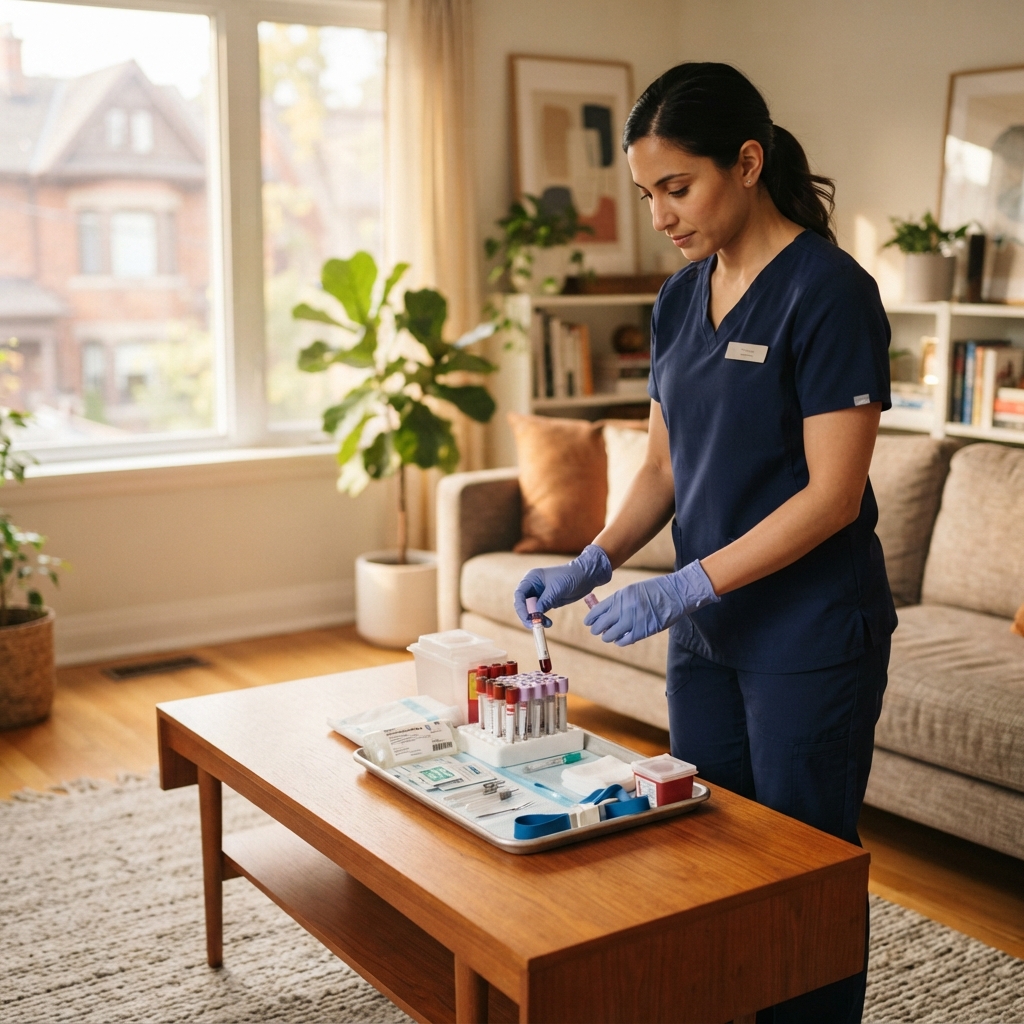
At-home biomarker testing in Toronto lets you skip the clinic entirely: a certified phlebotomist visits your home or office, draws a venous blood sample, and sends it to an accredited lab for physician-reviewed results delivered to a secure dashboard. For busy professionals across the GTA, this model removes the two biggest barriers to preventive care, waiting weeks for a referral and losing half a day to a clinic visit. The process typically takes fifteen minutes on-site, uses the same standard-of-care tubes and handling as any hospital lab, and returns results within three to five business days. That combination of accuracy and convenience is why private blood testing Toronto residents can access on-demand has grown sharply since 2024.
Key Takeaways:
Mobile blood collection services in Toronto deliver clinic-grade venous draws at your home or office, typically completed in under twenty minutes.
Results are analyzed by accredited Canadian laboratories and reviewed by a licensed physician before being released to your health dashboard.
A comprehensive at-home biomarker panel covers heart, thyroid, hormonal, and inflammatory markers, giving a broader picture than a standard annual physical.
How At-Home Biomarker Testing Works in Toronto
At-home biomarker testing follows a structured four-step workflow: online booking, in-home sample collection, accredited lab processing, and physician-reviewed result delivery. Each step is designed to match the clinical standards you would encounter at a hospital outpatient lab, only without the commute or wait time. Understanding the sequence helps you prepare properly and set accurate expectations for turnaround.
Booking Your Appointment and Choosing a Panel
Most providers offer online booking with same-week availability across the GTA, including downtown Toronto, North York, Etobicoke, Scarborough, Mississauga, and Vaughan. When you book, you select a panel that matches your health goals, which is the most important decision in the entire process since it defines which biomarkers get measured. Health-conscious professionals typically want more than the basic CBC and lipid panel offered in a routine physical.
Core snapshot panels: Cover essentials like lipids, glucose, HbA1c, liver enzymes, and kidney function, ideal for a first baseline.
Comprehensive panels: Add thyroid hormones (TSH, free T3, free T4), inflammatory markers like hs-CRP, and a personalized hormone panel Toronto professionals often want for energy and recovery insights.
Longevity-focused panels: Include advanced markers such as ApoB, homocysteine, insulin, ferritin, and vitamin D, plus a biological age calculation.
Follow-up panels: Smaller repeat draws used every three to six months to track specific markers you are actively working to improve.
What Happens During the Home Blood Draw
A licensed phlebotomist arrives at your chosen address with a sealed collection kit, verifies your identification, and performs a standard venous draw using vacuum tubes calibrated for the ordered tests. The appointment typically lasts fifteen to twenty minutes from setup to labeling, and the technician handles all chain-of-custody documentation before transporting samples to the partner lab in temperature-controlled conditions. If you want a deeper breakdown of what to expect during collection, the process mirrors a hospital outpatient visit with the same tube types, fasting rules, and handling protocols. Reputable providers publish accuracy data comparable to hospital labs, and independent reviews of at-home blood testing services consistently confirm equivalence when accredited phlebotomists perform the draw.

At-Home vs Clinic-Based Testing: The Practical Differences
The clinical accuracy of at-home and clinic-based venous testing is functionally identical when a certified phlebotomist performs the draw, but the operational experience differs substantially. The right choice depends on your schedule, the breadth of biomarkers you want measured, and whether you need results integrated into an ongoing tracking system rather than a one-time report filed in a chart.
Side-by-Side Comparison
The table below outlines how at-home biomarker testing compares to a traditional clinic visit or annual physical for someone building a preventive health strategy. It focuses on the differences that matter most to working professionals in Toronto.
Feature | At-Home Biomarker Testing | Clinic-Based Testing / Annual Physical |
|---|---|---|
Location | Home or office anywhere in the GTA | Clinic or hospital outpatient lab |
Time on-site | 15 to 20 minutes | 1 to 3 hours including travel and wait |
Referral required | No | Usually yes |
Typical biomarker count | 40 to 65+ | 10 to 20 |
Result turnaround | 3 to 5 business days | 1 to 3 weeks |
Physician review | Included | Separate follow-up appointment |
Longitudinal tracking | Built-in dashboard | Manual chart review |
Cost | Out-of-pocket, transparent pricing | Covered basics; extras out-of-pocket |
The practical takeaway is that clinic-based care remains essential for diagnosis and treatment, but at-home testing is better suited for proactive monitoring and longevity tracking. If you want a fuller breakdown of home blood draw versus clinic workflows, the accuracy is equivalent, but the follow-through experience is not. Peer-reviewed home-based screening research also shows higher completion rates when collection happens outside a clinical setting, which matters if consistency is the goal.
What Happens After the Draw: Results and Ongoing Tracking
Sample processing is where the medical value gets created, and this stage is invisible to the patient but tightly regulated. Once your tubes reach the accredited Canadian laboratory, they are run on the same analyzers used by hospital systems, and results are then routed to a licensed physician for clinical review before you see them.
Physician Review and Result Delivery
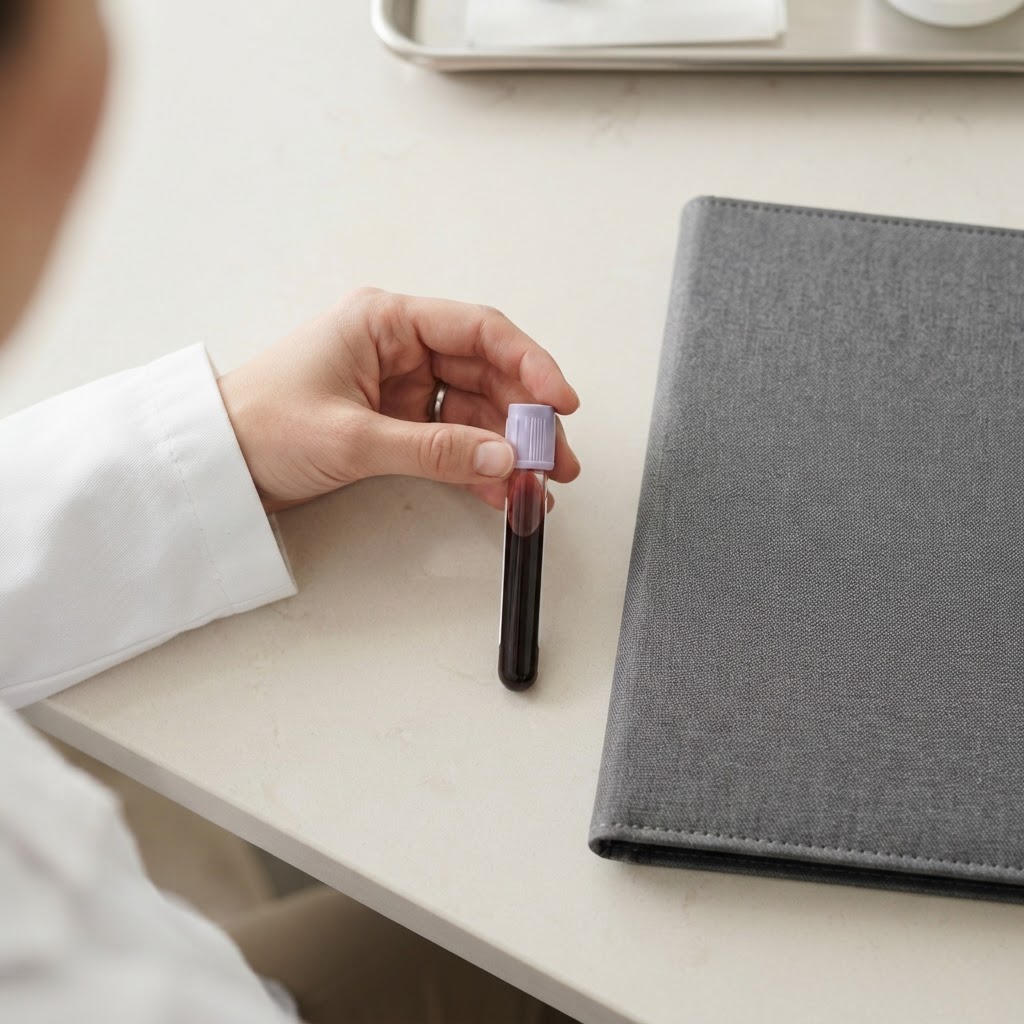
A Canadian-licensed physician reviews your values against reference ranges, flags anomalies, and adds context notes before the report is released to your dashboard, typically within three to five business days of collection. This is a meaningful distinction from raw lab reports, which show numbers without interpretation and often leave patients unsure whether a value slightly outside range is clinically significant. Providers like Biomi build these physician-reviewed health snapshots directly into the delivery flow, so you receive both the data and an initial clinical read at the same time. If a marker requires follow-up, the report will indicate whether a repeat test, lifestyle adjustment, or referral to your family physician is the appropriate next step. Health Canada also provides regulatory guidance on home-use testing that reputable providers follow closely.
Using a Health Dashboard for Longevity
The single biggest advantage of the at-home model is that every result feeds into a secure longitudinal record rather than sitting in a paper chart. When you repeat a panel three, six, or twelve months later, you can see trends in ApoB, HbA1c, hormones, or inflammatory markers plotted over time, which is how meaningful health optimization actually happens. Biomi organizes this into a health dashboard tracking view that scores your overall snapshot and highlights which markers moved since your last draw, making it far easier to connect a lifestyle change to a measurable outcome. For anyone building a preventive health strategy, this trend view is more valuable than any single test result.
Conclusion
At-home biomarker testing in Toronto compresses what used to be a multi-week clinical process into a single fifteen-minute appointment on your terms, with the same accuracy standards and an added layer of physician-reviewed interpretation. For working professionals, the value is not just convenience but the ability to run panels consistently every few months and watch trends develop, which is where preventive care actually pays off. Start with a comprehensive baseline panel that covers heart, thyroid, hormonal, and inflammatory markers, then schedule follow-up draws every three to six months on the markers you are actively working to improve. Choose a provider that combines accredited lab partnerships, in-home phlebotomy across the GTA, and a dashboard built for longitudinal tracking rather than one-off reports. That combination is what turns a single blood draw into a real preventive health program.
Ready to see exactly where your health stands today? Book a comprehensive panel with Biomi and get physician-reviewed results delivered to your personal health dashboard within days.
Frequently Asked Questions (FAQs)
How does at-home biomarker testing work in Toronto?
You book online, a certified phlebotomist visits your home or office to perform a standard venous draw, the sample is sent to an accredited Canadian lab, and physician-reviewed results are delivered to your secure dashboard within three to five business days.
Is it safe to do at-home blood collection for health testing?
Yes, because the phlebotomists are licensed, use sealed single-use collection kits, and follow the same chain-of-custody and handling protocols required in hospital outpatient labs.
Why choose private blood testing over a routine physical?
Private testing typically measures forty to sixty-five biomarkers versus the ten to twenty covered by a standard physical, and it does not require a referral or symptom-driven justification to order the panel.
What biomarkers are included in a comprehensive Peak-level panel?
A Peak-level panel covers roughly sixty markers including full lipid and ApoB profiles, glucose and HbA1c, thyroid hormones, sex and stress hormones, inflammatory markers, vitamin and mineral levels, plus a biological versus chronological age comparison.
Are biomarker tests covered by Canadian provincial health insurance?
Provincial plans like OHIP cover only physician-ordered tests deemed medically necessary, so private preventive panels are generally paid out-of-pocket or through employer wellness benefits and health spending accounts.
How often should I run a comprehensive biomarker panel?
Most preventive health protocols recommend a comprehensive panel once or twice a year, with smaller follow-up panels every three to six months on the specific markers you are actively trying to improve.
What is the difference between chronological and biological age?
Chronological age is your calendar age, while biological age is a calculated estimate based on biomarkers like inflammation, metabolic health, and organ function that reflects how your body is actually aging relative to your years.
À propos de l'auteur

Senior Health Content Strategist
Specializes in preventive health, biomarker analysis, and longevity science.
Articles connexes
- Biological Age Blood Test: What It Measures and Why It Matters
Curious about your biological age blood test results? Explore key biomarkers, what they reveal, and how to start optimizing your longevity today.
- At-Home Blood Draw for Health Testing in Calgary: How It Works
Discover how at-home blood draw testing works in Calgary, from booking to physician-reviewed results. Book your mobile blood collection today.
- What Is Biomi? Biomarker Testing and Biological Age Explained
Discover what Biomi is and how biomarker tracking reveals your biological age vs chronological age. Start your health journey today.
- Home Blood Draw: What to Expect Before Your Appointment
Booking a home blood test? Learn exactly what to expect before your appointment, from prep tips to physician-reviewed results with Biomi.
- What Is Longevity Testing? How It Works and What to Expect
Curious about longevity testing? Learn how this biomarker blood test works, what to expect, and how it reveals your biological age. Start today.
Lire l'article: Biological Age Blood Test: What It Measures and Why It MattersLire l'article: At-Home Blood Draw for Health Testing in Calgary: How It WorksLire l'article: What Is Biomi? Biomarker Testing and Biological Age ExplainedLire l'article: Home Blood Draw: What to Expect Before Your AppointmentLire l'article: What Is Longevity Testing? How It Works and What to Expect