English
What Does It Mean to Have Your Health Quantified?
Par Dr. Ethan Brooks

Introduction
Most people interact with the healthcare system only when something feels wrong, or once a year during a brief physical exam that checks a handful of basics. Health quantified is a fundamentally different approach: it converts what is happening inside your body into measurable, trackable data points that reveal your true physiological status. Instead of waiting for symptoms to surface, quantified health uses biomarker testing to map how your organs, hormones, metabolic systems, and nutrient levels are performing right now. The gap between feeling fine and actually being fine is often wider than most people realize, and that gap is exactly where actionable health data becomes invaluable.
Understanding Health Quantification and Why It Matters
Health quantification means translating your biology into numbers. Rather than relying on subjective feelings or vague reassurances from a routine checkup, this approach assigns measurable values to critical functions like inflammation, thyroid performance, cardiovascular risk, and vitamin status. A biomarker is any biological indicator that can be objectively measured to evaluate a normal or abnormal process in the body. When dozens of these markers are tested together, the resulting profile creates something far more detailed than a standard lab panel.
What Data Is Actually Involved?
Quantified health typically revolves around blood-based biomarkers, though it can extend to genetic markers, hormonal panels, and metabolic indicators. The data collected spans multiple physiological systems, and each marker tells a specific story about how well a part of your body is functioning. Here are some of the core categories involved:
Metabolic markers: Fasting glucose, HbA1c, and insulin levels reveal how efficiently your body processes energy and whether insulin resistance is developing.
Cardiovascular markers: LDL, HDL, triglycerides, ApoB, and hsCRP assess heart disease risk far beyond what a simple cholesterol check provides.
Hormonal markers: Cortisol, testosterone, estrogen, and thyroid hormones (TSH, free T3, free T4) indicate whether your endocrine system is supporting or undermining your energy, mood, and recovery.
Nutrient and vitamin markers: Vitamin D, B12, ferritin, and magnesium levels expose deficiencies that silently affect sleep quality, cognitive function, and immune resilience.
Inflammatory markers: CRP, homocysteine, and fibrinogen help detect chronic low-grade inflammation, a root driver of many age-related diseases.
How Results Are Interpreted Differently
A conventional lab report often classifies results as simply "normal" or "abnormal" based on population-wide reference ranges. These ranges are broad enough to accommodate the entire adult population, which means a result can fall within the "normal" window while still being far from optimal for your age, sex, or health goals. Quantified health applies tighter, evidence-based optimal ranges that distinguish between "not sick" and "actually thriving." For example, a vitamin D level of 32 nmol/L may not trigger a clinical flag, but functional health practitioners would identify it as suboptimal for immune function and bone health. This shift from disease-oriented to optimization-oriented interpretation is what makes personalized health insights possible.
From Raw Numbers to Real Decisions
Numbers alone are not useful unless they lead to clear, practical next steps. The real power of data-driven health insights lies in what happens after the blood draw: the translation of complex lab data into guidance you can act on immediately. This is where health quantification separates itself from the familiar experience of receiving a lab printout you cannot decode.
The Role of a Health Score Dashboard
A health score dashboard aggregates your biomarker results into a visual overview that highlights strengths, areas of concern, and trends over time. Instead of reading fifty or sixty individual lab values, you see a consolidated picture of where your body stands across multiple domains. This makes it possible to prioritize: perhaps your cardiovascular markers look excellent, but your thyroid function and vitamin D status need attention.
The dashboard model also supports establishing a real health baseline, which is a critical first step most people skip entirely. Without a baseline, there is no way to know whether a future test result represents improvement, decline, or stability. Longitudinal health tracking turns a single snapshot into a trajectory, revealing patterns that a one-off test simply cannot capture. Subtle changes in fasting glucose over eighteen months, for instance, might signal early metabolic dysfunction years before a diabetes diagnosis would occur through conventional screening.
Physician-Reviewed Results vs. Generic Reports
Not all biomarker reports carry the same weight. Physician-reviewed blood tests involve a licensed medical professional evaluating your results within the context of your health profile, history, and goals. This adds a layer of clinical judgment that automated reports cannot replicate. A standalone algorithm might flag elevated ferritin as a potential concern, but a physician reviewing the same result alongside your inflammatory markers and liver enzymes can determine whether it reflects iron overload, acute inflammation, or a benign variation.
Biomi structures its testing around this physician-reviewed model, ensuring that every set of results goes through clinical evaluation before reaching the user. That step transforms raw data into medically grounded, decoded health information that supports real decisions about diet, supplementation, exercise, and medical follow-up. The difference between receiving a PDF of numbers and receiving contextualized guidance is the difference between information and insight.

How Health Quantification Compares to Traditional Checkups
Annual physicals remain the default touchpoint for most Canadians, but they were designed primarily as screening tools for existing or imminent disease. Health quantification operates on a different premise: that prevention and optimization deserve as much rigor as diagnosis and treatment.
Scope and Depth of Testing
A standard annual physical in Canada typically covers blood pressure, basic cholesterol, fasting glucose, and perhaps a CBC (complete blood count). The Canadian Task Force on Preventive Health Care sets evidence-based guidelines for these screenings, but the scope is intentionally narrow, designed to catch major red flags rather than optimize performance. A comprehensive biomarker panel, by contrast, may test forty to sixty-five markers across cardiovascular, metabolic, hormonal, thyroid, liver, kidney, and nutritional domains.
This expanded scope is what allows health optimization to move from concept to practice. When you can see that your cortisol is chronically elevated, your B12 is borderline, and your ApoB is creeping upward, you have a specific, actionable map. The key biomarkers Canadians should monitor go well beyond what a typical family doctor appointment covers, and testing them does not require a referral or a diagnosed condition.
Accessibility Across Canada
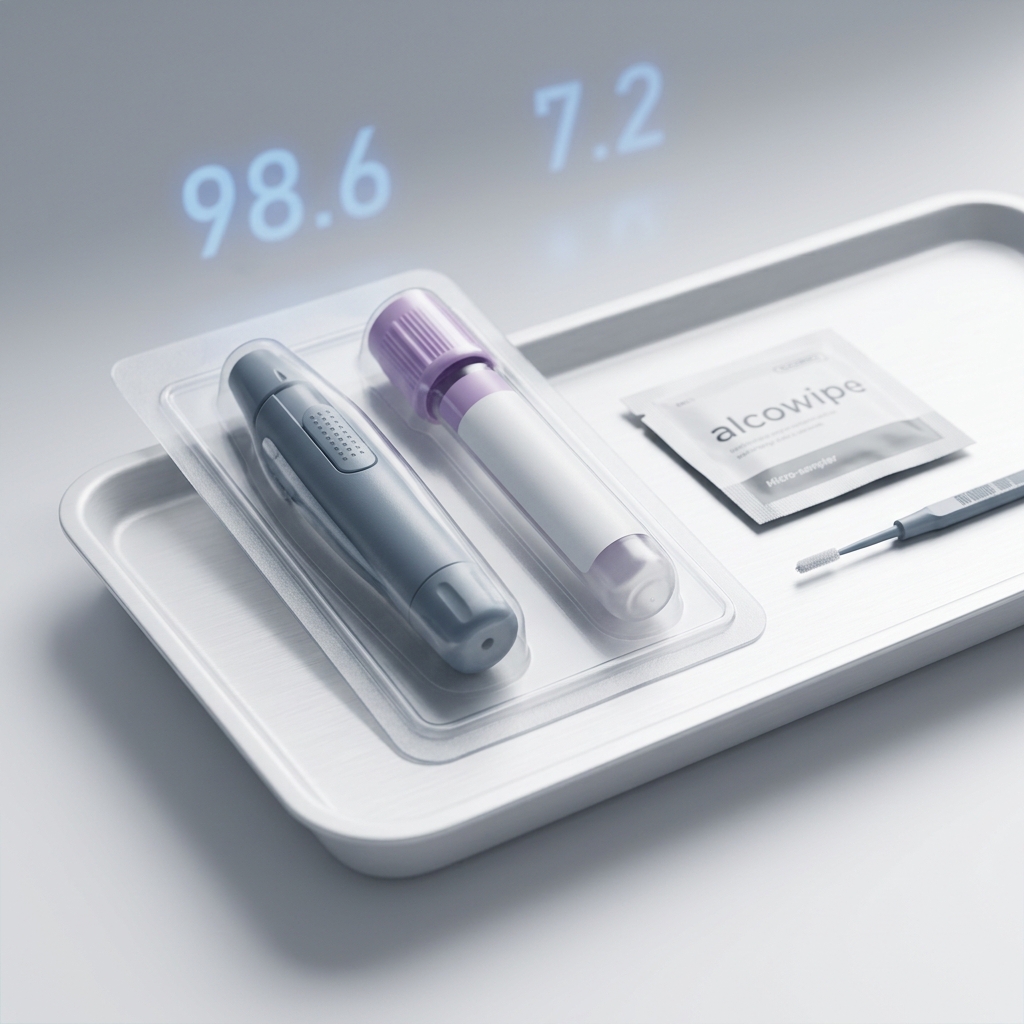
One of the historical barriers to comprehensive testing has been access. Not everyone lives near a major hospital or speciality lab, and getting a physician to order an expanded panel without clinical justification can be difficult. Biomarker testing in Canada has become more accessible through platforms that offer at-home blood collection kits shipped directly to your door, paired with certified lab processing. This model makes it possible for someone in a smaller city to access the same depth of testing available in Toronto or Vancouver. Biomi's biomarker testing follows this approach, combining at-home convenience with lab-grade accuracy so that geography does not limit who can take a proactive step toward understanding their health.
Who Benefits Most from Quantified Health?
Health quantification is relevant to anyone who wants to understand their body beyond surface-level symptoms. However, certain groups stand to gain the most from this approach.
Individuals Pursuing Longevity and Performance
Health-conscious professionals who already invest in nutrition, exercise, and sleep often hit a ceiling where subjective effort no longer translates to clear improvement. Biomarker testing removes the guesswork. If your recovery feels slow, a hormonal panel can reveal whether testosterone, cortisol, or thyroid function is the bottleneck. If you are supplementing vitamin D but your levels remain low, your protocol needs adjustment, not more effort. Tracking top biomarkers for health optimization gives high performers the feedback loop they need to fine-tune what they are already doing.
Organizations Investing in Employee Wellness
For corporate leadership and HR teams, offering employees access to quantified health testing signals a commitment to genuine preventive care rather than checkbox wellness programs. When employees understand their own data, they make better decisions about stress management, nutrition, and when to seek medical attention. This approach can identify risk factors across a workforce population early, potentially reducing absenteeism and long-term healthcare costs. The value proposition for organizations is straightforward: healthier employees perform better, and catching silent health problems before they escalate benefits everyone.
Conclusion
Having your health quantified means replacing assumptions with evidence. It means knowing your cardiovascular risk profile, your hormonal balance, your nutrient status, and your metabolic trajectory, not just whether you "passed" a physical. This approach empowers you to make targeted changes backed by real data, rather than guessing your way through wellness trends. Whether you are an individual looking to optimize your longevity or an organization building a smarter benefits strategy, health quantification provides the foundation for decisions that actually move the needle. The path from curiosity to clarity starts with a single, comprehensive test.
Start your journey toward quantified health with Biomi and discover what your biomarkers reveal about your true health status.
Frequently Asked Questions (FAQs)
What does it mean to have your health quantified?
It means using measurable biomarker data from blood tests to objectively evaluate how your body's systems are performing, rather than relying solely on symptoms or subjective assessments.
How does a health score dashboard work?
A health score dashboard consolidates individual biomarker results into a visual summary that highlights overall health status, flags areas of concern, and tracks changes over time across multiple physiological categories.
What biomarkers should I test for health optimization?
A comprehensive panel typically includes metabolic markers (glucose, HbA1c), cardiovascular markers (ApoB, hsCRP), hormonal markers (cortisol, thyroid hormones), and nutritional markers (vitamin D, B12, ferritin) for a thorough assessment.
How often should you track health biomarkers?
Testing every three to six months provides enough data to identify meaningful trends and evaluate whether lifestyle changes or interventions are producing measurable results.
How do physician-reviewed results differ from standard blood tests?
Physician-reviewed results include clinical interpretation by a licensed medical professional who evaluates your data within the context of your health history, goals, and the interplay between multiple markers, rather than simply flagging values outside a reference range.
À propos de l'auteur

Medical Research Content Advisor
Combines medical research and functional medicine expertise to create educational content on health biomarkers, disease prevention, and longevity.
Articles connexes
- Biological Age Blood Test: What It Measures and Why It Matters
Curious about your biological age blood test results? Explore key biomarkers, what they reveal, and how to start optimizing your longevity today.
- At-Home Blood Draw for Health Testing in Calgary: How It Works
Discover how at-home blood draw testing works in Calgary, from booking to physician-reviewed results. Book your mobile blood collection today.
- What Is Biomi? Biomarker Testing and Biological Age Explained
Discover what Biomi is and how biomarker tracking reveals your biological age vs chronological age. Start your health journey today.
- Home Blood Draw: What to Expect Before Your Appointment
Booking a home blood test? Learn exactly what to expect before your appointment, from prep tips to physician-reviewed results with Biomi.
- What Is Longevity Testing? How It Works and What to Expect
Curious about longevity testing? Learn how this biomarker blood test works, what to expect, and how it reveals your biological age. Start today.
Lire l'article: Biological Age Blood Test: What It Measures and Why It MattersLire l'article: At-Home Blood Draw for Health Testing in Calgary: How It WorksLire l'article: What Is Biomi? Biomarker Testing and Biological Age ExplainedLire l'article: Home Blood Draw: What to Expect Before Your AppointmentLire l'article: What Is Longevity Testing? How It Works and What to Expect